
Loading...

A strong "why us" essay does one thing every mediocre one skips: it names a specific, verifiable school resource, ties it to something real from your own history, and closes by saying what you will actually do on campus. Skip the campus scenery and the ranking talk. If your essay survived with the school's name swapped for another, it fails.
TL;DR:
- A strong "why us" essay must name a unique, verifiable school resource, demonstrate genuine engagement with it, and detail how the applicant will contribute on campus.
- Effective research involves primary sources like faculty publications, course catalogs, and student organization projects, verified for currency and relevance.
- Depth in one or two specific resources is more convincing than broad, superficial mention of multiple programs or rankings.
- When limited to fewer words, focus solely on the strongest personal connection and precise resource, avoiding fillers or general praise.
- Essays should be built around a clear structure: state an interest, connect it to a specific resource, then specify a concrete contribution or action at the school.
Most drafts don't fail because the writing is bad. They fail because the content could belong to any school. Here's what goes wrong most often, and how to catch it before a reader does.
The swap test catches almost everything. Take your draft, cross out the school's name, and drop in a different one. Read it again. If the sentence "I'm drawn to the vibrant community and rigorous academics" still works with the new name, you've written a brochure, not an essay. This heuristic comes straight from admissions-focused writing coaches, and it's the fastest way to audit your own work — the swap test exposes generic praise in seconds.
Try it on these two openers:
The second example survives because no other school has Professor Chen's lab. That's the whole test.
Name-dropping without engagement is the second-biggest trap. Mentioning a professor's name or a building isn't the same as showing you've engaged with their work. Admissions officers read thousands of these essays, and they notice the difference between a student who read a syllabus and one who found a name on a faculty directory page. If you can't explain what the professor studies or what the course actually covers, don't mention it. Specificity beats brochure language every time, and it's the difference reviewers flag first.
Firehosing five programs beats depth on none. Students often try to prove devotion by listing every club, major, and building they've heard of. One or two resources explored in real depth read as far more convincing than six mentioned in passing. Pick your best connection and go deep instead of wide.
Ranking and location talk signals nothing. "This school is ranked in the top 20" or "I love that it's close to a big city" tells an admissions officer nothing about intellectual fit. Reframe location around access: not "it's near a city" but "the urban campus means I can take Professor Alvarez's applied economics seminar that partners directly with the city's transit authority."
Pro Tip: Before you submit, read your final paragraph out loud. If it ends on a feeling ("I would be so happy there") instead of an action ("I would join the robotics team's autonomous drone project"), rewrite the last two sentences.
Good research takes a significant amount of time per school, and it should follow a repeatable process rather than a random scroll through the admissions website. The research-first approach that admissions counselors recommend leans on primary sources, not marketing pages.
Here's where to actually look, in order of usefulness:
Verifying currency matters more than students think. Check the syllabus date, cross-reference the professor's most recent publication year, and confirm the course appears in the upcoming semester's schedule. Admissions counselors warn that AI tools can summarize school offerings quickly but need cross-checking against official pages, since programs and faculty rosters change year to year.
As you research, log four things for every resource you find worth citing:
Print this checklist before you draft:
Two hours sounds like a lot for a 200 word essay. It isn't. Most of that time goes into reading, not writing, and the payoff shows up in every sentence that follows.
Every strong "why us" essay follows some version of the same three-part shape: name an intellectual interest, connect it to a specific school resource, then say what you'll contribute. This structure comes directly from former admissions officers, and it scales up or down depending on your word limit.
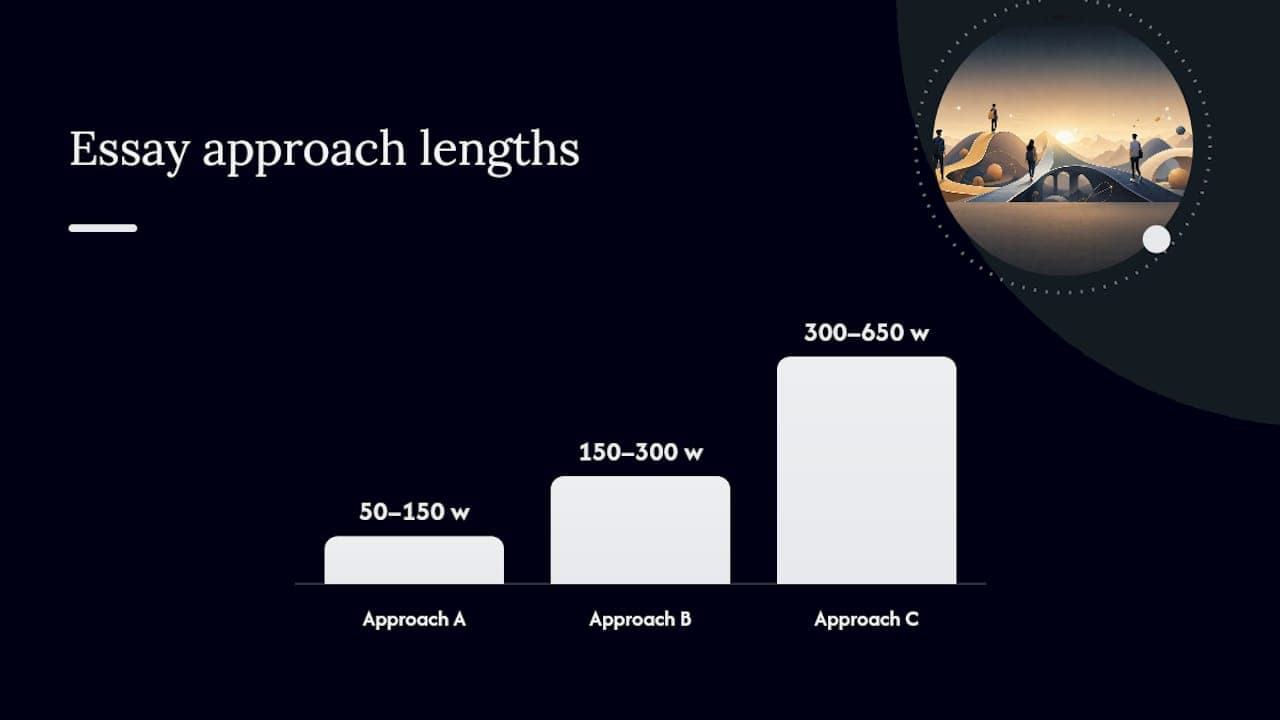
Approach A: the 50 to 150 word essay. You have room for one tight claim, one specific resource, and a single line of contribution. Something like: "I want to study urban water policy, and Professor Diallo's Environmental Justice Clinic gives me a chance to work directly with the cases I've only read about. I'd bring two years of local watershed volunteer work to that clinic's first-year cohort." That's it. No room for a story, and none needed.
Approach B: the 150 to 300 word essay. This length supports a compact hook plus two or three specifics, ideally one academic and one extracurricular, followed by a concrete contribution. Open with a short, real observation (not a dramatic anecdote), spend the middle on your two resources, and close with a specific plan, like joining a named club or proposing a research topic to a specific professor.
Approach C: the 300 to 650 word essay. Here you can afford a real narrative hook or a focused anecdote, then go deeper into one professor or program rather than spreading thin across three. Longer essays let you show a research trajectory: what you've already done, what open question remains, and how one specific resource moves you toward answering it.
The biggest structural mistake is treating every prompt like the 650 word version. When space is tight, cut in this order:
Pro Tip: If a prompt gives you 100 words or fewer, skip the hook entirely. Lead with your strongest specific connection in sentence one. There's no room for a warmup.
Reading full essays helps less than reading the sentences that do the actual work. Below are excerpts across different lengths and academic interests, each with a breakdown of why it holds up and how you could sharpen it further. Annotated examples work as a teaching method because they show pattern replication students can copy directly into their own drafts.
1. Biology, short prompt (approximately 60 words)
I want to research antibiotic resistance mechanisms, and Professor Yoon's microbiology lab, which published on efflux pump inhibition last spring, is exactly where I'd start. My two summers culturing bacteria for a local health department gave me lab habits I'm ready to apply to real research questions instead of assigned protocols.
2. Economics, medium prompt (approximately 180 words)
The first time I modeled a supply curve for my own family's small bakery, I realized textbook economics rarely accounts for suppliers who can't afford to wait out a bad month. That's why Professor Ibarra's Applied Microeconomics seminar, which partners directly with three local small businesses each semester, is the class I've been building toward since I was fifteen. I want to bring the pricing data I've already collected from my family's business into that seminar's live case studies, not as a hypothetical, but as a real dataset a professor and classmates can actually critique. Beyond the seminar, I'd apply to join the Undergraduate Economics Society's small business consulting arm, which matched three teams with local shops last year according to the group's own project page.
3. English literature, short prompt (approximately 70 words)
Professor Okafor's course on Post-Colonial Narrative Structures, offered every fall, covers the exact gap I found in my own AP Literature research paper on unreliable narration in translated texts. I'd want to extend that paper's questions into her class discussion, especially around how translation choices shift a narrator's reliability, a topic my paper touched but couldn't fully resolve in ten pages.
4. Computer science, medium prompt (approximately 160 words)
I spent last summer trying to teach myself reinforcement learning from a stack of papers I only half understood, so Professor Wu's Machine Learning for Robotics course, which requires students to publish a working demo by the semester's end, would finally give that self-study a real deadline and real feedback. I also want to bring my half-finished drone navigation project into the Robotics Club's open project nights, which the club's page describes as running biweekly through the spring. Right now that project fails more often than it works, and I'd rather fail it in front of people who can tell me why.
5. Political science, long prompt (approximately 220 words)
During my junior year, I organized a mock city council session for my government class, and the hardest part wasn't the policy, it was watching classmates dismiss procedural rules as boring paperwork that didn't matter. That frustration is why I want to study in Professor Martel's Legislative Process Lab, where students spend a full semester tracking one real bill through committee, not a simulation but an actual piece of pending legislation. I've read two of the lab's public reports from the last two years, and both traced bills that died in committee for procedural reasons nobody outside the room understood. I want to be in the room. Beyond the lab, I'd apply to the Student Government Association's policy research committee, which the group's site says reviewed four campus policy proposals last year. Between the lab's rigor and the committee's practical stakes, I'd have both the theory and the practice I've been missing since that mock council session made me realize how much procedure actually decides outcomes.
6. Chemical engineering, short prompt (approximately 65 words)
The Sustainable Materials Lab's current project on biodegradable polymer coatings, described on the department's spring update page, addresses the exact packaging waste problem I researched for my school's environmental club last year. I'd want to bring that club's local waste audit data into the lab as a real-world testing case, since most polymer research I've read skips small-scale, real-use data entirely.
7. Art history, medium prompt (approximately 150 words)
I spent two years cataloging pieces at my regional museum's education program, mostly cleaning metadata that nobody else wanted to touch, so Professor Lindqvist's Museum Studies practicum, which places students directly with the university's own collection for a full academic year, is the exact next step for that unglamorous work I've come to actually love. The practicum's page lists last year's cohort cataloging a donated textile collection, work I'd want to continue if a similar collection needs it this year.
8. Nursing, short prompt (approximately 55 words)
Clinical rotations through the university's partnership with the regional hospital system, listed on the nursing department's clinical placement page, would let me build on the patient intake experience I gained as a hospital volunteer, moving from observation to hands-on care under supervision I've been preparing for since I was sixteen.
Word limits force decisions, and the best openers, middles, and closings change shape depending on how much room you have. A short answer of 150 to 250 words works best with a tight hook and one or two concrete reasons; longer prompts can carry more narrative weight or a second resource, according to admissions writing coaches.
Openers that work across most lengths:
What belongs in the middle, regardless of length, is evidence of fit: not just naming a resource but explaining exactly how it advances something you're already doing. Vague fit ("this program aligns with my interests") reads as filler. Specific fit ("this seminar's semester-long bill-tracking project extends the procedural questions my mock council project raised") reads as real.
Closings should state an action, not a feeling. Short answers especially benefit from action-focused endings over sentimental ones. Compare "I would be honored to be part of this community" against "I would apply to the Robotics Club's spring project cohort in my first semester." The second tells an admissions officer what Tuesday afternoon will actually look like.
For genuinely short prompts (100 to 200 words), skip the hook and lead with your specific reason in sentence one, since there often isn't room for a full narrative windup.
Before you submit, run this micro-edit pass:
Use this before you submit any draft. If you can't check a box, go back and fix it before moving on.
10-point integrity checklist:
Template 1 (150 to 250 words): Open with one sentence naming your intellectual interest and a hook rooted in your own experience. Follow with two sentences citing a specific resource (course, lab, or professor) and why it matters to that interest. Add one sentence connecting a second resource, ideally extracurricular. Close with one sentence stating exactly what you would do or join.
Template 2 (300 to 400 words): Open with a short anecdote (two to three sentences) that reveals your interest through a specific memory. Spend the middle third going deep on one professor or program, citing something you've actually read or verified. Add a paragraph connecting a student organization or extracurricular tie. Close with a concrete plan naming what you'd contribute and when you'd start.
The three-part structure recommended throughout this guide, intellectual interest, specific resource, contribution, isn't a stylistic preference. It's the framework former admissions officers themselves recommend for evaluating fit, and it pairs with a research standard of roughly two hours per school to gather verifiable details rather than surface-level impressions.
Admissions officers consistently prefer essays that read as research-driven rather than promotional. Citing a professor's recent paper you actually read carries more weight than praising a program in general terms.
This workflow can be supported by AI tools without replacing the research itself:
None of these tools replace reading a syllabus or a faculty publication yourself. AI can help you organize and tighten what you've found, but the specific, verifiable details still have to come from primary sources, cross-checked against official school pages rather than summarized secondhand.
Short prompts don't leave room for everything you know about a school, so they force a choice: pick the single strongest connection and cut the rest. If a prompt gives you 100 words, you likely have space for one resource and one personal bridge, not three of each.
Start by drafting long, even if the limit is short. Write out every resource and every personal connection you found in your research notes, then rank them. Keep only the pairing where the resource and your personal experience connect most specifically and drop everything else, no matter how good it sounds on its own.
Word count pressure also changes vocabulary choices. Long adjectives and hedging phrases ("I believe that I would really enjoy...") cost words without adding meaning. Replace "I believe that I would really enjoy studying under Professor Lin" with "I want to study under Professor Lin." The second version says the same thing in half the words and sounds more confident doing it.
When a prompt caps you at 50 words, treat it almost like a text message to someone who already knows your background: state the resource, state the connection, done. There's no room for a hook, a wind up, or a closing reflection. The tightest prompts reward the students who've already done their two hours of research, because they can skip straight to the specific detail instead of hunting for one under deadline pressure.
The strongest link between your goals and a school's offerings isn't a shared word (both of you say "innovation" or "community"). It's a shared specific problem. If you want to study public health policy, the connection isn't "this school has a great public health program." It's "this school's health policy clinic tracked a real Medicaid expansion bill last year, and I've been trying to understand exactly that kind of legislative gap since volunteering at a free clinic."
Start from your own goal, stated as specifically as possible: not "I want to help people" but "I want to research how transportation access affects rural healthcare outcomes." Then search for the school resource that answers that exact question, not a resource that's merely adjacent to public health in general.
The linking sentence should name both halves explicitly. A common weak version: "This aligns with my interest in economics." A stronger version: "Professor Ibarra's seminar on small-business pricing models would let me apply the same supply-and-demand questions I first ran into pricing my family's bakery."
If you can't find a resource that connects to your specific goal, the goal statement is probably still too broad. Narrow it until a real match on the faculty page or course catalog jumps out. That narrowing process is itself often the most useful part of writing a "why us" essay, because it forces you to figure out what you actually want to study, not just what field sounds impressive.
Applying to eight schools with eight "why us" prompts doesn't mean writing eight unrelated essays from scratch. It means building a bank of your own experiences and rotating which ones you emphasize depending on which school's resources they match best.
Start by listing your three or four strongest personal threads: a research project, a volunteer role, a specific academic gap you've hit, an extracurricular commitment. Most schools will have some resource that connects to at least one of these threads, but rarely the same one twice. School A might match your research project to a specific lab. School B might match your volunteer work to a policy clinic instead.
The mistake to avoid is writing one strong essay and then swapping only the school name and resource into an otherwise identical template. Readers at different schools won't compare notes, but the essay quality suffers when you force the same anecdote to fit a resource it doesn't naturally connect to. If your research project genuinely doesn't connect to anything at School C, lead with a different thread instead of stretching a weak match.
Keep a running document of your research notes for every school, organized by the four-part logging method covered earlier: exact wording, URL, relevance, and personal connection. When you sit down to draft essay number six, you're pulling from real notes, not trying to remember which lab belonged to which school from memory.
Most "why us" essay advice focuses on finding the right words. That's backwards. The students who write the strongest essays aren't better writers, they're better researchers who found one true, specific, verifiable connection between their own history and a resource the school actually offers.
Samwell's approach to this kind of essay leans deliberately toward verification over polish. A clever sentence about a lab you never actually read about will still fail the swap test. A plain sentence about a lab you spent an hour actually researching will pass it every time.
If you're starting a draft tonight, block off 60 to 90 minutes and do nothing but research: find one professor, one course, and one student organization for the school in question, and write down exactly why each one connects to something you've already done. Draft the essay only after that document exists. The research always comes first.
— Tilen
Research gets you the raw material. Turning two hours of notes into a tight, 200 word essay that actually sounds like you is a separate skill, and it's where most students lose time they don't have during application season.

Guided Essays takes the three-part structure covered throughout this guide, intellectual interest, specific resource, contribution, and helps you build an outline around it before you write a single full sentence. Once you have a draft, Power Editor targets the generic phrases and overlong sentences that fail the swap test, tightening language without erasing your own voice. Before you submit anything, running a final originality pass matters just as much as the content itself. Samwell's plagiarism-free essay tools check that your final draft reads as authentically yours, which matters for both integrity and your own confidence going into submission.
The workflow mirrors what this guide walks through: research first, outline second, draft third, tighten last. If you're juggling several schools' supplements at once, Samwell's research paper generator can help you organize source material and drafts side by side without losing track of which resource belongs to which school. Start a trial and run your next draft through the same three-part structure covered above.
The research and structure behind this guide draws on established admissions-writing sources worth reading directly if you want more detail on any single step.



