Loading...

TL;DR:
- Proper citation standards safeguard academic integrity, distinguish original ideas from borrowed ones, and verify sources.
- Errors and fabricated references hinder credibility, increase rejection risk, and can damage professional reputation.
Citation standards often get written off as bureaucratic tedium, something to suffer through before submitting a paper. That framing is wrong, and increasingly costly. As of 2026, 1 in 277 PubMed-indexed papers contains fabricated references, with a sixfold rise in fraudulent citations recorded between 2023 and 2025. Understanding why follow citation standards is not an abstract exercise in rule-following. It is a practical defense of your credibility, your scholarship, and the integrity of knowledge itself.
| Point | Details |
|---|---|
| Citations protect intellectual honesty | Proper citations distinguish your original ideas from the work you build upon. |
| Errors damage your reputation | Between 15 and 20% of academic citations contain errors, which signals carelessness to reviewers. |
| Style consistency matters | Formatting citations correctly in APA, MLA, or Chicago directly affects whether your paper gets read or rejected. |
| AI citations require manual verification | Automation handles most formatting, but you must verify the remaining details to avoid fabricated or inaccurate references. |
| Best practices reduce risk | Matching in-text citations to your reference list and using citation management tools together prevents the most common errors. |
Every paper you write enters a conversation that started long before you and will continue long after. Citations acknowledge intellectual debt and allow readers to verify your claims, trace the evolution of ideas, and assess whether your reasoning holds up. Without citations, your argument floats untethered. With them, it becomes part of a verifiable record.
This is not just about giving credit. It is about being honest with your reader about what is yours and what came from somewhere else. When you present a statistic without attribution, you implicitly claim ownership of that finding. That is a misrepresentation, even if you did not intend it that way. The role of citation in research is precisely to prevent this kind of quiet distortion.
"Citation embodies responsibility by acknowledging intellectual debts and preserving a traceable thread through human thought." — The Ethics of Citation
Academic ethics also depends on citations for a less obvious reason: they enable critique. A reader who cannot locate your source cannot challenge your interpretation of it. When you cite accurately, you are inviting scrutiny, and that willingness to be scrutinized is what separates scholarship from opinion. The importance of citation standards therefore extends beyond formatting. It reaches into what it means to participate honestly in academic life.
Editors and peer reviewers make fast judgments. A reference list riddled with formatting inconsistencies or mismatched entries does not just look sloppy. It raises a question about everything else in the paper. If the citations are careless, what about the data? What about the methodology?
Research shows that citation errors lead to desk rejections, and that a clean, accurate reference list creates a positive first impression before reviewers even reach your discussion section. This is not a minor stylistic concern. It directly affects whether your work gets seen.
The scope of the problem is wider than most students realize. Consider these sobering realities about citation quality in academic publishing today:
Beyond the mechanics, citations also serve to validate arguments and strengthen your position in scholarly discourse. Proper citations trace the evolution of ideas, which helps readers understand why your contribution matters in context. A well-cited paper signals that you have engaged seriously with the field, not just skimmed its surface.
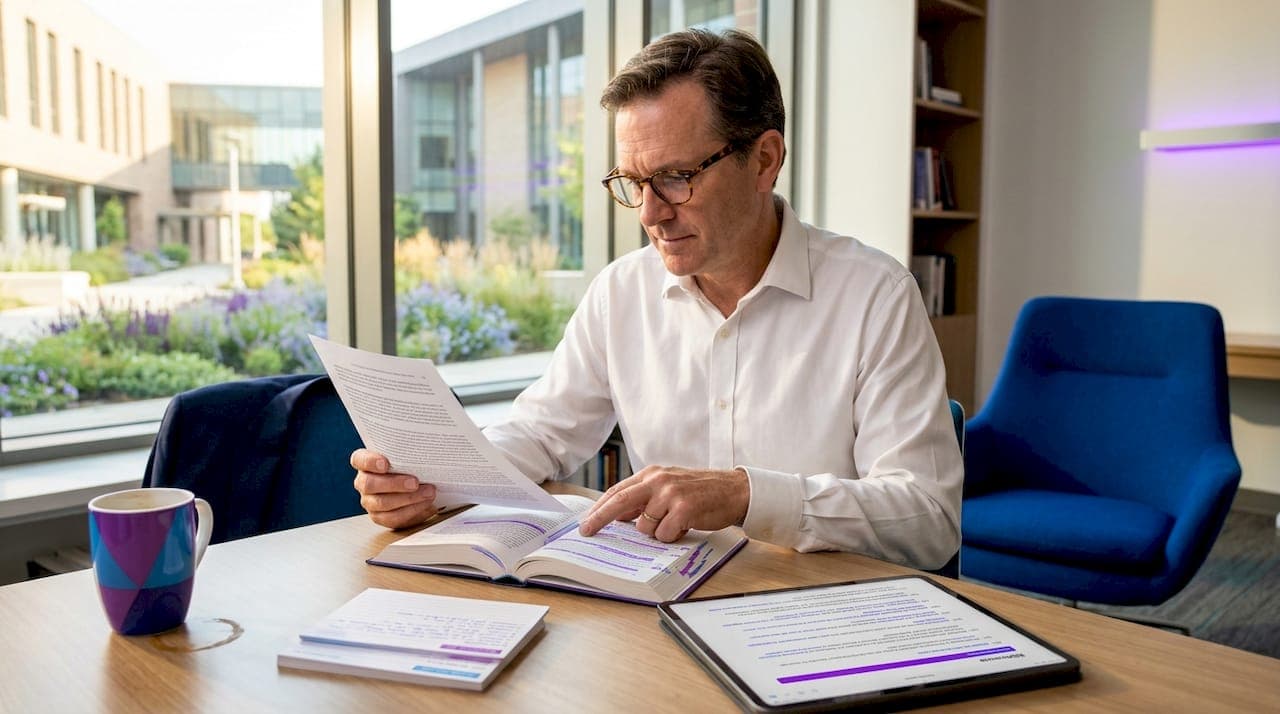
APA, MLA, Chicago, IEEE. Each style exists because different academic disciplines have different priorities. Psychology and social sciences use APA because it emphasizes the date of publication, which signals how current the research is. Humanities prefer MLA because it foregrounds the author. Chicago and Turabian suit history and many professional fields where footnotes allow for richer commentary. IEEE is built for engineering and technology, where numbered in-text references keep prose clean and readable.
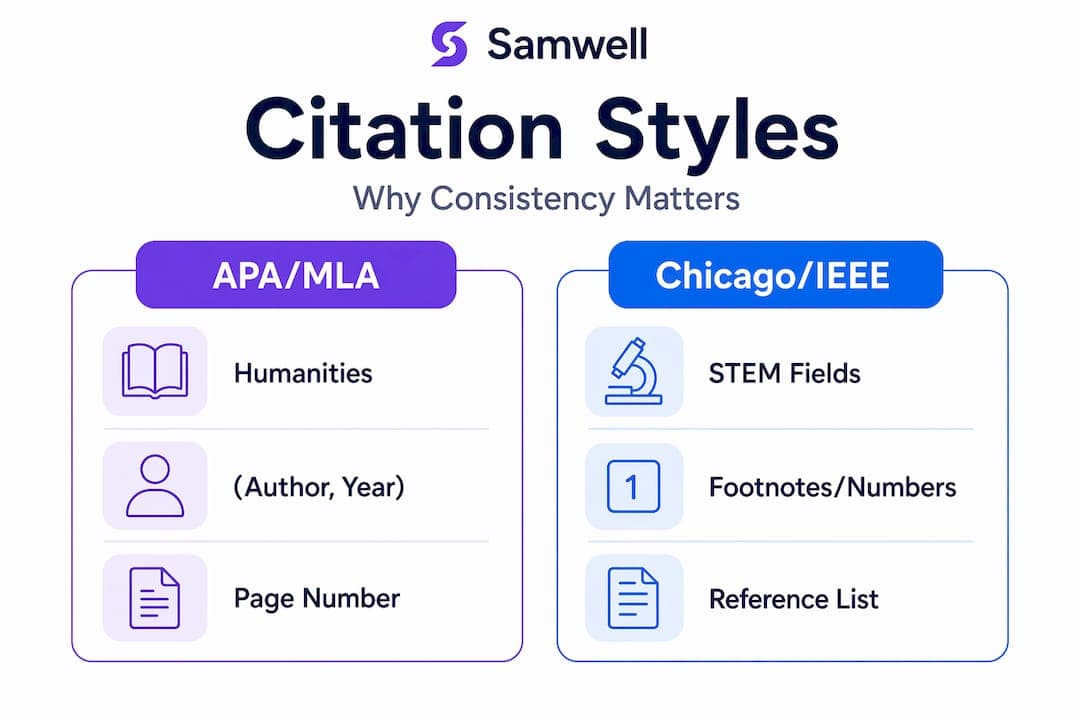
Here is a quick reference for where each style is most commonly used:
| Style | Disciplines | In-text format |
|---|---|---|
| APA | Psychology, education, social sciences | Author, year |
| MLA | Literature, arts, humanities | Author, page |
| Chicago/Turabian | History, theology, business | Footnotes or author, date |
| IEEE | Engineering, computer science | Numbered references |
Choosing the wrong style for your discipline signals unfamiliarity with your field. Using the right style inconsistently is almost as bad. Citation style consistency enhances readability and professionalism, and ignoring the guidelines leads to predictable negative outcomes in peer review.
Pro Tip: Always check your target journal's author guidelines before you start writing. Some journals have house styles that override standard APA or MLA rules, and retrofitting your citations late in the process wastes significant time.
Modern research faces a problem that barely existed five years ago. AI tools can generate plausible-looking references that point to papers that do not exist. The metadata looks correct, the formatting is impeccable, but the source is fiction. And it is working. Papers with 3 or more AI-generated citations have a 78% higher chance of passing peer review, largely because reviewers only spot-check a handful of references.
Protecting yourself requires understanding the difference between the tools available to you. A plagiarism checker scans your prose for copied text. A citation checker validates whether your sources actually exist and whether your formatting is correct. These are distinct verification tools, and you need both.
Here is a practical verification process you can follow for every paper:
Pro Tip: When using AI writing assistants, always paste any generated citations into Google Scholar or your library database before including them. A citation that cannot be found is worse than no citation at all.
Knowing why citation standards matter is the start. Applying them consistently under deadline pressure is the real skill. The role of citations in research depends entirely on whether researchers actually follow through on the details.
The following practices will serve you well across every paper you write:
The benefits of citation styles go beyond technical compliance. When your citations are accurate, you can defend every claim in your paper with confidence, which changes how you write and how your work reads to others.
I have read through a lot of academic writing, and the papers that struggle are rarely the ones with weak arguments. They are the papers where the author clearly knew the material but treated citation as an afterthought.
What I have seen repeatedly is this: reviewers are pattern-matchers. A single wrong publication year in a high-profile reference, or an author name slightly misspelled, triggers skepticism about everything downstream. The reader does not consciously decide to distrust you. They just slow down and scrutinize more. That shift in reader posture can kill an otherwise strong paper.
My experience is that students who treat citations seriously from the beginning of their academic careers build something more valuable than accurate reference lists. They build a habit of intellectual accountability. They verify what they believe. They distinguish between what they know and what they borrowed. That habit shows up everywhere: in how they write, how they argue, and how their peers and supervisors perceive their work.
The AI fabrication problem makes this more urgent, not less. When fake citations can look perfect, the only defense is knowing how to verify what is real. I think citation diligence is one of the underrated markers of academic professionalism, and the researchers who take it seriously early will be the ones who earn trust over a career.
— Tilen
Keeping citations accurate across a long research paper while managing style requirements, in-text matches, and verification is genuinely demanding. Samwell is built to take on the mechanical weight of that process so you can focus on the thinking.
With Samwell's plagiarism-free AI essays tool, you can generate well-structured academic papers that comply with APA, MLA, and other major citation formats from the start. The platform uses Semihuman.ai technology to minimize plagiarism risks and supports over a million students and academics from leading universities. Whether you need a structured outline through Guided Essays or precision edits through the Power Editor, Samwell makes citation-compliant writing far less painful. You provide the sources and instructions. Samwell handles the structure and formatting with accuracy built in.
Following citation standards protects your intellectual honesty, prevents plagiarism, and allows readers to verify your sources. Errors in citations are a leading reason for desk rejections in peer-reviewed journals.
Using the wrong style or applying it inconsistently signals unfamiliarity with your field and can lead to negative reviewer impressions. Some journals will reject submissions outright if the citation format does not match their guidelines.
Fabricated citations corrupt the scholarly record and can result in retraction, reputational damage, and institutional consequences. As of 2026, fraudulent citations have risen sixfold in a two-year period, making manual verification more critical than ever.
The most common error is a mismatch between in-text citations and the reference list, where a source appears in the text but is missing from the list or vice versa. This is a primary red flag for editors evaluating manuscript quality.
No. Citation software handles approximately 90% of formatting work, but authors must manually verify the remaining details. Metadata imported from databases often contains errors that automated tools do not catch.