
Loading...

An informative essay's thesis is one sentence that names your topic and previews the specific points, or facets, your essay will cover, without arguing for an opinion. It sits at the end of your introduction, right after the hook and context. A working formula: "[Topic] involves [facet 1], [facet 2], and [facet 3]." That's it. Everything else in your essay exists to support that single sentence.
TL;DR:
- A clear, focused thesis must name the topic and outline three specific facets to support the essay’s structure.
- Each identified facet should correspond to a separate paragraph and be narrow enough to research thoroughly within the length constraints.
- The thesis should be neutral, explanatory, and avoid opinion or argumentative language to effectively set the essay’s informative tone.
- It is recommended to revise the thesis multiple times, ensuring each facet is supported with evidence and aligns with the essay’s actual content.
- Testing the thesis for focus, significance, and doability helps prevent it from being too broad, vague, or unsupported with available sources.
An informative thesis explains. An argumentative thesis persuades. That's the entire difference, and it's the one most students get wrong on the first draft.
If your thesis invites someone to say "I disagree," it's not informative anymore. Purdue OWL frames the informative version as one that organizes and explains a subject rather than pushing a stance the reader could push back on. Compare "Remote work should replace the traditional office" (argumentative, arguable) with "Remote work has reshaped hiring practices, office real estate, and employee scheduling" (informative, explanatory). Same general subject, completely different job.
Here's what trips people up: an informative thesis still needs an angle. It can't just be a topic label like "This essay is about the French Revolution." A real thesis:
Drop the thesis, and a reader has no way to predict what's coming next.
The most reliable structure for an informative essay thesis is Topic + Road Map: name the subject, then list the key points you'll discuss. RRCC's writing guide gives a clean model of this: "To fully understand hip-hop culture, it is important to consider its origins in break dancing, deejaying, and emceeing." One sentence, three facets, three implied body paragraphs.
You can build this two ways:
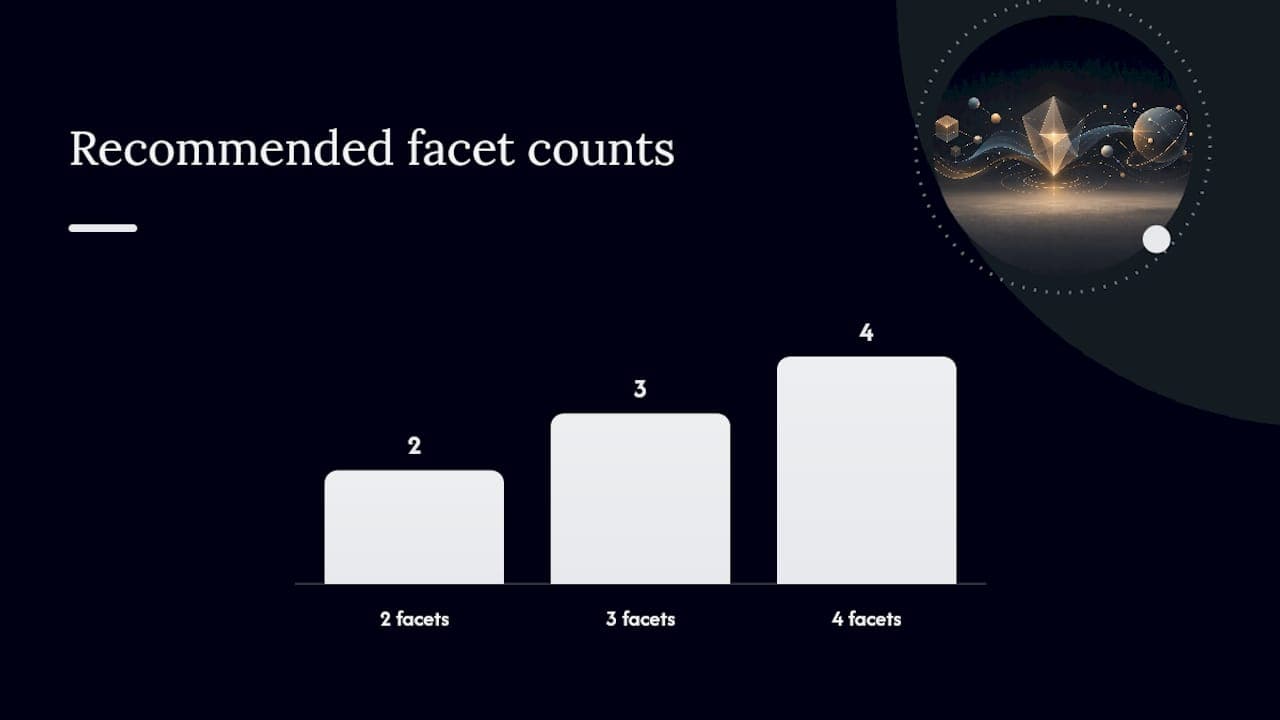
Each facet you name should correspond to roughly one body paragraph. If you list four facets, plan on four paragraphs of real support, not four throwaway lines. Most informative essays work best with two to four facets. More than that, and either your paragraphs get shallow or your thesis turns into a run-on list nobody can track.
Pro Tip: Count your facets before you write a single body paragraph. If you can't picture what evidence goes under each one, you have too many, or one is too vague to support on its own.
Building a thesis for essays doesn't happen in one shot. It happens in passes. Here's the sequence that actually works:
That draft is a working thesis, not a finished one. The Gateway LibGuides ENG 101 resource recommends treating it exactly that way: a placeholder that anchors your research early, which you're expected to revise as your understanding deepens. Write your body paragraphs, then come back and adjust the thesis so it matches what you actually argued, not what you guessed you'd argue three drafts ago.
Pro Tip: Print your working thesis on a sticky note and leave it next to your keyboard. Every time you finish a body paragraph, glance at it and ask: does this paragraph still match a facet listed there? If not, revise one or the other.

Seeing the formula in action makes it click faster than any explanation. Each of these pairs a topic with facets that map cleanly to body paragraphs.
Notice what's absent from all five: no "should," no "best," no arguable claim. Just a topic and a clear preview of what's coming, which is exactly what distinguishes a working thesis from a persuasive one.
Most weak informative thesis statements fail for one of four reasons: they're too broad to cover in the assigned length, they sneak in an opinion disguised as a fact, they read like a topic sentence for one paragraph instead of a road map for the whole essay, or they cram in five or six facets nobody can support with real depth.
The UMGC Writing Center recommends running every draft through three quick tests before you commit to it:
A thesis that fails focus might read "Technology has changed the world." Fixed for focus: "Smartphone adoption has changed how teenagers communicate, study, and sleep." Same energy, real boundaries. If a topic won't compress into one clean sentence, that's usually a sign it's too broad and needs narrowing before you draft anything else.
Testing a thesis against three criteria is easier with a second pair of eyes, even a digital one. Guided essay tools can help you structure an outline around your facets, and editing features let you expand or tighten a thesis sentence without starting the whole introduction over. Try this: draft a working thesis, run one revision pass through Guided Essays, then compare both versions side by side to see what got sharper.
This piece was written by Tilen for Samwell's writing resources team, drawing on standard composition guidance used across university writing centers.
Don't wait for the "perfect" sentence before you start writing body paragraphs. Draft the thesis early, write your evidence, then revise the thesis to match what you actually proved. Treat it as removable scaffolding, not a monument.
— Tilen
Samwell gives you a faster path from a rough topic to a working thesis than staring at a blank document ever will. Instead of drafting an introduction cold, you can outline your facets in Guided Essays, generate a supporting draft, and use the Power Editor to tighten or expand your thesis sentence until it passes the focus, significance, and doability tests on its own. If you're staring down a research paper and need help turning scattered notes into a coherent road map, the research paper generator is built for exactly that first, hardest step. Start with your topic, generate a working draft, and revise from there.
"Coral reef ecosystems depend on symbiotic algae, stable water temperatures, and low pollution levels" is one example: it names a topic and previews three facets without arguing a position.
Yes. Every informative essay needs a thesis at the end of the introduction to preview what the body paragraphs will cover, even though the tone stays neutral rather than persuasive.
The three main parts are the introduction (hook, context, thesis), body paragraphs (one per facet named in the thesis), and a conclusion that reinforces the main idea.
A three-point thesis names a topic and three facets in one sentence, such as "The printing press changed information access, literacy rates, and the spread of political ideas," with each facet mapped to its own body paragraph.
A thesis organizes the entire essay and appears in the introduction, while a topic sentence organizes a single paragraph and appears at that paragraph's start.



