
Loading...

Before you buy a term paper from any service, compare five things: price, turnaround time, originality guarantee, revision and refund terms, and how the provider handles your data. We built Samwell.ai as an integrity-first alternative that gives you guided drafts, real-time originality checks, and editing tools instead of a finished paper you can't defend. This guide walks through what to compare, what the risks are, and how to protect yourself either way.
TL;DR:
- Before paying beyond a deposit, get the similarity tool, revision window, refund conditions, writer credentials, and data deletion policy in writing.
- Pay by card through a standard processor; wire transfers, cryptocurrency, and gift cards can leave you with little recourse if a dispute arises.
- A clean similarity score does not rule out detection: instructors may compare vocabulary, reasoning, and style with your coursework, drafts, and exams.
- Penalties can include failing grades, permanent academic record notations, or expulsion, especially in professionally accredited programs such as nursing and law.
- Choose an outline, editable draft, or annotated sources instead of a finished submission, so you can revise the argument and explain it if questioned.
Most paper-selling sites follow a similar process, and knowing the steps helps you spot where things go wrong.
Sites commonly advertise claims like "100% custom-written," "plagiarism-free," and "24/7 support." In practice, "custom-written" can mean a paper assembled from recycled research rather than written from scratch, and "plagiarism-free" usually refers only to a single similarity-checker score rather than a guarantee against detection methods that look at writing style. Support availability varies widely: some sites route every message through a dashboard with slow replies, others let you message a writer directly.
Watch for these red flags during ordering:
A transparent provider tells you who is writing your paper, how they check originality, and what happens if you're not satisfied. If a site can't answer those questions clearly before you pay, that's information in itself.
Once you've seen how the ordering process works, compare providers against a fixed checklist rather than judging them on marketing copy alone.
Request these details in writing before paying anything beyond a deposit. A provider that won't commit to revision windows or refund criteria in writing is telling you how disputes will likely go.
Pro Tip: Ask for the similarity report method by name (for example, which checker is used) rather than accepting a flat "0% plagiarism" claim at face value.
Payment safety deserves particular attention. Services that only accept wire transfers, cryptocurrency, or gift cards offer you little recourse if something goes wrong, while card payments through a standard processor at least give you a dispute path.
Prices for purchased term papers vary by academic level, deadline, and length, and understanding the drivers helps you budget and avoid offers that are too cheap to be real. High school and introductory undergraduate papers typically sit at the lower end of the market, upper-level undergraduate work costs more, and graduate or specialized papers (requiring primary research or technical expertise) sit at the top. Rush orders, sometimes due in under 24 hours, carry a premium on top of the base rate, and that premium tends to grow the shorter the window gets.
Add-ons that commonly raise the price include:
You can lower your cost legitimately without cutting corners on quality:
An essay-mill sector report has documented pricing models where simple assignments are offered at very low fixed amounts, often a sign of resold or outsourced work rather than original writing. Prices that undercut the rest of the market by a wide margin are worth treating with skepticism rather than relief.
A "plagiarism-free" guarantee usually refers to a text-similarity score from a tool like Turnitin, which flags matching strings of text against a database. That's different from contract-cheating detection, which looks at whether the writing style, vocabulary, and reasoning match what an instructor has seen from you in class, in drafts, or in exams. Linguistic fingerprint research shows that analyzing a student's writing patterns alongside assessor familiarity can identify submissions that don't match a student's own voice, even when the similarity score comes back clean.
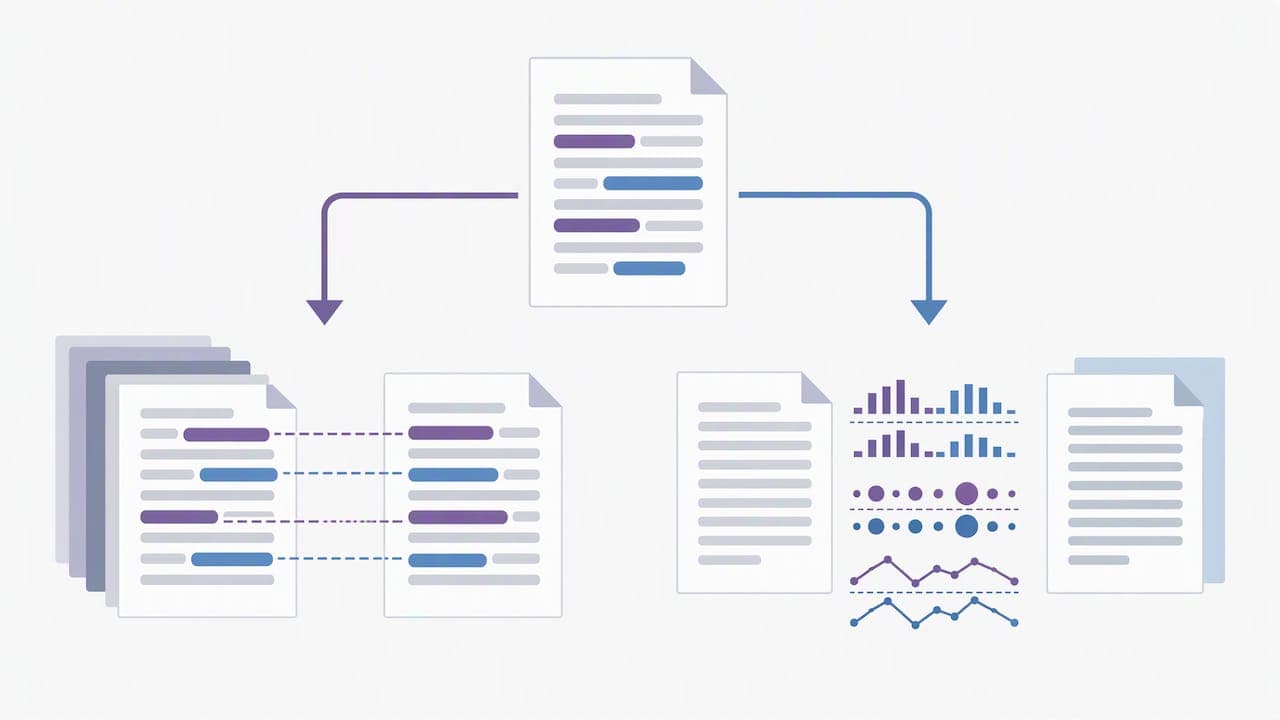
A uniquely written paper can still read as inconsistent with your other coursework, your in-class writing, or your known skill level, and instructors increasingly use that inconsistency as a starting point for further scrutiny.
Consequences for using purchased work can be severe. Guidance on academic integrity outlines penalties ranging from a failing grade to a permanent notation on academic records to expulsion, with especially serious consequences in professionally accredited programs like nursing or law.
Key points to weigh:
If you're weighing whether to buy a paper, a short set of safeguards reduces both academic and personal risk.
Pro Tip: Save every written exchange with a provider, including order confirmations and chat logs. If a dispute arises over quality or refunds, that record is your only leverage.
Contract-cheating sector reports document cases where personal data was stored with minimal protection, creating extortion risk after the initial purchase. Reducing your exposure means limiting how much personal information you hand over and avoiding sites that require account creation with sensitive identifiers.
If you want to preserve the learning value of the assignment, request an editable draft, an outline, or annotated sources instead of a finished paper you submit untouched. That approach lets you actually engage with the material and adapt it in your own words. Working from a reflection paper format guide or similar structural resource can help you shape a draft into something you understand and can defend if asked about it later.
Our platform offers this workflow directly: guided essay structures, a citation builder, and an editor built for revising your own drafts rather than replacing them.
We built our platform around the idea that academic help should strengthen your work, not replace your understanding of it. Each feature maps to a specific buyer priority from the checklist above.
These tools are built on our Semihuman.ai technology, aimed at reducing plagiarism risk while keeping content aligned with academic standards.
Across comparison discussions and student forums, the recurring theme isn't which service writes the "best" paper. It's which approach leaves students able to explain and defend their own work under questioning, revise confidently before a deadline, and avoid the anxiety that comes with submitting something they didn't fully write. Students who use guided drafting and editing tools tend to describe a different kind of outcome than those who buy a finished paper outright: they report understanding the material well enough to answer follow-up questions in class or during an oral defense, which purchased, untouched papers rarely allow for.
We hear from many students and academic professionals who rely on our platform for exactly this reason: a way to produce a paper that's genuinely theirs by the time it's submitted, built with guidance rather than built for them. That distinction, between assistance and replacement, is the throughline in most positive feedback about academic writing tools, and it's the same distinction that separates a safer workflow from a risky one.
A term paper is a research-based project typically between 5 and 10 pages that presents findings and, often, argues a thesis. Some course guides recommend a similar range of 8 to 10 pages for a solid submission, though exact expectations vary by instructor and course level.
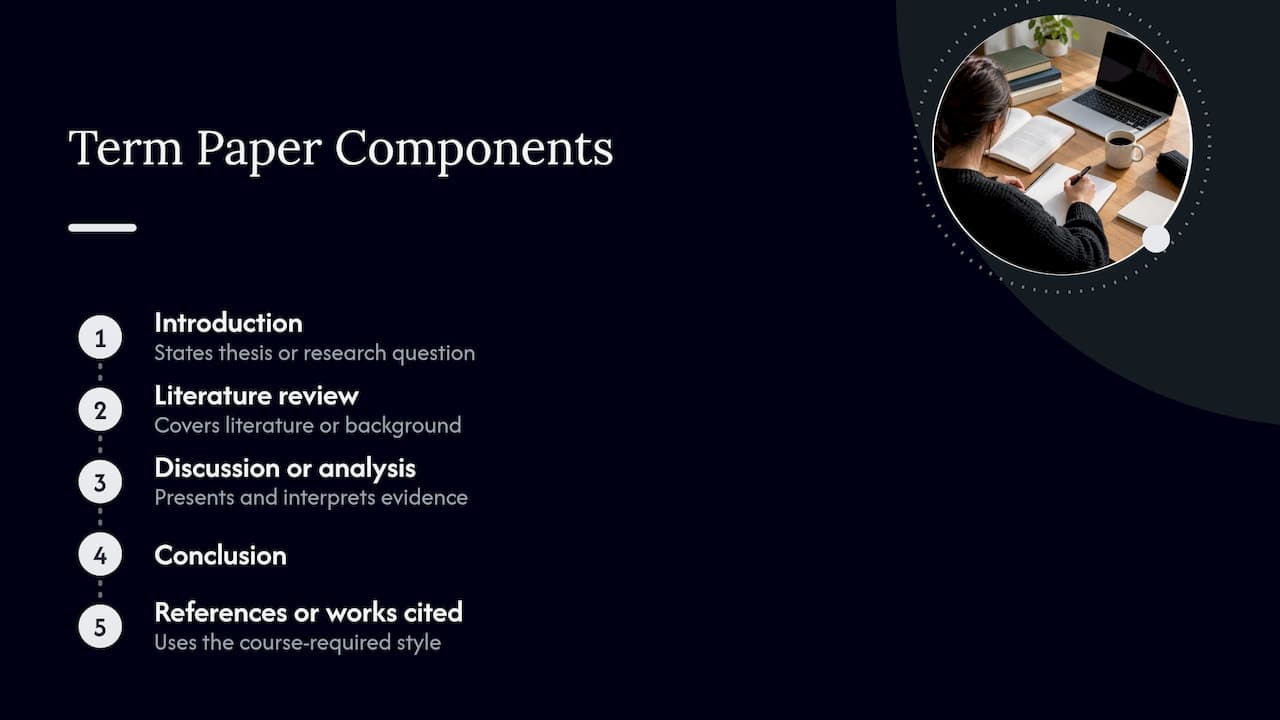
Faculty generally expect a consistent structure: an introduction that states your thesis or research question, a literature review or background section, a discussion or analysis section where you present and interpret evidence, a conclusion, and a references or works-cited page formatted in the style your course requires (APA, MLA, or another standard). Graduate-level and upper-division papers often require more original analysis and primary sources, while introductory courses may focus more on synthesizing existing research.
Formatting mistakes, like inconsistent citation styles or missing in-text references, are among the most common and most avoidable deductions on a term paper. Budgeting real time for drafting and revision (faculty advice often suggests several hours per page for upper-level work) reduces the temptation to outsource the whole process and gives you room to catch these issues yourself.
Here's where I land after looking at how these services actually operate: the real risk of buying a finished term paper isn't just getting caught. It's finishing your degree without the skills the paper was supposed to build. A guaranteed grade on one assignment doesn't help you when the next exam, the next course, or the first year of your career expects you to write and argue at that same level on your own.
If you're under deadline pressure, prioritize tools that keep you in the driver's seat: editable drafts, guided outlines, and citation accuracy, over a finished submission you'd struggle to explain if asked. That's a safer bet academically and professionally.
— Tilen
We designed our platform so you don't have to choose between meeting a deadline and doing your own academic work. Instead of a finished paper you can't fully stand behind, you get a guided outline, real-time originality checks, and an editor that helps you shape your own argument in your own words.

Check the Academic Plan and Custom Professional Plans for extended word limits and advanced editing features when you're ready for more support; pricing details are available on the website.
A term paper is a research-based project written over an academic term that presents findings on a topic and often argues a specific thesis. It typically includes an introduction, a review of existing research, an analysis section, a conclusion, and a formatted reference list.
Term papers are sometimes called research papers or research essays, depending on the course and institution. The expected structure, research grounded, with a thesis and formal citations, stays largely the same across these names.
Most term papers run 5 to 10 pages, though some course guides recommend 8 to 10 pages for a fully developed paper. Exact length depends on the course level and your instructor's specific assignment guidelines.
A typical term paper opens with an introduction stating the thesis, followed by a literature review summarizing relevant research, a discussion section analyzing evidence, a conclusion, and a references page in the required citation style. This structure applies across most disciplines, though the depth of analysis expected varies by academic level.



