
Loading...

A rough draft essay is the first full attempt at your paper, written to get every idea on the page in order, not to sound polished. The single rule that matters most: chase momentum, not perfection. Skip the second-guessing, follow your outline, and start a 20 to 30 minute drafting sprint right now.
TL;DR:
- A rough draft must include a clear thesis, topic sentences, and supporting evidence, even if some elements are still placeholders or rough.
- Draft body paragraphs first in short, timed sprints to maintain momentum and avoid over-editing, saving polishing for later revision.
- Focus on the big-picture revisions such as argument clarity and structure before fine-tuning grammar and sentence wording.
- Set a minimum of five paragraphs for your draft, ensuring each contains a topic sentence and relevant supporting details, according to common guidelines.
- Trust in messy drafts as a necessary step, prioritizing completing the full argument over perfect wording to meet deadlines and facilitate effective revisions.
A rough draft is different from an outline. An outline is a skeleton of bullet points; a rough draft is that skeleton wearing actual sentences and paragraphs, even messy ones. It exists to test whether your argument holds together before you spend time polishing language that might get cut anyway.
Most instructors expect a basic structural minimum, even in a first pass. LibreTexts recommends a basic essay structure including an introduction, several body paragraphs, and a conclusion, with each body paragraph built around a topic sentence backed by facts, examples, or anecdotes. A rough draft that hits this shape is already doing its job, even with rough transitions or missing citations.
A "good enough" rough draft has these traits:
Some course platforms enforce their own submission rules for rough drafts, including word count minimums, so it is worth confirming your assignment's specific requirements against your course platform before you submit anything.
Start before you start. Prewriting, whether that means a five-minute freewrite, a mind map, or a simple list of evidence you already have, gives your brain something to work from instead of a blank page. Pick whichever method gets ideas moving fastest for you; there is no prize for using the fanciest technique.
Once you have raw material, build a skeleton outline: one thesis statement, three supporting points, and a line or two of evidence notes under each. Keep it loose. LibreTexts frames drafting as expanding that outline into full sentences, and recommends starting with whichever section you know best rather than forcing yourself to begin at the introduction.
From there, draft fast:
Pro Tip: Write the paragraph you're most confident about first, even if it's paragraph three. Momentum builds momentum, and a strong opening paragraph is easier to write once you already have proof the argument works.
Most stalled drafts share the same handful of habits, and every one of them has a fast fix.
None of these fixes require more writing skill. They require noticing the habit in the moment and choosing the faster option.
Revision works best in a fixed sequence, moving from big ideas down to small details. Reversing that order, fixing commas before you've confirmed your argument even holds together, wastes real time on sentences that might get cut in the next pass.
This sequence, idea first, then structure, then paragraph logic, then wording, reflects how experienced writers and writing centers approach revision: fix the argument before you fix the sentence. For a deeper walk-through of the first pass specifically, see how to revise an argumentative essay for ideas and structure.
Pro Tip: Step away from your draft for at least a few hours, ideally overnight, before you start revising. Reading your own writing out loud after that break exposes awkward phrasing your eyes glide past silently, and a peer reader will catch gaps you can't see because you already know what you meant to say.
Seeing a weak passage next to its fix teaches more in ten seconds than a paragraph of advice.
Annotating your own draft speeds up this kind of edit. Drop a bracketed note like [thesis too vague, needs a claim] directly next to the weak sentence while you're still in revision mode, so you don't have to re-diagnose the same problem twice. For more worked examples at this scale, browse these short essay examples for students.
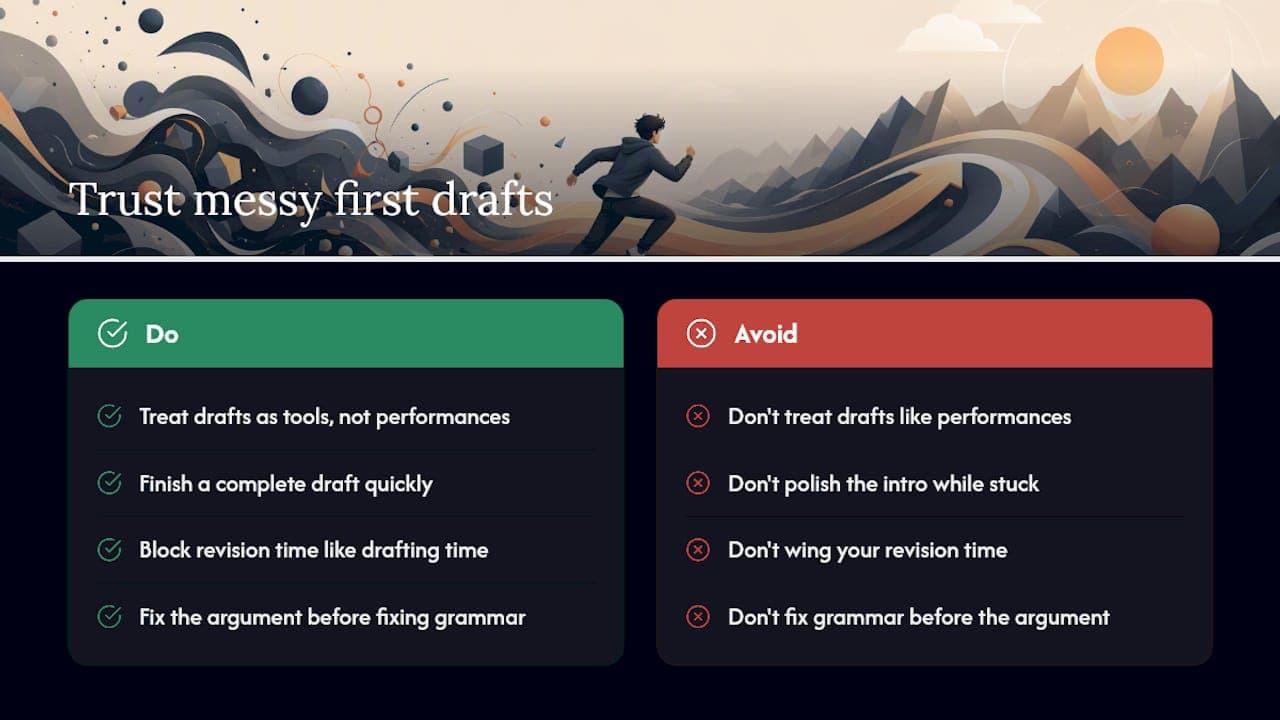
Most students treat a rough draft like a performance instead of a tool, and that's backwards. A draft's only job is to exist long enough for you to revise it. I'd rather see a clumsy full draft finished at 11 p.m. than a beautiful introduction paragraph that never made it past sentence three.
Deadlines don't care how clean your first attempt was. Budget your revision time the same way you budget drafting time: block it, don't wing it. Fix the argument before you fix the grammar, every single time.
— Tilen
This platform offers a structured way to move from outline to draft to polished paper without losing your own voice in the process.

Guided Essays builds a structured outline for you before you start writing, which solves the exact skeleton-outline step covered above. Once you have a full rough draft, the Power Editor helps with the structural and paragraph-level revision passes, expanding thin paragraphs and tightening weak transitions. The Reference Builder replaces those placeholders with real, properly formatted sources instead of leaving you to track them down one by one.
If you already have a draft sitting in a document somewhere, you can upload your existing essay and start the revision passes immediately. Otherwise, check the available plans and start with whichever level of support your current draft actually needs.
A rough draft example is a full first version of an essay with a working thesis, at least three body paragraphs each anchored by a topic sentence, and a conclusion, even if some sentences are awkward or a citation is still a placeholder. It shows the argument's full shape without polished wording. See the before-and-after examples above for what one paragraph looks like at each stage.
Prewrite first with a freewrite or simple evidence list, then build a skeleton outline with a thesis and three supporting points. Draft the body paragraphs in timeboxed 20 to 30 minute sprints, using placeholders for missing facts instead of stopping to research them.
A rough draft essay on a school policy topic might open with a working thesis like "School start times should shift later," followed by three body paragraphs on sleep research, attendance data, and academic performance, each with a topic sentence and rough supporting evidence. The conclusion restates the stakes even in a single loose sentence. Tools like Samwell's Guided Essays can generate that structure automatically if you want a starting skeleton.
A standard essay draft should contain a minimum of five paragraphs — an introduction, at least three body paragraphs, and a conclusion — and each body paragraph should include a topic sentence and supporting details, following LibreTexts' drafting guidance. Longer assignments generally add more body paragraphs, and some course platforms set their own word count minimums worth checking beforehand.



