
Loading...

Paying someone to write your research paper is technically possible, but it exposes you to academic penalties, contract cheating findings, and privacy risks that most students never anticipate. A safer path is a draft-first platform like Samwell.ai, where you control the writing, citations, and revisions yourself instead of handing your name to an anonymous third party.
TL;DR:
- University of Michigan LSA says confirmed contract cheating cases can bring a 0% grade, suspension, expulsion, or even a rescinded degree.
- Before paying, get the deadline, included revision rounds, refund terms, and data storage practices in writing; never share university logins or student IDs.
- Require an accessible similarity report, independently verifiable sources, and matching in text citations and references in your required APA, MLA, or Chicago style.
- If a seller threatens exposure, disclose the situation to your institution and seek legal or counseling support rather than paying to stay silent.
Prices for paid research paper writing vary widely based on deadline, academic level, and page count. Urgency and complexity are the two biggest price factors any service uses, with shorter deadlines and higher academic levels generally costing more per page.
Most providers price one of three ways:
What you get for that price varies just as much. A basic tier often means an unresearched draft with thin citations. A mid tier adds real sourcing and a reference list. A top tier promises a fully formatted paper with built-in revisions, though "fully formatted" is rarely verified until you receive it.
Watch for pricing red flags: a quote dramatically below the going rate for your academic level, a refund policy that is vague or hidden behind a support ticket, and any site that only advertises a "plagiarism-free guarantee" without explaining how originality is actually checked. Guidance from the University of Edinburgh notes that essay mills commonly lean on exactly this kind of guarantee while using manipulative marketing tactics, and that the guarantee itself is often unreliable.
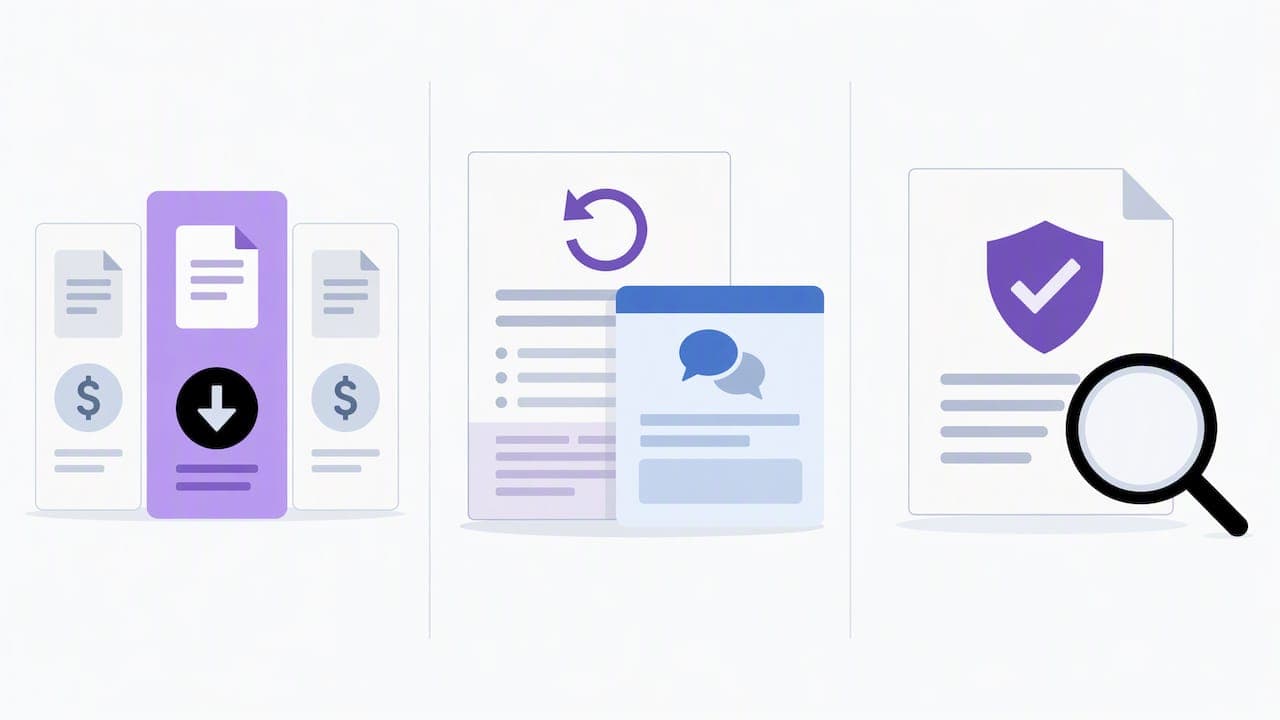
Most paid writing services follow a similar flow, and knowing the sequence helps you spot where things go wrong.
Before paying anything, confirm four things in writing: the deadline, the number of revision rounds included, the refund policy if the paper misses the brief, and how your payment and personal details are stored. Avoid any provider that asks for your university login credentials or student ID; UNSW's conduct guidance warns that sharing these credentials with a third party creates both credential compromise and legal exposure. Secure payment processing and a support channel inside the platform, rather than a personal email or messaging app, are the baseline signs of a provider that takes privacy seriously.
This is the part most ghostwriting guides skip. Paying for a research paper is not a gray area at most institutions; it is defined as contract cheating, and University of Michigan LSA's guidance states that confirmed cases can carry a 0% grade, suspension, expulsion, or even a rescinded degree.
The risks extend past grades. Arc UNSW Student Life warns that students who use these services can become blackmail targets: a third party holding your paper, your payment records, and your contact details has leverage to demand ongoing payments or threaten exposure to your school. Reused papers also get flagged more easily than students expect, since similarity-detection tools catch recycled content across submissions.
Protect yourself by requiring:
If you are already a target of blackmail tied to purchased work, UNSW's guidance notes that disclosure to your institution, with access to legal and counseling support, tends to produce a more supportive outcome than staying silent.
Whatever you pay for, hold it to a concrete standard rather than a vague promise of quality. A proper research paper includes the standard academic structure: abstract, introduction, methodology, results, discussion, and a complete reference list.
Citation compliance is non-negotiable. Specify your required style (APA, MLA, or Chicago) upfront and check that in-text citations and the reference list actually match that format, since mismatched citation styles are one of the most common quality failures in rushed orders.
Reasonable expectations to set before you pay:
A service that cannot produce a similarity report or source list on request is not one you should trust with your academic record.
Samwell.ai gives you a different route to the same end goal: a finished, properly cited research paper, except you stay the author throughout. The Guided Essays tool builds a structured outline before any writing happens, so you control the argument instead of receiving a stranger's draft cold. The Power Editor lets you expand, tighten, or rework specific sections rather than regenerating an entire paper you did not write.
For sourcing, Upload Your Resources lets you feed in your own course readings or assigned texts so the output reflects material your instructor actually assigned, and the Reference Builder formats citations in APA, MLA, and other required styles automatically. Real-time AI detection checks let you see how your draft reads before you submit it, rather than finding out after the fact.
Samwell.ai works with Semihuman.ai technology aimed at reducing plagiarism risk and serves a stated base of more than 1,000,000 students and academic professionals.
Pro Tip: Generate your outline and citations first, then write section by section with the Power Editor so the final paper reflects your own revisions, not a single unreviewed draft.
Paying a stranger to write your paper trades a short-term deadline problem for a long-term risk you cannot fully control once the file leaves your hands. My honest recommendation is to default to tools and campus resources, like writing centers, before considering any anonymous paid service. If you have already paid for a paper and are worried about exposure, disclosure to your institution tends to go better than staying quiet. Building the research and citation skills yourself, with supervised help, pays off in every course after this one.
— Tilen
If you want control over your research paper without the privacy risk of an anonymous writer, we built plans that address that need. The service includes a free plan to try the core tools before committing to anything, plans suited for students writing papers regularly, and plans designed for researchers and academics with heavier writing needs.

Start with our Research Paper tool to build a Guided Essay outline, upload your course sources, and run the citation builder before you write your first section. When you are ready for more capacity, compare plans on our upgrade page.
People who write papers professionally typically work through freelance platforms, academic writing services, or direct client arrangements, charging per page or per project. This is separate from being paid as an author for original research, which does not work the same way.
Academic publishing runs on peer review, and Springer Nature's author guidance confirms that authors are not paid for individual journal articles; some may instead pay open-access fees to publish. Paying someone to write an assignment is not related to how legitimate academic publishing works.
Prices vary by urgency, academic level, and page count, with rushed or advanced-level work commanding the highest per-page rates. Rather than fixating on a number, confirm the revision policy, refund terms, and privacy protections before paying anything.
Freelance academic writers are typically paid per page or per project rather than a fixed salary, and rates depend on the platform, subject complexity, and turnaround time. There is no standard industry salary figure for this work.
The university policies and publisher guidance cited throughout this piece outline how institutions define contract cheating, the penalties involved, and how legitimate academic publishing actually works. We gathered them here for direct verification.



