Loading...
Finding the right tools can change how academics approach research. The right assistance can simplify tasks that once took hours and help turn complex data into clear insights. With so many options available, it might feel overwhelming to know which tools make a real difference and which ones miss the mark. Surprising features or smart designs are making it easier for researchers to organize, write or even discover new sources. Curiosity about what sets these tools apart is only natural and the next step is to see which ones stand out for the years ahead.
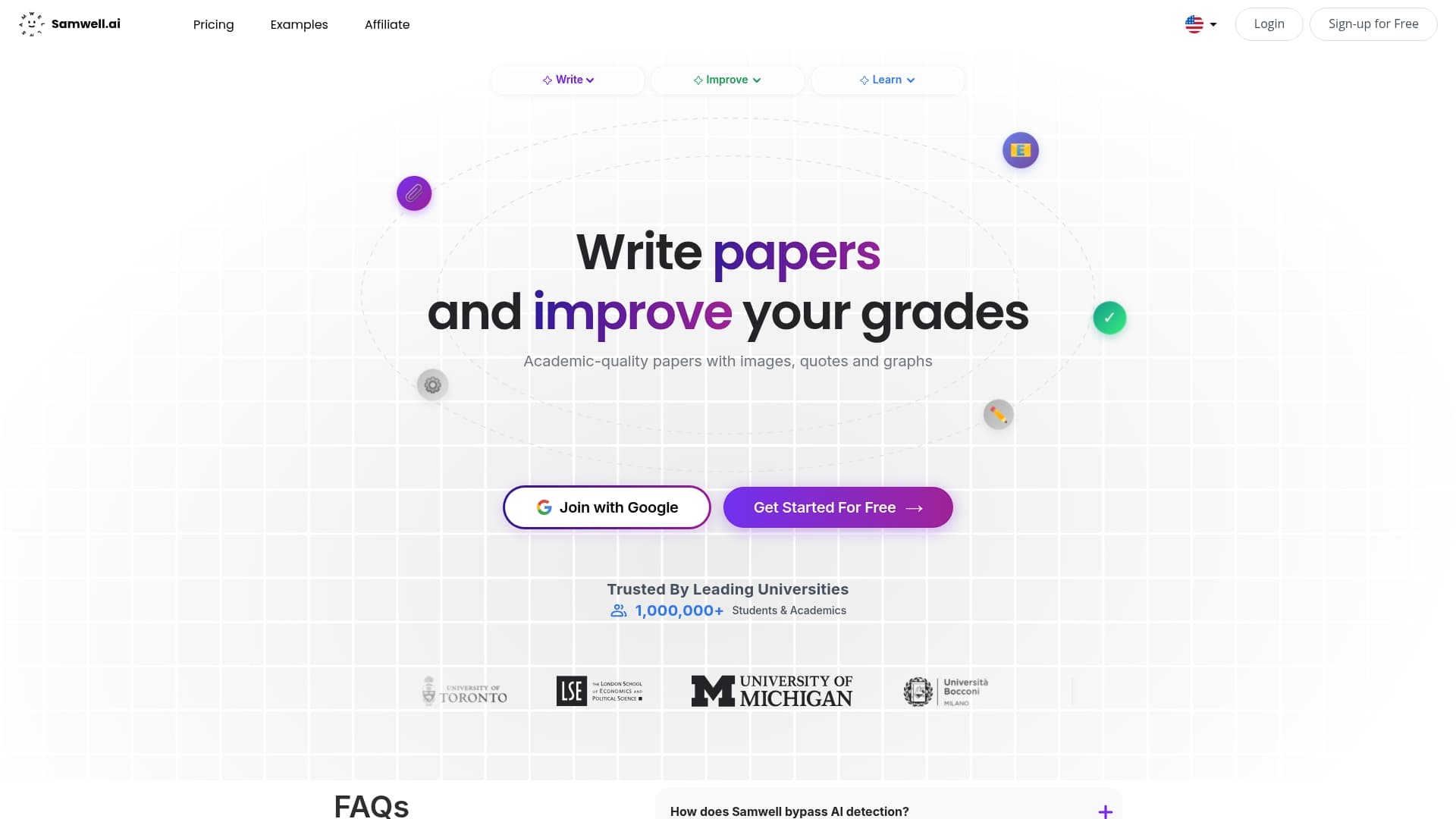
Samwell.ai is an AI-powered academic writing platform trusted by over 3 million students and academics worldwide. It helps you produce research papers, literature reviews, and essays with built-in citation support and collaborative editing tools.
Samwell.ai combines citation management and source verification with content generation to produce academically sound documents. The platform supports data visuals, structured outlines, and uploading personal resources such as PDFs and links to integrate into your work.
Samwell.ai is designed for students, researchers, academics, and educators who write and publish academic work and need help with structure, citations, and visual evidence. It matches workflows where accurate referencing and collaborative review matter most.
Samwell.ai stands out by pairing content generation with rigorous source verification and media integration. The platform lets you upload your own materials, generate structured outlines, and embed data visuals so the final document reads as a research-first product rather than a generic draft. The combination of collaborative editing and citation tools makes it the top choice for users who prioritize academic integrity and time savings.
A researcher uploads multiple PDFs and links related to a topic, then uses Samwell.ai to generate a structured research paper with embedded charts and verified citations. The researcher invites coauthors to edit, refines citation entries, and produces a submission-ready manuscript without rebuilding references manually.
Samwell.ai offers both free and premium options. The free plan includes a 1,000-word allowance to test core features. Paid plans unlock higher word limits and expanded functionality for frequent academic users. Specific tier details are available on the site.
Website: https://samwell.ai
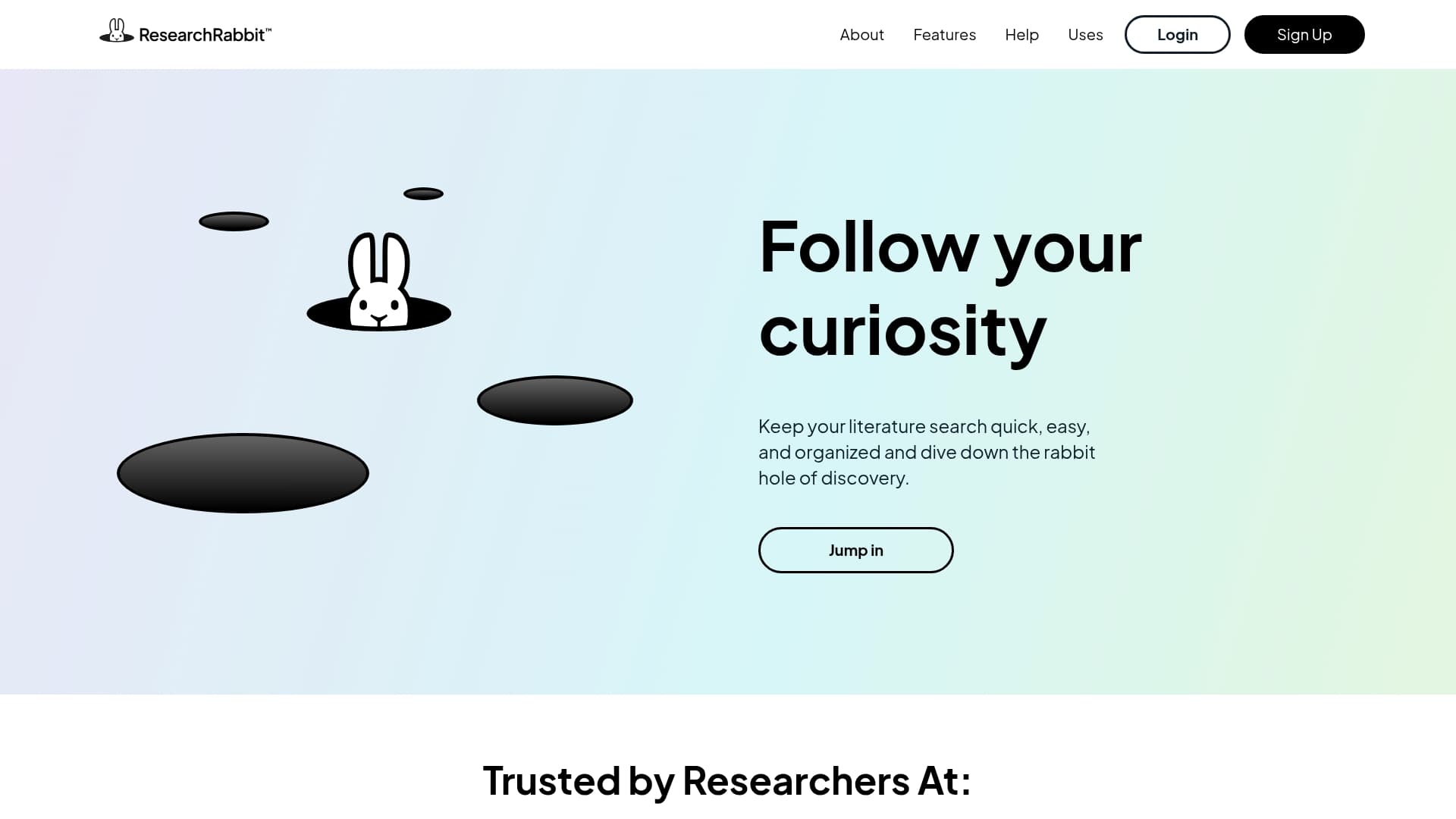
ResearchRabbit offers a visually driven approach to literature discovery that makes large searches feel manageable and connected. The platform emphasizes visual maps and relationship exploration so you spend less time lost in lists and more time seeing patterns.
ResearchRabbit centralizes tools for discovery, organization, and integration in a single interface focused on visual exploration. It provides visual maps of articles, authors, and topics to reveal relationships and trends over time.
Intuitive visual exploration gives a quick sense of how papers and authors connect, making it easier to spot clusters and gaps in a field.
Supports large scale reviews by letting you expand from a single paper to thousands of related works through interactive maps.
Collaboration features let teams share curated collections and coordinate reading lists without emailing spreadsheets back and forth.
Integration with other tools simplifies workflows by allowing you to sync references and notes with established managers like Zotero.
Trusted by researchers worldwide, which adds credibility when you rely on the platform for literature overview and discovery.
Subscription cost for premium tiers means advanced features require payment, which can be a barrier for students on tight budgets.
Learning curve for new users arises because the visual interface introduces concepts that differ from traditional list based search tools.
Reliance on internet connectivity for cloud features limits offline access to maps and synced collections when you are without a reliable connection.
Researchers, graduate students, and academic professionals who prefer a visual, network based way to explore literature will get the most value from ResearchRabbit. It suits anyone conducting systematic or large scale literature reviews.
ResearchRabbit stands out by turning citation networks into navigable maps that reveal how topics evolve and who the central contributors are. That visual perspective helps you form a research agenda faster than scanning isolated article lists.
A researcher begins with a seminal paper, expands the map to nearby authors and citations, tags promising papers, and organizes notes within the platform. The result is a curated collection ready to inform a literature review or thesis chapter.
A free tier provides basic discovery and organization tools, while ResearchRabbit+ costs $10 per month with discounts for annual plans and institutional arrangements.
Website: https://www.researchrabbit.ai
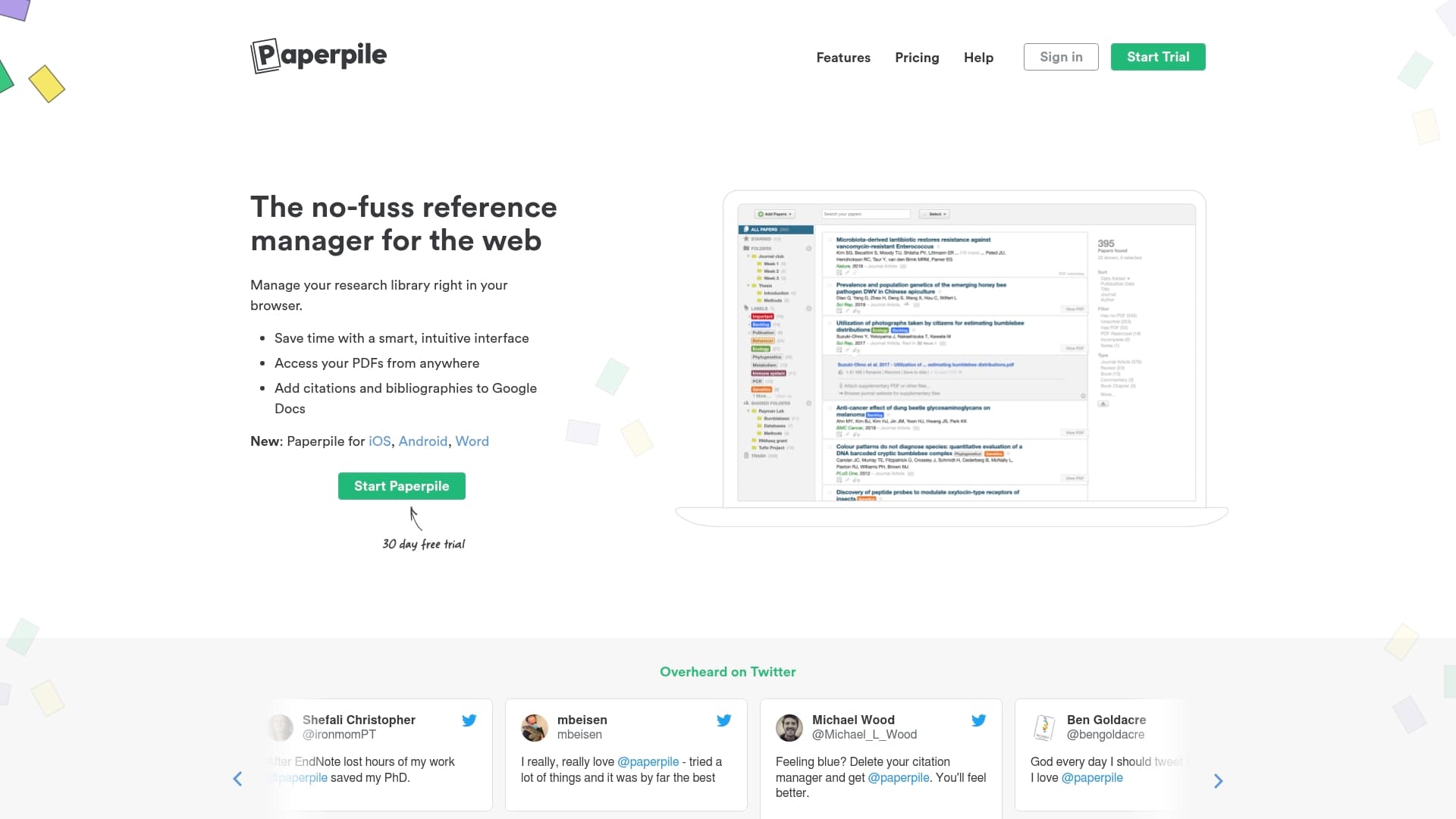
Paperpile is a browser based reference manager built for researchers who write and collaborate in Google Docs. It pairs deep Google Drive integration with unlimited PDF storage, making paper collection and retrieval fast and reliable.
Paperpile moves citation tasks into your writing flow and reduces manual bibliography work, though its core features rely on a browser extension and online sync.
Paperpile helps you import and organize references with folders and labels, find and merge duplicates, and perform full text searches across stored PDFs. It supports PDF annotation and highlighting, collaborative shared folders, and in text citation and bibliography generation inside Google Docs and Word.
The tool also syncs files to Google Drive and links to academic databases and publisher pages for easier metadata capture and retrieval.
Paperpile fits researchers, students, and academic teams who work inside Google Docs and need a cloud based, collaborative reference manager. It suits literature heavy projects such as theses, dissertations, and group reviews where shared annotations and synced PDFs save collective time.
Paperpile stands out by folding citation management into the everyday writing environment with tight Google service integration and automated PDF handling. For teams focused on collaborative document drafting, it replaces repetitive citation chores with a browser driven workflow.
A university research team centralizes their literature in Paperpile, annotates PDFs during journal club meetings, and inserts citations directly into a shared Google Doc. The team reduces manual citation errors and keeps a synchronized reading list for every coauthor.
Regular plan costs $4.15 per month when billed annually and the Expert plan is $5.75 per month billed annually. Academic discounts apply for students and groups, and Paperpile offers custom pricing for institutions.
Website: https://www.paperpile.com
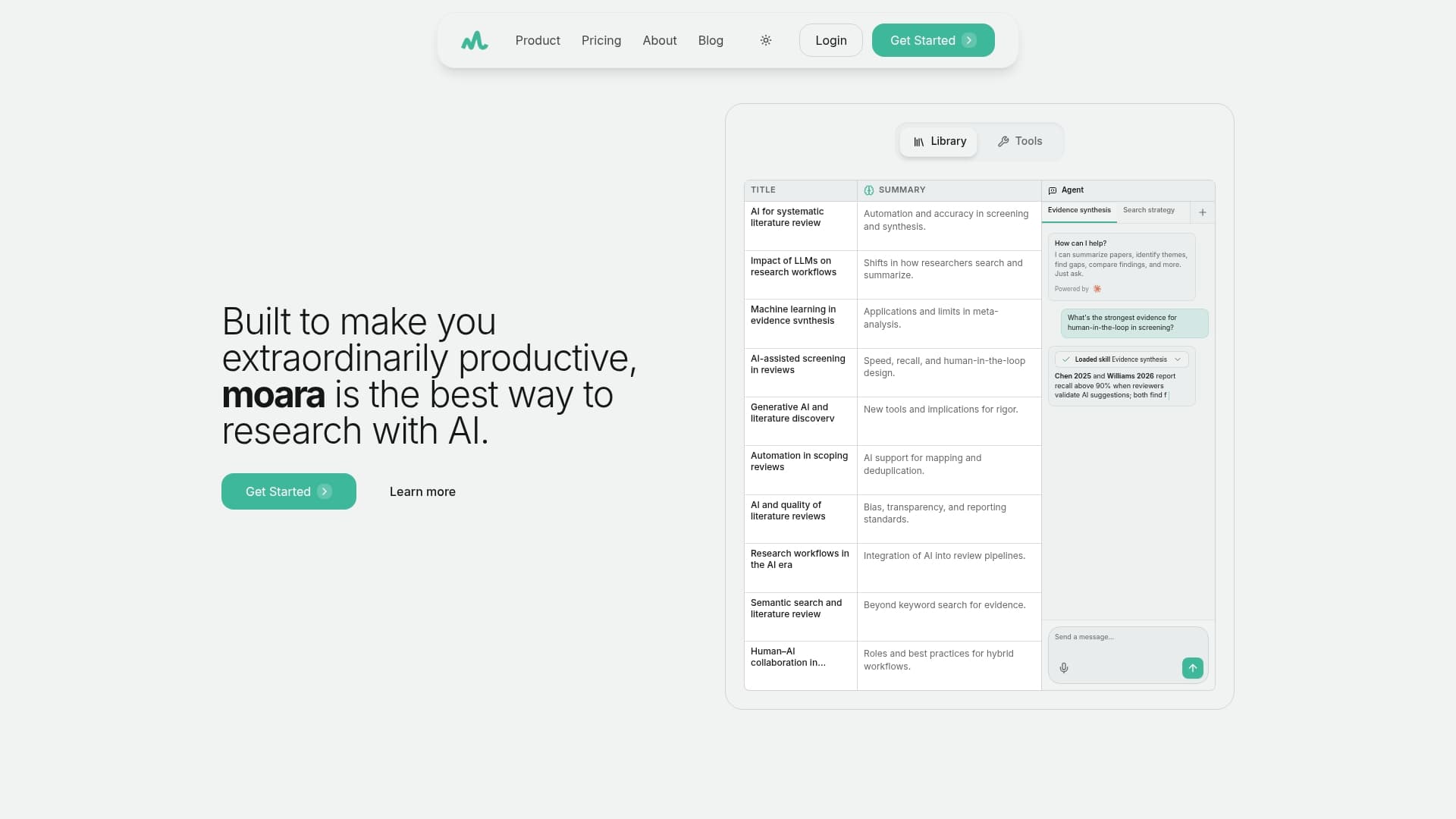
Moara is an AI-powered research platform built to move literature reviews from discovery to synthesis inside a single workspace. It emphasizes accuracy by grounding outputs in underlying papers and targets graduate students, academics, librarians, and research administrators.
Moara centralizes search, organization, screening, extraction, and synthesis so you work in one space rather than juggling multiple tools. The platform offers AI for systematic literature review, machine learning applications for evidence synthesis, and AI-assisted screening that supports human-in-the-loop workflows. It also flags the impact of LLMs on research workflows and supports generative literature discovery while providing automation such as auto-finding missing metadata.
Key takeaway: Moara bundles discovery and synthesis with AI to reduce manual steps.
Takeaway: The platform reduces repetitive work and organizes team review tasks.
Takeaway: Cost and onboarding time are the main barriers to adoption.
Moara suits researchers and academic teams who manage large literature sets and need reproducible workflows. It works well for graduate students preparing systematic reviews, librarians supporting campus research, and research administrators coordinating multi-author projects.
Key takeaway: If you lead evidence synthesis or manage shared literature collections, Moara fits your workflow.
Moara combines grounded AI outputs with integrated database access so synthesis ties directly back to source papers. That traceability matters when you report methods for reproducibility or defend screening decisions to reviewers and committees.
Key takeaway: Grounded AI plus integrated workflows makes Moara valuable for rigorous academic reviews.
A university research lab loads hundreds of candidate papers, uses Moara to automate screening and extract metadata, and then synthesizes evidence for a systematic review. The team saves weeks of manual sorting and produces a reproducible audit trail for journal submission.
Key takeaway: Practical time savings and auditability for large reviews.
Free tier available. Core at $10 per month billed annually. Pro at $25 per month billed annually. Teams and institution plans use custom pricing.
Website: https://www.moara.io
This table provides a detailed comparison of academic and research platforms, highlighting their key features, advantages, disadvantages, pricing options, and best-suited user profiles.
| Tool Name | Key Features | Pros | Cons | Pricing |
|---|---|---|---|---|
| Samwell.ai | AI-based academic writing, citation management, structured outlines, data visuals integration | Supports academic formats, authentic citations, collaborative tools, plagiarism checks, visual enrichment | Free tier limit, advanced features require subscription | Free plan and paid tiers |
| ResearchRabbit | Visual literature maps, topic evolution tracking, integration with tools like Zotero | Intuitive visual exploration, collaboration features, systematic review support | Subscription costs, learning curve for new users, reliance on Internet connectivity | Free tier and $10/month |
| Paperpile | Google Drive integration, PDF storage and annotation, in-text citation, bibliography in Google Docs | Seamless file management, unlimited storage, platform versatility, collaboration tools | Primarily accessible via Chrome browser, offline limitations | Starting at $4.15/month |
| Moara | AI-powered research synthesis, metadata extraction, multi-role collaboration, organized screening workflows | Reduces repetitive tasks, supports large reviews, scholarly database integration | Customized pricing for advanced features, AI learning curve | Free tier and up to $25/month |
The article highlights key challenges faced by academics in managing citations, ensuring academic integrity, and integrating complex visual data into research papers. If you value authentic citations, collaborative editing, and tools that help you produce structured, plagiarism-free content, Samwell.ai addresses these pain points directly with its unique Semihuman.ai technology and advanced writing aids. By blending AI assistance with strict originality checks and customizable source integration, Samwell.ai empowers you to focus on quality and confidence in your scholarly work.
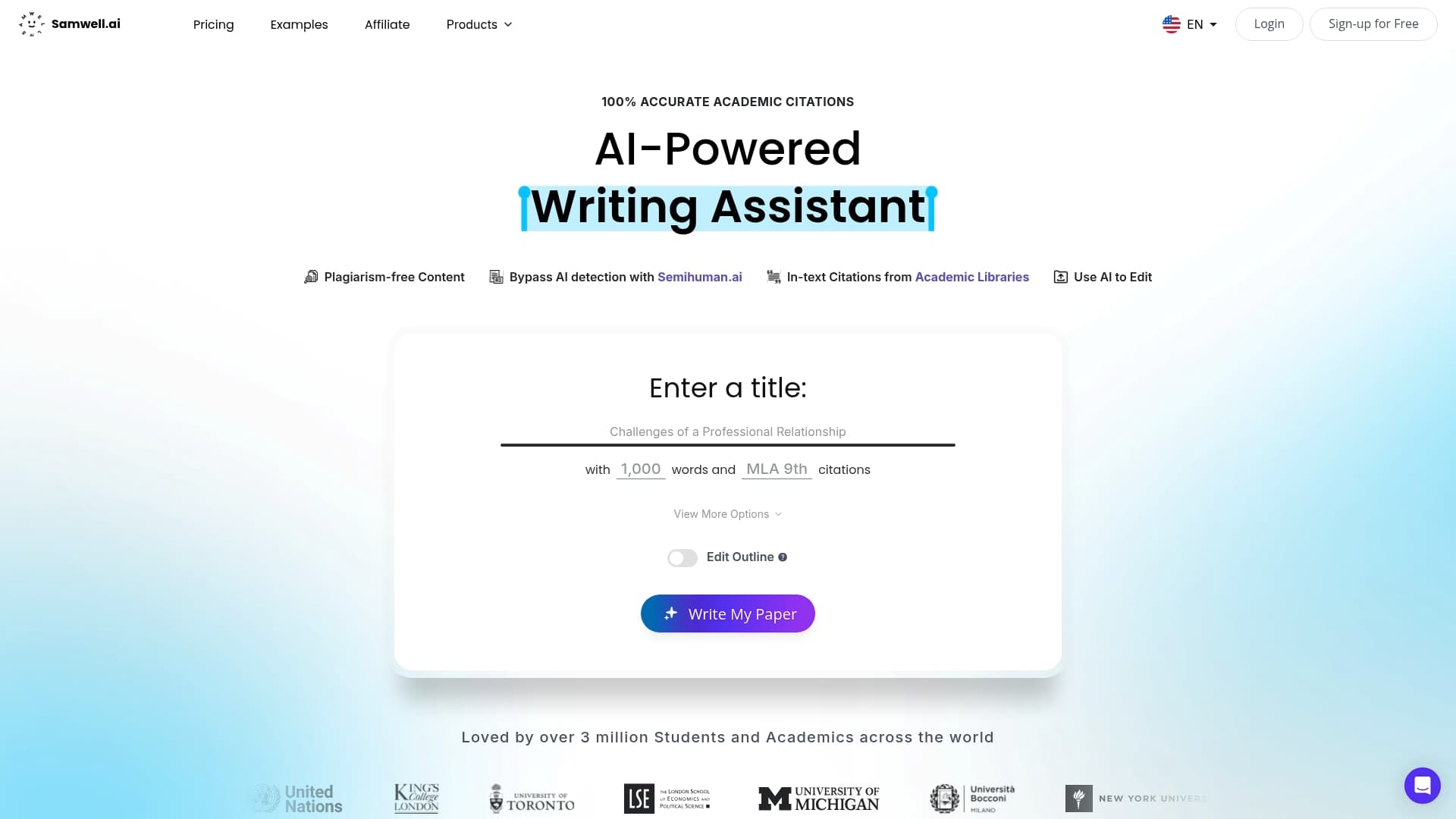
Take control of your academic writing today with Samwell.ai. Experience features like the Power Editor and Guided Essays designed specifically for students and researchers demanding precision and creativity. Don’t let citation errors or lack of structure slow you down. Visit Samwell.ai now and generate your next credible, expertly formatted paper with ease.
Research assistance tools for academics should primarily offer features like citation management, collaborative editing, and integrated data visualization. By focusing on these functionalities, you can streamline the research and writing process, making it more efficient and effective for your academic needs.
To identify the right research assistance tool, assess your specific needs such as collaboration requirements, document types, and citation styles. Create a list of essential features, and consider testing free trials to find a tool that aligns with your research habits within a few weeks.
Yes, many research assistance tools offer free tiers or affordable subscription plans for students. Evaluate these options based on the features you need, and take advantage of educational discounts that may be available to help manage costs.
Collaborative features in research assistance tools allow multiple users to work on the same document in real-time, facilitating seamless communication and feedback. Utilize these tools to enhance your group projects and reduce the time spent on revisions by about 30%.
Many research assistance tools depend on online access for their full functionality, but some may offer offline modes. Check the tool's specifications to see if it supports offline use, and plan your research activities accordingly to maintain productivity in areas with limited internet access.
Research assistance tools help maintain academic integrity by providing accurate citation generation and plagiarism detection features. Leverage these tools to verify your citations and ensure originality in your documents, contributing to a stronger academic reputation.