Loading...

Writing your UCAS personal statement can feel like staring at a blank page with no clear direction. The new 2026 UCAS format changes this by dividing your statement into three distinct questions totaling 4000 characters. This article walks you through crafting compelling responses with concrete examples and strategies that boost your chances of standing out.
| Point | Details |
|---|---|
| New format requires three answers | Each question needs minimum 350 characters, addressing motivation, preparation, and experience. |
| Strong statements connect all elements | Link your motivation, qualifications, and activities clearly to your chosen course. |
| Tailoring boosts success rates | Course-specific content and super-curricular activities increase interview chances by approximately 35%. |
| Avoid generic approaches | Vague statements without evidence reduce your admission prospects significantly. |
The 2026 UCAS personal statement replaces the traditional essay with a structured approach. You'll answer three specific questions instead of writing a continuous narrative.
Here's what you need to know about the structure:
Each response must contain at least 350 characters. Your total statement cannot exceed 4000 characters across all three answers. This format helps you organize your thoughts and ensures admissions tutors quickly find the information they need. The structured approach reduces the stress of figuring out how to begin and what to include.
This change benefits applicants who struggled with the open-ended essay format. You now have clear prompts guiding your content while maintaining the freedom to showcase your personality and experiences.
Admissions tutors evaluate personal statements to understand your motivation and suitability beyond grades. They want to see genuine passion backed by evidence.
Focus on these critical elements:
Authenticity matters more than impressive vocabulary. Tutors can spot generic statements immediately. Your examples should be specific enough that another applicant couldn't use them.
Pro Tip: Replace every vague claim with a concrete example. Instead of "I'm passionate about biology," write "Volunteering at the marine conservation center showed me how coastal ecosystems respond to pollution."
Your statement should demonstrate critical thinking about your chosen field. Show you understand what the course involves and how your experiences have prepared you. Strong personal statements reflect careful thought about course fit rather than simply listing achievements.
The three-question format guides you through presenting motivation, preparation, and experience systematically.
Question 1: Why do you want to study this course?
Start with a specific moment or experience that sparked your interest. Avoid generic statements like "I've always been interested." Connect your motivation to particular aspects of the course content. Explain what excites you about the subject and how it aligns with your intellectual curiosity.
Question 2: How have your qualifications and studies prepared you?
Link specific subjects, projects, or coursework to skills needed for your chosen course. Reference particular topics you've studied that relate directly to university-level content. Mention research projects, extended essays, or independent study demonstrating your readiness.
Question 3: What else have you done to prepare outside education?
Highlight activities showing relevant skills and deepening your understanding:
Effective statements connect these elements logically. Each answer should reference the others, creating a cohesive narrative. Your extracurricular section shouldn't feel disconnected from your academic interests.
Pro Tip: Use your character count wisely. Aim for 400-500 characters per question to stay well above minimums while leaving room for polish. Draft longer answers first, then trim ruthlessly.
Think about structuring your motivation around specific examples rather than abstract qualities. This approach makes your statement memorable and credible.
Seeing real examples helps you understand how to apply these principles to your own statement.

Primary Education Example: "Working as a teaching assistant at Riverside Primary revealed how children learn through structured play. I observed how Mrs. Thompson adapted phonics activities for different learning styles, sparking my interest in differentiated instruction. My psychology A-level taught me about cognitive development theories I saw applied daily in the classroom. Beyond academics, organizing the school's reading buddy program showed me the patience and creativity required in education."
Architecture Example: "Sketching historic buildings in my town led me to question how design balances function with cultural identity. My mathematics and physics studies provide the technical foundation for understanding structural principles, while art history deepened my appreciation for how architecture reflects societal values. I completed an online course in sustainable design, then applied these concepts by redesigning my school's courtyard as my extended project."
Healthcare Example: "Volunteering at a care home during the pandemic exposed me to the emotional and physical demands of healthcare work. Helping residents with daily activities taught me the importance of dignity in care. My biology and chemistry coursework prepared me scientifically, but observing physiotherapists work with stroke patients showed me how rehabilitation combines medical knowledge with interpersonal skills."
| Subject | Key Strength | Takeaway |
|---|---|---|
| Primary Education | Links observation to academic theory | Connect practical experience with coursework |
| Architecture | Demonstrates independent learning | Show initiative beyond classroom |
| Healthcare | Balances technical and interpersonal skills | Address multiple competencies |
These examples share common features:
Notice how each example answers all three questions while maintaining flow. They avoid listing activities without context. Every experience mentioned connects directly to course requirements or demonstrates relevant skills.
Explore more personal statement examples to see how different subjects require different emphases while following the same structural principles.
Many applicants make predictable mistakes that weaken their statements. Recognition helps you steer clear.
Generic motivations: "I want to study law because I'm interested in justice" tells tutors nothing. Replace with specific experiences: "Attending a mock trial revealed how evidence presentation shapes jury perception."
Achievement lists without context: Simply stating "I achieved grade 8 piano" means little. Explain: "Preparing for my grade 8 piano exam taught me discipline and how to break complex skills into manageable practice sessions."
Poor structure and character management: Running over limits or writing unbalanced answers signals poor planning. Draft each section separately and review character counts before combining.
Irrelevant extracurriculars: Including every activity dilutes your message. A pottery class might be interesting but shouldn't take space from relevant experiences unless you can connect it meaningfully.
Avoid these specific problems:
Your statement should sound like you wrote it, not like you assembled it from templates. Read it aloud to catch awkward phrasing. Better yet, have someone unfamiliar with your experiences read it to see if your points come across clearly.
Review tips for avoiding mistakes to refine your approach further. Small errors compound to create weak impressions, while careful attention to these details strengthens your entire application.
You submit one personal statement for up to five UCAS university choices. This creates a unique challenge.
Balance relevance across applications by focusing on course content rather than university-specific features. Mentioning "Oxford's tutorial system" excludes your other choices immediately. Instead, discuss aspects of the subject itself that all your chosen universities teach.
Research your university choices to find common ground:
Keep your language neutral regarding location or campus features. "I'm excited to study marine biology in a coastal setting" works only if all your choices are coastal. "I'm eager to conduct fieldwork studying marine ecosystems" applies universally.
Pro Tip: Read course descriptions for all five choices before writing. Note overlapping themes and requirements. Build your statement around these commonalities while staying specific about your motivation for the subject.
This approach prevents you from writing something too generic while avoiding content that excludes some choices. Your statement should make sense whether you're reading it as an admissions tutor at any of your selected universities.
Consider these scholarship essay strategies that apply equally to personal statements requiring broad appeal. The principle remains consistent: be specific about your interests without limiting your options unnecessarily.
Comparing traditional and 2026 formats illustrates the benefits of structured responses.
| Format | Structure | Strengths | Challenges |
|---|---|---|---|
| Pre-2026 | Continuous essay | Creative freedom | Difficult to organize, easy to ramble |
| 2026 Three Questions | Guided prompts | Clear focus, easier planning | Requires concise answers within limits |
The new format improves clarity for both applicants and admissions tutors. Course-specific tailoring combined with relevant super-curricular activities can increase interview success rates by approximately 35%.
Key implications for your approach:
The three-question format naturally guides you toward including essential elements tutors want to see. You're less likely to forget crucial components when prompted specifically.
Transferable skills from extracurricular activities deserve equal weight with academic preparation. The dedicated question for experiences outside education validates their importance in your application.
Starting with clarity about what each section should accomplish helps you write more effectively. Treat the format as a helpful framework rather than a constraint.
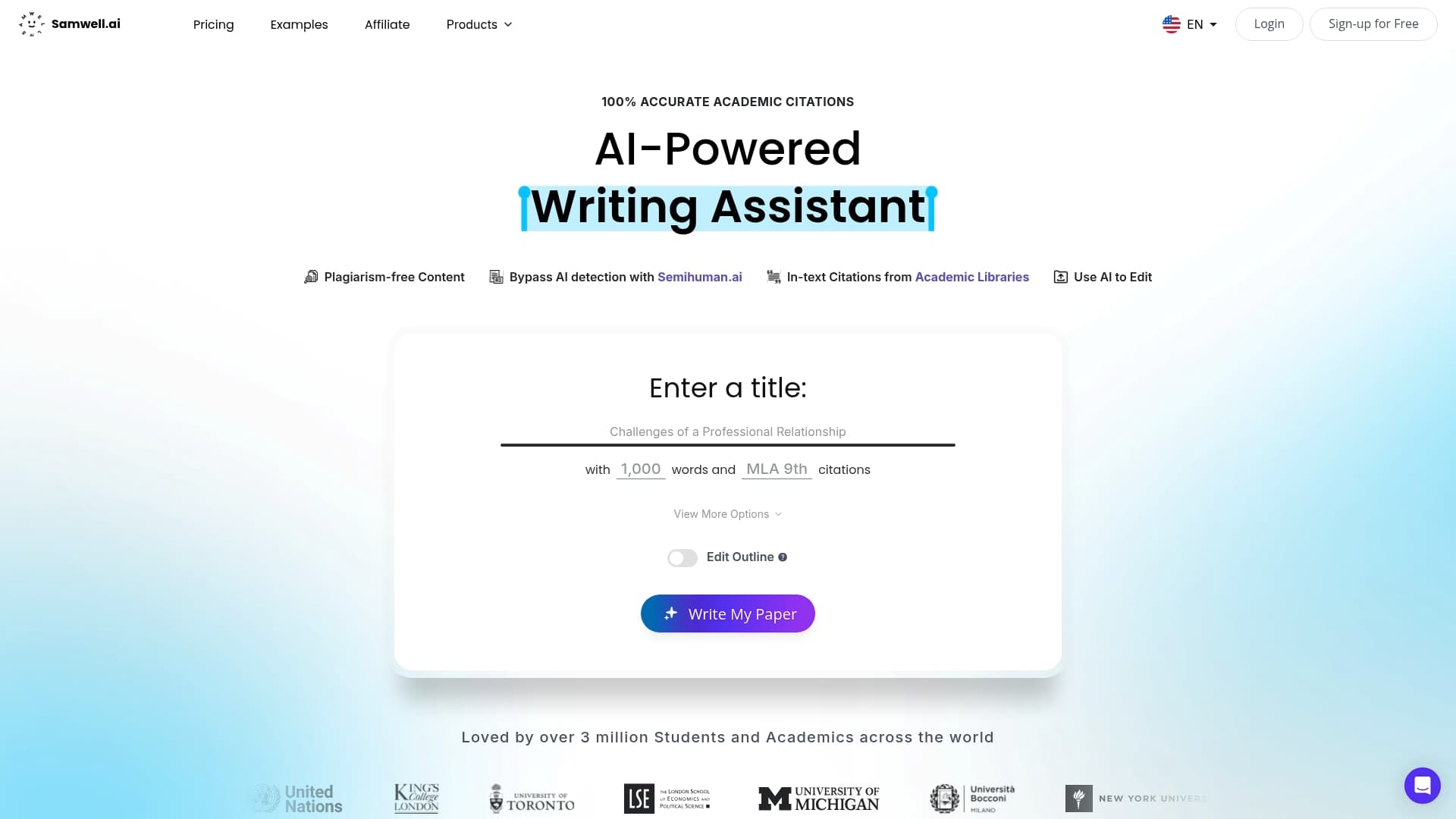
Writing a compelling personal statement challenges even strong writers. AI writing tools can help you draft, refine, and polish your responses efficiently.
Using an AI writing assistant helps overcome writer's block by generating initial drafts you can personalize. These tools identify grammar issues, suggest stronger word choices, and help you meet character requirements precisely. The academic writing process becomes smoother when you have immediate feedback on structure and clarity.
!
AI support works best when combined with your authentic voice and experiences. Use it to organize your thoughts, not replace them. The technology excels at catching errors you might miss and suggesting improvements to sentence structure. Understanding AI writing helps you leverage it effectively as one tool in your application process.
Pro Tip: Draft your answers to all three UCAS questions, then use AI feedback to refine each response. Iterate multiple times, incorporating suggestions that maintain your authentic voice while improving clarity and impact.
The first question asks why you want to study your chosen course. The second explores how your qualifications and studies have prepared you academically. The third question addresses relevant extracurricular activities, work experience, and skills developed outside formal education.
Each of the three questions requires a minimum of 350 characters. Your complete personal statement across all three answers cannot exceed 4000 characters total, including spaces.
Yes, you submit the same personal statement for up to five universities through UCAS. Focus your content on the course itself rather than university-specific features. Highlight shared aspects of the subject and transferable skills that apply across all your choices to maintain relevance.
Avoid generic motivations that could apply to any applicant or course. Don't list achievements without explaining their relevance to your chosen subject. Stay within character limits for each question and proofread carefully. Vague statements without supporting evidence significantly weaken your application.
Select activities directly relevant to your course or demonstrating transferable skills. Explain specifically what you learned and how each experience prepared you for university study. Connect activities to your motivation and personal development rather than simply listing what you did. Quality and relevance matter more than quantity.