Loading...

Most American students are surprised to learn that even a small formatting error in a movie title can lower their academic scores. Correct styling is a key marker of professionalism in research papers, yet many overlook the details MLA guidelines require. Understanding exactly how the MLA format applies to films will help you avoid common mistakes and ensure every reference to movies in your academic writing is both accurate and credible.
| Point | Details |
|---|---|
| Proper Formatting | Always italicize movie titles when referencing them in academic writing to follow MLA guidelines. |
| Bibliographic Requirements | Include comprehensive details such as the title, director's name, production company, and release year in citations. |
| Capitalization Rules | Major words in movie titles should be capitalized, while articles and conjunctions should remain lowercase. |
| Contextual Differentiation | Distinguish between standalone films and components of larger works using appropriate formatting for clarity. |
In academic writing, properly formatting movie titles is crucial for maintaining scholarly credibility. When referencing films in research papers, the Modern Language Association (MLA) provides clear guidelines that distinguish how movies should be stylized. How Do You Write a Movie Title in an Essay provides comprehensive insights into these formatting requirements.
According to MLA style, movie titles are always italicized when mentioned in the body of an academic paper. This means that whether you are discussing a classic Hollywood film or a contemporary international production, titles like "The Godfather" or "Parasite" should appear in italics. The italicization helps distinguish the movie title from surrounding text and signals to readers that you are referencing a specific cinematic work. Academic writers should consistently apply this formatting across all references to maintain professional standards.
When citing movies in your bibliography or works cited page, additional details become important. You will typically include the title (in italics), director's name, production company, and year of release. These elements provide comprehensive information for readers who might want to locate or verify the source of your reference. Precision in citation is not just about aesthetics but demonstrates scholarly rigor and respect for intellectual attribution. Mastering How Do You Reference a Movie in an Essay offers detailed guidance on constructing accurate film citations that meet MLA requirements.
For students and researchers navigating academic writing, understanding these formatting nuances can make a significant difference. While it might seem like a minor detail, consistent and correct movie title formatting reflects attention to detail and adherence to established academic writing standards. Always double-check your citations and when in doubt, consult the most recent MLA style guide to ensure your references are impeccable.
MLA formatting establishes precise guidelines for documenting movie titles in academic writing. Comprehensive title formatting rules dictate specific stylistic requirements that writers must consistently follow. The primary rule is straightforward: movie titles should always appear in italics when referenced within research papers, essays, or scholarly manuscripts.
The capitalization rules for movie titles are equally important. According to MLA guidelines, writers must capitalize the first letter of all major words in the title. This means articles like "the" and "a" remain lowercase, while substantive words such as nouns, verbs, adjectives, and adverbs receive initial capitalization. For example, a movie title like "The Shawshank Redemption" follows this precise capitalization pattern. Academic title formatting standards emphasize the importance of maintaining consistent typographical conventions across all referenced works.
Beyond italicization and capitalization, MLA requires additional contextual considerations when referencing movies. When a movie title appears within the body of a text, it should be fully italicized. In bibliographic entries or works cited pages, the title remains italicized, but additional information like director, production year, and studio become critical components of the complete citation. Academic writers must pay meticulous attention to these nuanced formatting requirements to ensure professional and standardized documentation.
Understanding these formatting rules is not merely about aesthetic preference but demonstrates scholarly precision. By following MLA guidelines consistently, researchers communicate their work with clarity and respect for established academic writing conventions. Whether discussing classic cinema or contemporary film, maintaining these formatting standards ensures your academic writing remains professional, credible, and aligned with recognized scholarly practices.
In academic writing, precise differentiation between various media types is crucial for accurate citation. MLA style provides specific guidelines for distinguishing between standalone works and components of larger media by implementing distinct formatting rules. Movies, as complete and independent works, receive different typographical treatment compared to shorter or embedded media elements.
Standalone works like full-length films are always italicized, while smaller media components require alternative formatting. Contextual differences become critical when referencing different types of media. For instance, a complete movie like "Inception" would be italicized, whereas a specific scene from that movie or a documentary segment would be enclosed in quotation marks. This nuanced approach helps readers immediately understand the scope and nature of the referenced work.
The distinctions extend beyond simple formatting. Academic writers must consider the complete context of the media being referenced. Television series, individual TV episodes, podcast episodes, and web series each have unique citation requirements. A full television series would be italicized, but a single episode within that series would appear in quotation marks. These subtle differences reflect the hierarchical nature of media and ensure clarity in scholarly communication.
Mastering these formatting distinctions demonstrates a writer's attention to detail and understanding of academic communication standards. By carefully applying MLA guidelines, researchers can precisely communicate their references, avoiding ambiguity and maintaining the highest levels of scholarly precision. Understanding these nuanced rules transforms citation from a mundane technical requirement into a sophisticated communication tool that respects the complexity of media representation.
Frequent errors in movie citation can undermine the academic credibility of research papers and essays. Many students inadvertently make formatting mistakes that deviate from MLA guidelines, potentially resulting in point deductions or reduced scholarly authenticity. Recognizing and avoiding these common pitfalls is essential for maintaining professional academic writing standards.
One of the most prevalent citation errors involves improper title formatting. Students often mistakenly use quotation marks instead of italics for movie titles, which directly contradicts MLA style guidelines. For instance, writing "The Godfather" instead of The Godfather demonstrates a fundamental misunderstanding of MLA formatting rules. Additionally, inconsistent capitalization can compromise the professional appearance of academic documents. MLA requires capitalizing major words while leaving articles and conjunctions lowercase, a nuanced requirement that many writers overlook.
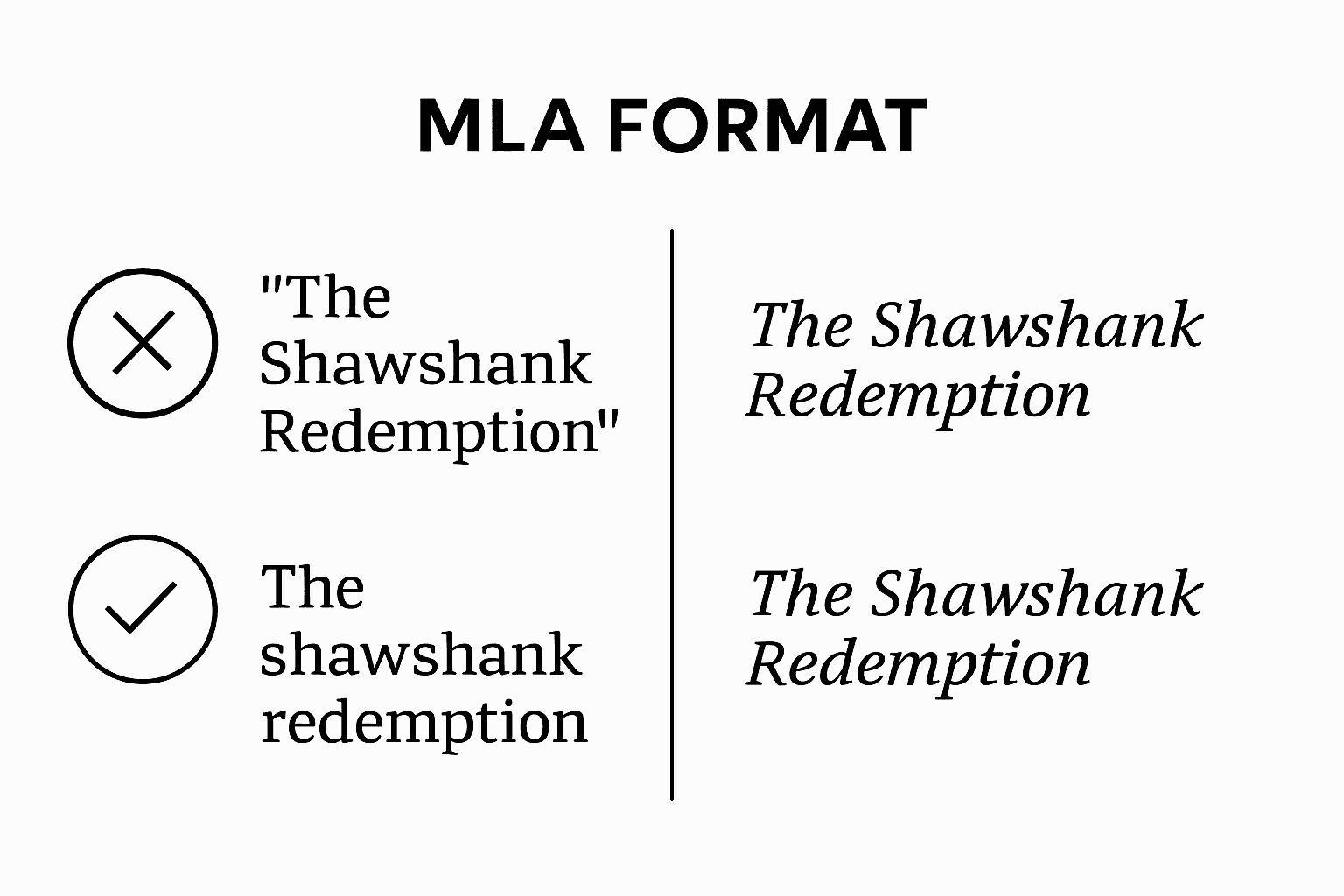
Bibliographic citations present another complex area prone to mistakes. Academic writers frequently struggle with including comprehensive yet precise information about movies. A complete MLA movie citation should include the film's title in italics, director's name, production studio, and release year. Omitting any of these critical components or presenting them in an incorrect order can result in an incomplete or inaccurate reference. MLA 8 In Text Citation Guide provides detailed guidance on constructing accurate citations that meet scholarly standards.
Understanding these nuanced formatting requirements goes beyond mere technicality. Proper citation reflects a researcher's attention to detail, academic rigor, and respect for intellectual standards. By carefully reviewing and implementing MLA guidelines, students can transform potentially error-prone citations into precise, professional references that enhance the credibility of their scholarly work. Meticulous adherence to these formatting conventions demonstrates sophisticated academic communication skills.
Academic paper citation strategies require precise attention to detail when referencing films. Researchers must navigate complex formatting rules that extend beyond simple title presentation. Introducing movie titles demands a strategic approach that balances scholarly precision with clear communication, ensuring that film references enhance rather than distract from academic discourse.
The core requirement for integrating movie titles involves consistent italicization and contextual presentation. When first mentioning a film, academic writers should include both the italicized title and the director's name to establish scholarly credibility. For example, a proper introduction might read: "In Martin Scorsese's Goodfellas, the narrative explores complex social dynamics..." This approach provides immediate context and demonstrates rigorous research methodology. Precise in-text citation techniques recommend selecting either the film's title or the director's name as the primary reference point, depending on the specific analytical focus.
Beyond initial introduction, subsequent references require consistent formatting and strategic citation. Academic writers must maintain the italicized title throughout the document and ensure that any references align with the works-cited page. This means tracking the film's appearance across different sections of the paper, maintaining typographical consistency, and providing sufficient context for readers to understand the film's relevance to the research argument. Careful integration transforms movie references from mere decorative elements into substantive scholarly evidence.
Successful academic writing demands more than technical compliance. By thoughtfully incorporating film references, researchers demonstrate intellectual sophistication and the ability to draw meaningful connections across different media and scholarly domains. Mastering the nuanced art of movie title integration reflects a writer's commitment to clear, precise, and engaging academic communication.
Struggling with the precise MLA formatting rules for movie titles in your academic papers can be frustrating. Whether it is italicizing titles correctly, capitalizing major words, or crafting perfect citations, these details make a huge difference in your credibility and grades. If mastering these stylistic nuances feels overwhelming, you are not alone. Many students face challenges ensuring every film reference aligns with MLA standards, avoiding common mistakes that undermine their hard work and scholarly rigor.
Take control of your academic writing with Samwell.ai where cutting-edge AI solutions simplify MLA formatting tasks. Our platform offers tools like the 'Power Editor' to polish your in-text movie title usage and the 'Guided Essays' feature to help organize citations efficiently. Ensure every movie title is perfectly italicized and all bibliographic details meet MLA citations standards with confidence. Visit Samwell.ai now to transform tedious formatting into an effortless step in producing authoritative, high-quality research papers.
Movie titles should always be italicized when referenced in the body of an academic paper according to MLA style guidelines.
When citing movies, you should include the title in italics, the director's name, the production company, and the year of release to ensure comprehensive citation.
Yes, in MLA formatting, capitalize the first letter of all major words in a movie title while articles like "the" and "a" remain lowercase.
Standalone works like full-length films should be italicized, while smaller media components, such as individual scenes or episodes, should be enclosed in quotation marks.