
Loading...

Two hundred words runs about 0.4 pages single-spaced or 0.8 pages double-spaced in a standard 12-point font with 1-inch margins. Most pieces that length break into 2 to 3 paragraphs, though web copy often splits into more. Reading it takes roughly 40 to 60 seconds. Writing it takes anywhere from 5 minutes for a rough draft to an hour if you're polishing every sentence.
TL;DR:
- A 200-word document spans about 0.4 pages single-spaced or 0.8 pages double-spaced in standard formatting.
- Most readers can silently read 200 words in approximately 40 to 60 seconds, while reading aloud extends that to around 1.5 minutes.
- Writing a polished 200-word response typically requires 20 to 60 minutes, including planning, drafting, and editing processes.
- A structured outline with an introduction, evidence-based body, and concise conclusion ensures clarity within the tight word limit.
- Using a clear final sentence as a goal helps prevent over-explaining and keeps writing focused and efficient.
Spacing changes the page count more than almost anything else you control. At 12-point Times New Roman with 1-inch margins, 200 words lands around 0.4 pages single-spaced and 0.8 pages double-spaced. Split the difference and 1.5 spacing puts you around 0.6 pages.
Font choice shifts that number too. Arial runs slightly wider than Times New Roman, so switching fonts at the same point size can nudge your page count by a few percentage points without you changing a word.
Quick reference for standard formatting:
If you're not sure which spacing to use, Purdue OWL's formatting guidance recommends checking your assignment instructions first. Double-spacing is the default for most academic submissions because it leaves room for margin notes.
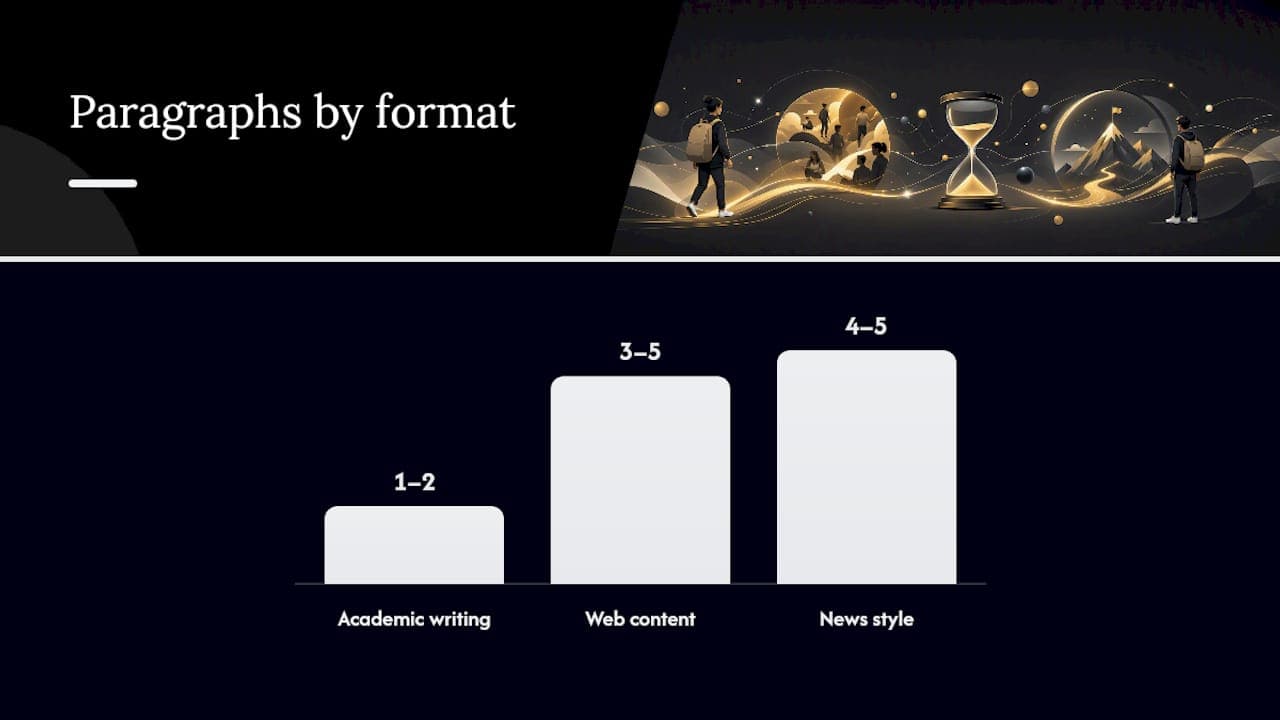
Paragraph count depends entirely on what you're writing and who's reading it. A 200-word college essay or supplemental prompt response typically runs 2 to 3 paragraphs, each one dense enough to carry a full idea. Web content tends to break the same word count into 3 to 5 shorter paragraphs because online readers scan rather than read line by line. News writing goes even shorter, often 4 to 5 clipped paragraphs of one or two sentences each.
Here's how that breaks down by format:
For a graded short answer, spend your first paragraph stating your point in one or two sentences, your middle section on evidence, and your last sentence closing the loop. There's no room to wander.
Most adults read silently at 200 to 300 words per minute, which puts 200 words at roughly 40 to 60 seconds for a typical reader.
At a glance: silent reading takes under a minute; reading aloud takes closer to a minute and a half.
Reading aloud slows things down considerably. Spoken pace for presentations or interviews usually falls between 130 and 160 words per minute, which stretches 200 words to about 75 to 95 seconds. If you're timing a scholarship interview response or a class presentation, budget for the slower pace and build in pauses for emphasis. For timed exams or written short-answer sections, silent-reading speed is the number that matters, since graders skim rather than read aloud.
A fast, unpolished draft takes most writers 5 to 15 minutes. A polished, submission-ready version, the kind with a clear argument, tight sentences, and no filler, usually takes 20 to 60 minutes depending on how much research or revision it needs.
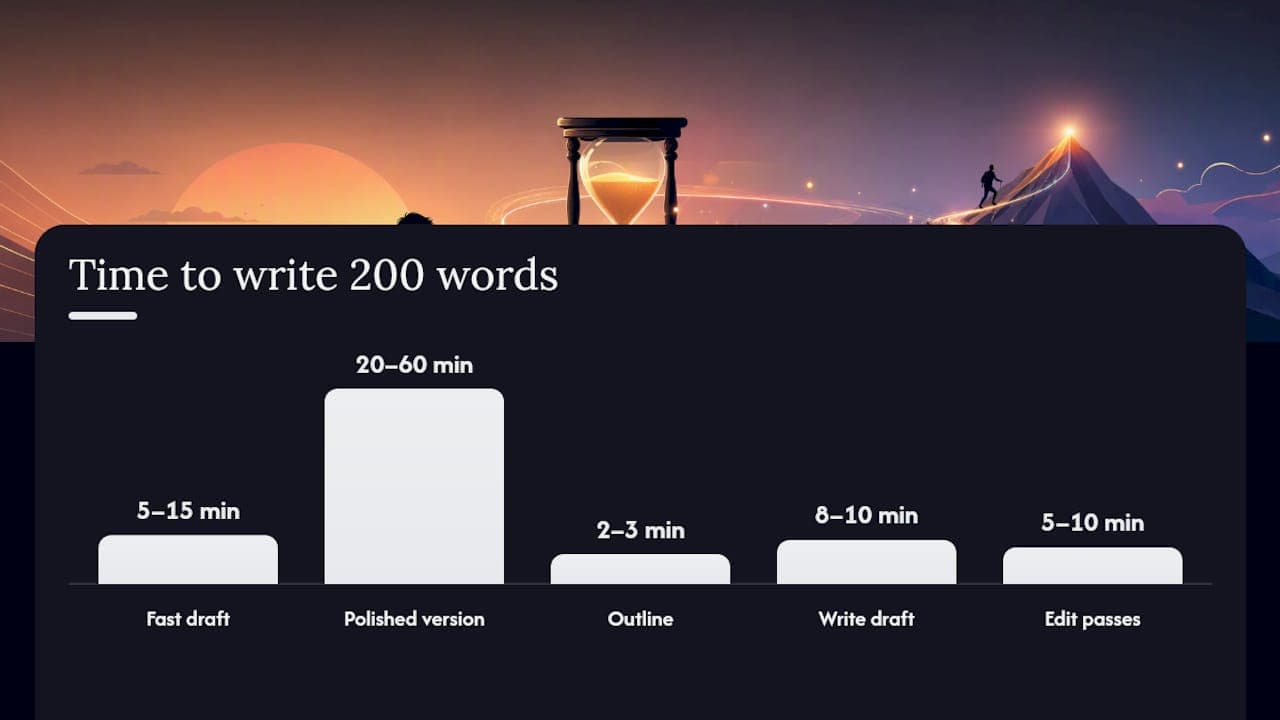
Several things push that time higher. Writing about something you already know well is faster than researching a new topic mid-draft. Every editing pass adds time, and writers working in a second language often need extra rounds to smooth phrasing without changing meaning.
For a time-boxed writing session, try this breakdown:
Pro Tip: Write your last sentence first. Once you know exactly where the response needs to land, every sentence before it gets easier to trim.
Here's a three-part skeleton that fits almost any 200-word assignment, from a scholarship prompt to a short-answer exam question:
Before you submit, run through this checklist:
Clarity and conciseness guidance from IUP's writing resources makes a point worth remembering here: short pieces leave no room for a meandering setup, so every sentence has to introduce, support, or close your argument. There's no space for a sentence that does only one small job.
Getting 200 words right under a deadline is a formatting problem and a precision problem at once. Samwell's Guided Essays feature builds a structured outline before you write a single sentence, so you're not guessing at how to divide 200 words into an intro, evidence, and conclusion. Once a draft exists, the Power Editor lets you target specific sentences for trimming or expansion instead of rewriting the whole thing.
For citation-heavy short answers, Samwell's built-in MLA and APA tools format references automatically. The platform's Semihuman.ai technology also runs real-time originality checks, which matters when a 200-word response has almost no room to hide weak or repetitive phrasing. Samwell serves more than 1,000,000 students and academic professionals, many of whom use these tools specifically for tight word-count assignments where every sentence has to count.
Most students over-explain a 200-word response because they're afraid of sounding thin. The opposite problem is usually the real one: writers pack in three ideas when the assignment only has room for one, and everything ends up half-developed.
My advice is blunt. Write your concluding sentence before you write anything else. It works as a compass. Every sentence you draft after that either moves toward that conclusion or it gets cut. Pair that with short, timed practice sessions, even 10 minutes a few times a week, and concise writing stops feeling like a constraint and starts feeling like a skill you actually have.
— Tilen
Watching the clock while you try to hit an exact word count is its own kind of stress, especially when a scholarship application or short-answer exam gives you one shot to get it right. Samwell cuts that friction by handling structure and formatting so you can focus on the actual argument.

The workflow is straightforward: start with a Guided Essay to lock in your outline, generate a first draft, then run it through the Power Editor to tighten sentences and hit your exact word count. Built-in citation checks catch MLA or APA formatting issues before a professor does. If you're building toward something longer than a single short answer, the AI Essay Generator handles everything from a 200-word response to a full-length paper, and the Research Paper Generator is there when your next assignment scales up. Samwell's free tier lets you test the workflow on your next short response before committing to anything.



