Loading...
Every year, new writing tools promise to make research easier and polish essays for top marks. Whether you are an educator or a student, finding the right platform to help tackle citations, strengthen arguments, and catch errors can feel like a puzzle. Some platforms focus on speed and automation while others offer deep editing or robust checks for originality. With so many options, you might wonder which features actually help you work smarter and which ones shape the best results for academic writing. The details ahead reveal important differences and useful strengths that could change the way you write and review work.
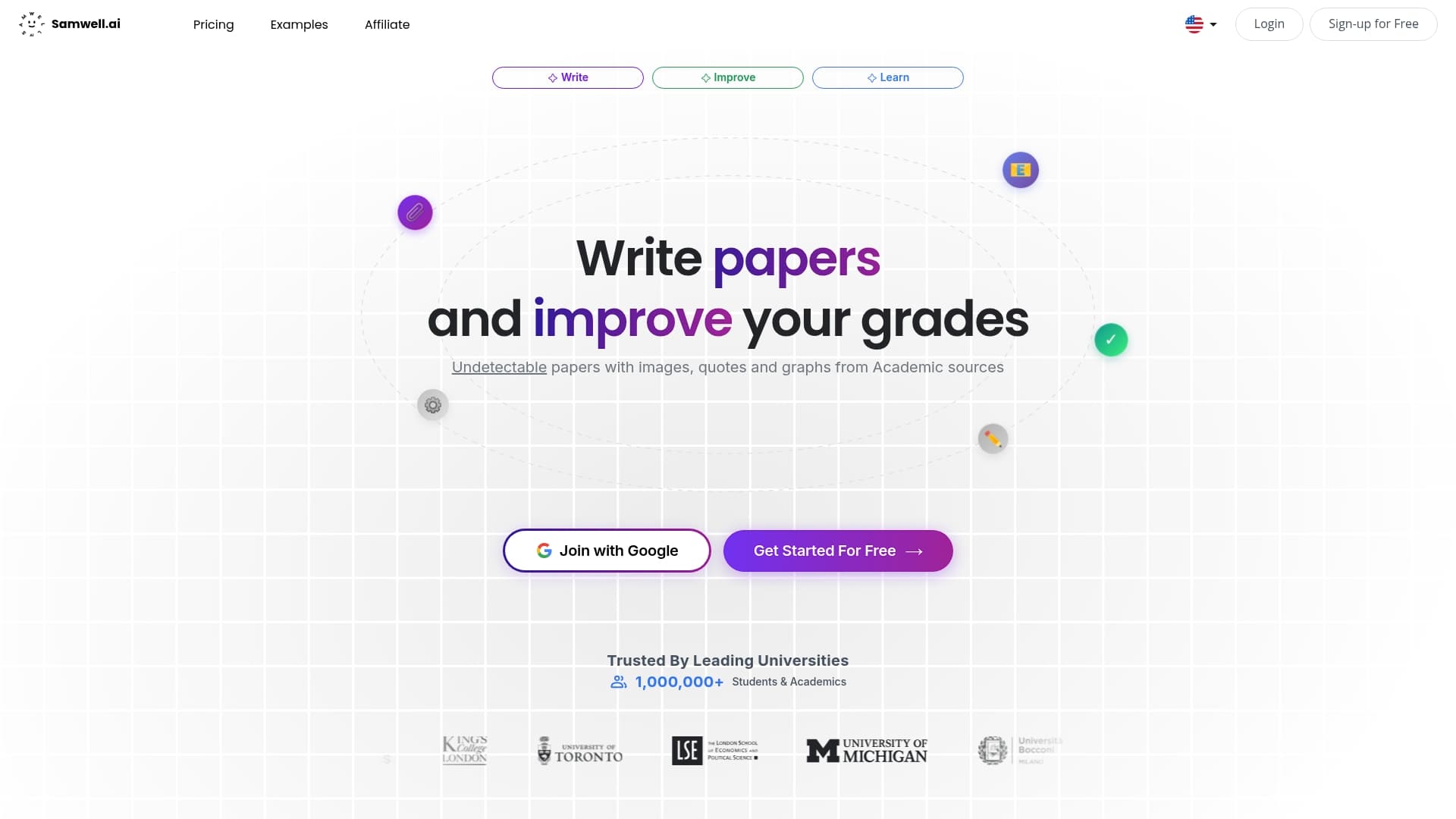
Samwell.ai is an advanced AI-driven academic writing platform designed to help students and academics produce credible, citation-rich essays and research papers efficiently. It blends powerful research tools, multi-format citation support, and a sophisticated Semihuman.ai technology that reduces plagiarism risk and supports originality. For educators, Samwell.ai offers a dependable way to guide students toward well-sourced, structurally sound writing without sacrificing academic integrity. It’s powerful, customizable, and built for long-form academic work.
Samwell.ai provides AI-powered academic writing with integrated citations, in-depth literature review capabilities, and explicit support for scientific papers and detailed source analysis. Key tools include the Power Editor for targeted editing and expansion, Guided Essays for structured outlines, and real-time AI detection checks that align with evolving technologies. The platform supports multiple citation formats—MLA, APA, Harvard, Chicago, IEEE, and Oxford—and gives users the ability to supply specific sources and instructions for tailored output. Samwell.ai also claims provenance from Semihuman.ai technology to minimize plagiarism and produce high-quality, credible content.
Samwell.ai is ideal for university educators, graduate students, and researchers who supervise lengthy essays, theses, or scientific papers and need a platform that combines source analysis, citation management, and advanced editing. If you assign multi-source literature reviews or want students to learn structured academic writing while preserving originality, Samwell.ai fits naturally into your toolbox.
Samwell.ai’s core advantage is the integration of deep research capability with editorial control and originality safeguards. Unlike generic text generators, Samwell.ai emphasizes academic rigor: you can pull from academic libraries, enforce MLA or APA formats, and refine drafts with the Power Editor while monitoring originality through Semihuman.ai-assisted detection tools. This combination reduces time spent on sourcing and formatting while preserving instructor standards for citation and evidence. Design choices—such as prioritizing user-supplied sources and a robust editor—mean outputs are customizable and pedagogically useful, not just generic text. In short: Samwell.ai is optimized for academics who need long-form, source-driven writing with strong controls for integrity.
A university student uses Samwell.ai to research, draft, and refine a 20-page literature review: they import key sources, use Guided Essays to structure sections, generate draft passages with integrated citations, and polish arguments in the Power Editor before final submission—maintaining originality with Semihuman.ai checks throughout.
Pricing: Not specified in the provided content.
Website: https://samwell.ai
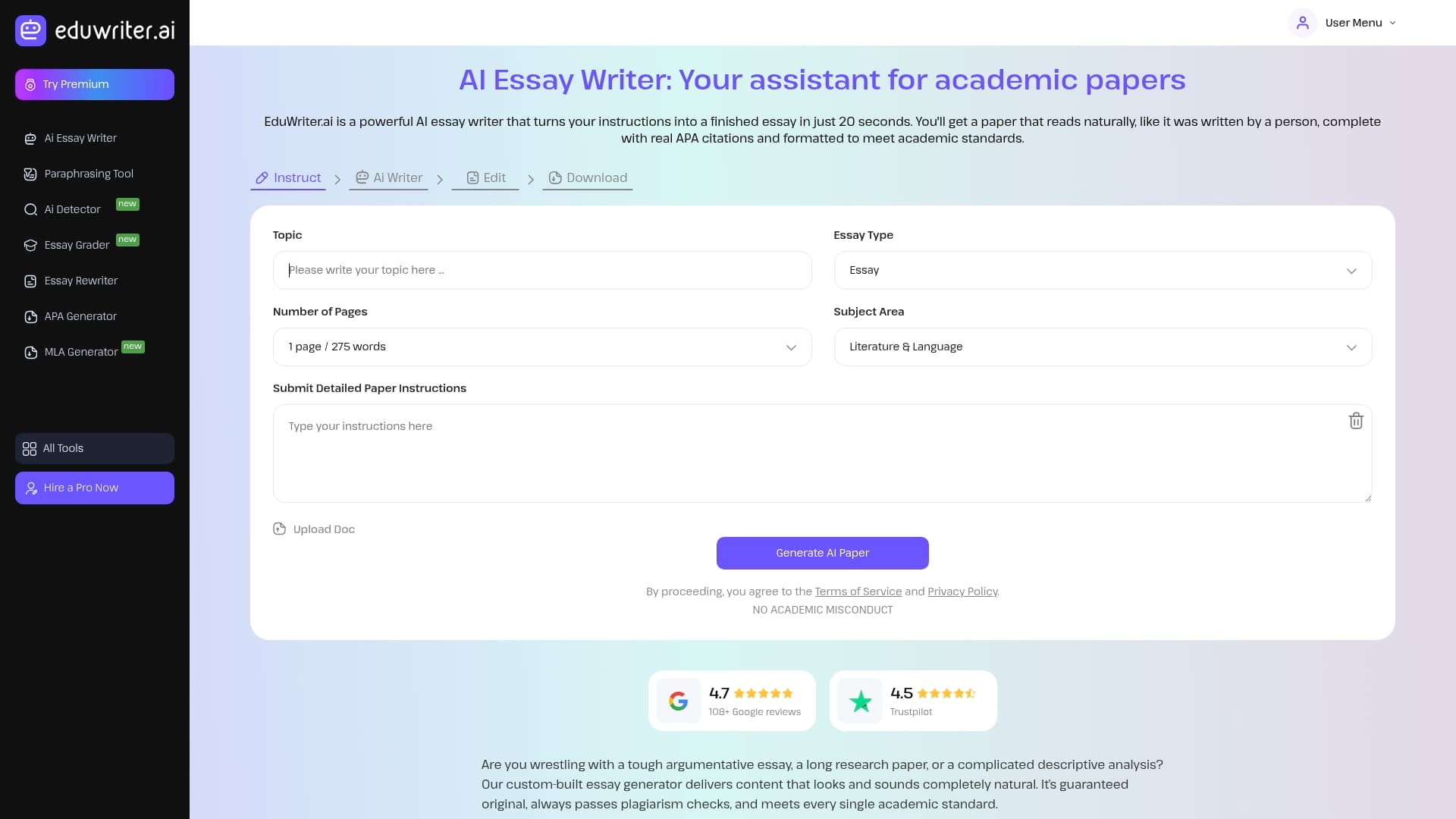
EduWriter.ai is a fast, academic-focused AI essay writer that generates complete essays in about 20 seconds while embedding APA citations and formatting. It emphasizes natural readability and originality, and it pairs automated generation with optional human editorial support. For educators, it is a practical tool for producing clean drafts and citation-ready content quickly, though it works best when you provide clear, specific instructions.
EduWriter.ai produces full essays in roughly 20 seconds and includes automatic APA citations and formatting to meet academic standards. The platform offers multiple AI writer models to match different needs and detection profiles, plus tools for paraphrasing, summarizing, citation generation, and plagiarism checking. Users can choose subject-specific essay types and tap into human editors for additional review and refinement when required.
EduWriter.ai is best suited for educators, researchers, and advanced students who need fast, citation‑ready drafts and reliable formatting. If you teach large classes and want model essays, scaffolded drafts, or citation examples to demonstrate expectations, this tool lets you produce example material quickly while retaining the option for human editorial oversight.
EduWriter.ai combines speed, academic formatting, and multiple AI models with human editorial support, delivering a balanced workflow for educators who need polished, original drafts fast. Its explicit focus on APA formatting and plagiarism checks makes it especially useful in academic settings where citation accuracy and integrity matter.
A professor preparing weekly model answers uses EduWriter.ai to generate a 1,200‑word sample essay with correct APA citations in under a minute, then routes the draft to a human editor for tone adjustments and course‑specific examples before sharing it with students.
EduWriter.ai offers a free plan with limited features; Premium plans start at $3.3 per month and scale up to $19 per month for unlimited AI essay generation and additional tools.
Website: https://eduwriter.ai
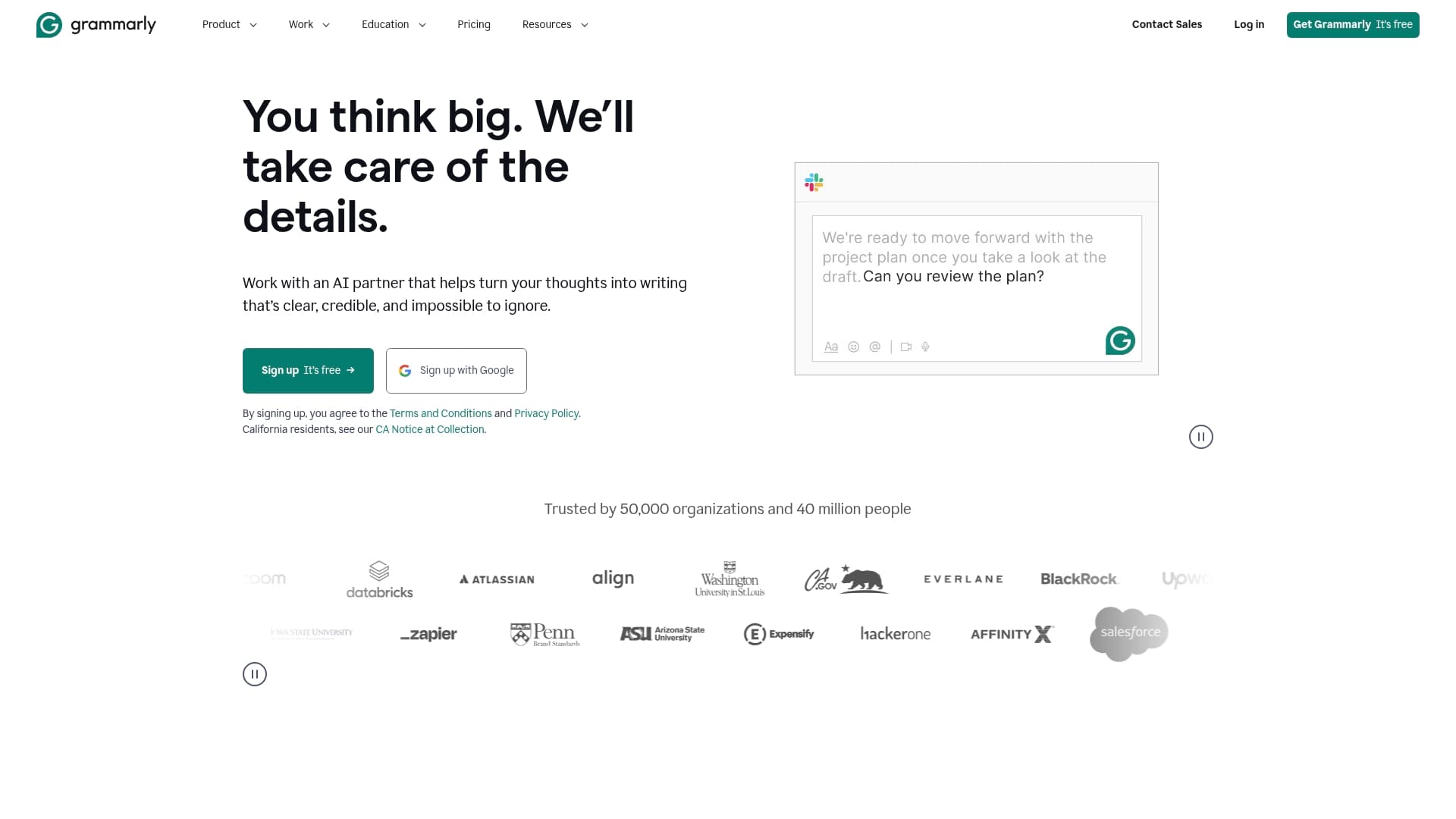
Grammarly is an AI-powered writing assistant that helps educators accelerate feedback and improve clarity, tone, and style across student work and departmental documents. Trusted by millions, it combines grammar and punctuation correction with tone adjustment and plagiarism checks, making it a practical classroom and faculty tool. It’s especially strong for teams that need consistent voice and policy compliance, though advanced capabilities sit behind paid tiers. Overall: a reliable productivity multiplier with some cost considerations.
Grammarly’s core capabilities include AI-powered writing suggestions that catch grammar, punctuation, and clarity issues; tone adjustment to align text with audience expectations; style guide adherence to enforce consistency; plagiarism detection to flag unoriginal content; and AI prompt generation to help refine or expand English-language content. These features aim to reduce manual editing time while preserving author voice and supporting institutional style requirements.
Grammarly is ideal for individuals, teams, and organizations seeking to enhance writing quality and efficiency with secure, AI-powered assistance. For university educators, this includes instructors who want faster, more consistent feedback on student drafts, departmental editors who enforce style and tone, and administrative teams creating polished proposals and documentation.
Grammarly’s unique value lies in pairing robust, AI-driven writing corrections with enterprise-level collaboration and security. That combination makes it suitable not only for individual improvement but also for coordinated, institution-wide writing standards that preserve voice while speeding up review cycles.
A content team uses Grammarly to streamline its editing process, ensuring all published content is clear, consistent, and on-brand, saving time and maintaining high quality. For academic units, that same workflow translates into faster grading, consistent syllabus language, and improved clarity on student-facing communications.
Free for basic features; Pro at $12 USD/month (billed annually) with additional features; Enterprise plans are customizable and require contacting sales for details.
Website: https://grammarly.com
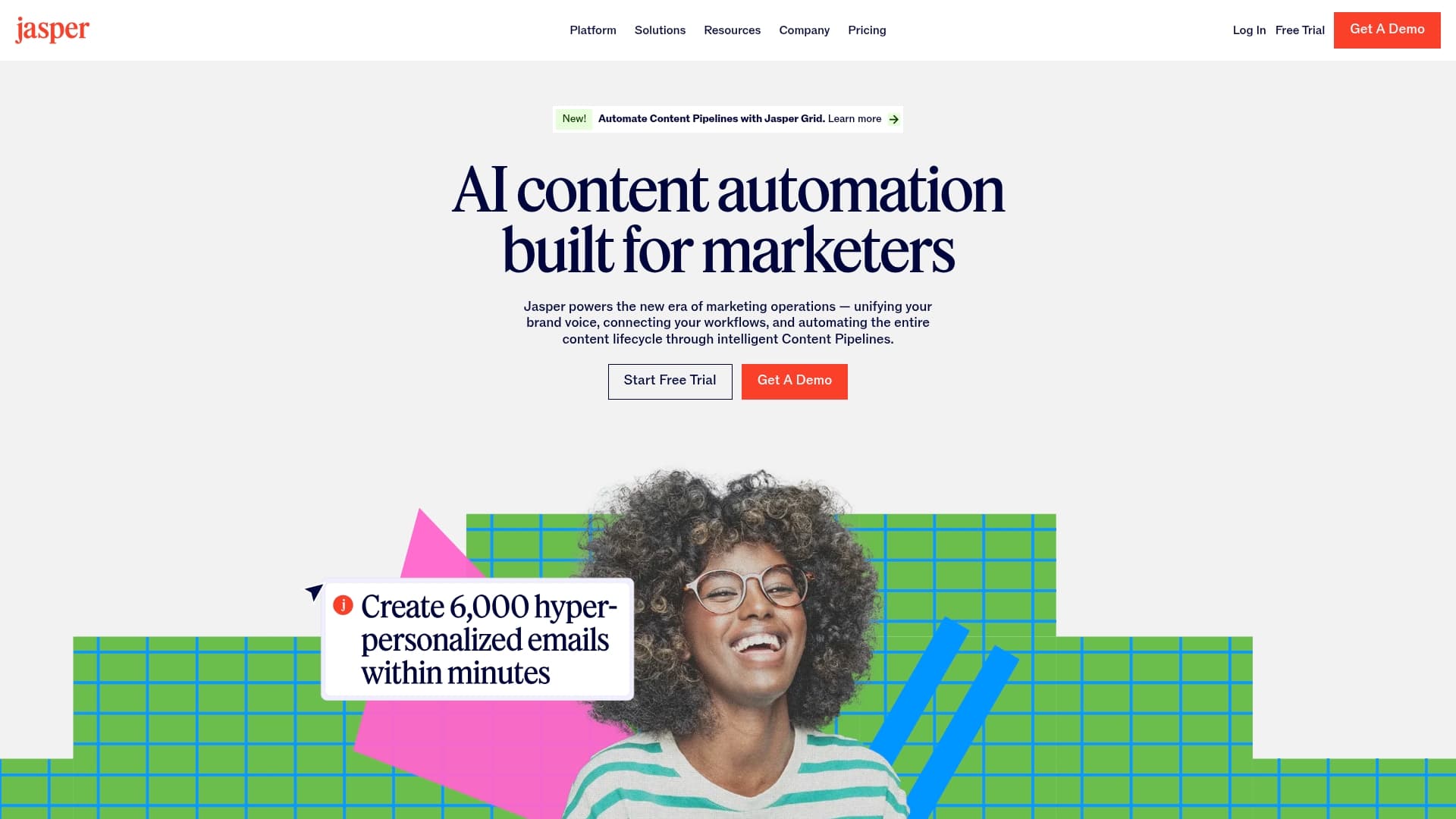
Jasper.ai is an AI content automation platform built primarily for marketers that emphasizes on-brand, high-quality outputs and enterprise-grade security and compliance. For educators evaluating AI tools, Jasper’s strengths are its automation pipelines, visual asset generation, and strong governance features that can help scale consistent messaging. It’s powerful but not trivial to master — expect a learning curve if you want to unlock advanced integrations and agent workflows.
Jasper combines intelligent agent-based content automation with content pipelines that link data, creativity, and distribution. It includes no-code AI app building through Jasper Studio, brand and visual guideline management, and proprietary vision models in the Image Suite for image generation and editing. Jasper IQ provides brand knowledge and contextual understanding so outputs remain aligned with defined voice and standards. The platform is built to integrate with existing workflows and tools used in professional environments.
Short. Sharp. Useful.
Jasper is best suited to teams that need to automate and scale content creation while enforcing brand consistency and security — primarily marketing and communications groups, and medium to large organizations that already manage guideline-driven outputs. Educators evaluating Jasper should consider whether institutional content or outreach efforts would benefit from marketer-style automation and governance.
Jasper’s unique value is the combination of agent-driven automation, no-code app building, and integrated vision models that allow teams to generate both text and visual assets while maintaining brand alignment and governance. That mix positions Jasper as a production-oriented platform rather than a simple writing assistant.
A marketing team uses Jasper to rapidly produce personalized email campaigns, social media content, and visual assets while ensuring each piece adheres to brand voice and compliance requirements, substantially reducing production time and coordination overhead.
The Pro plan starts at $59/month billed annually or $69/month billed monthly; Business and custom Enterprise plans are available with additional features and customization.
Website: https://jasper.ai
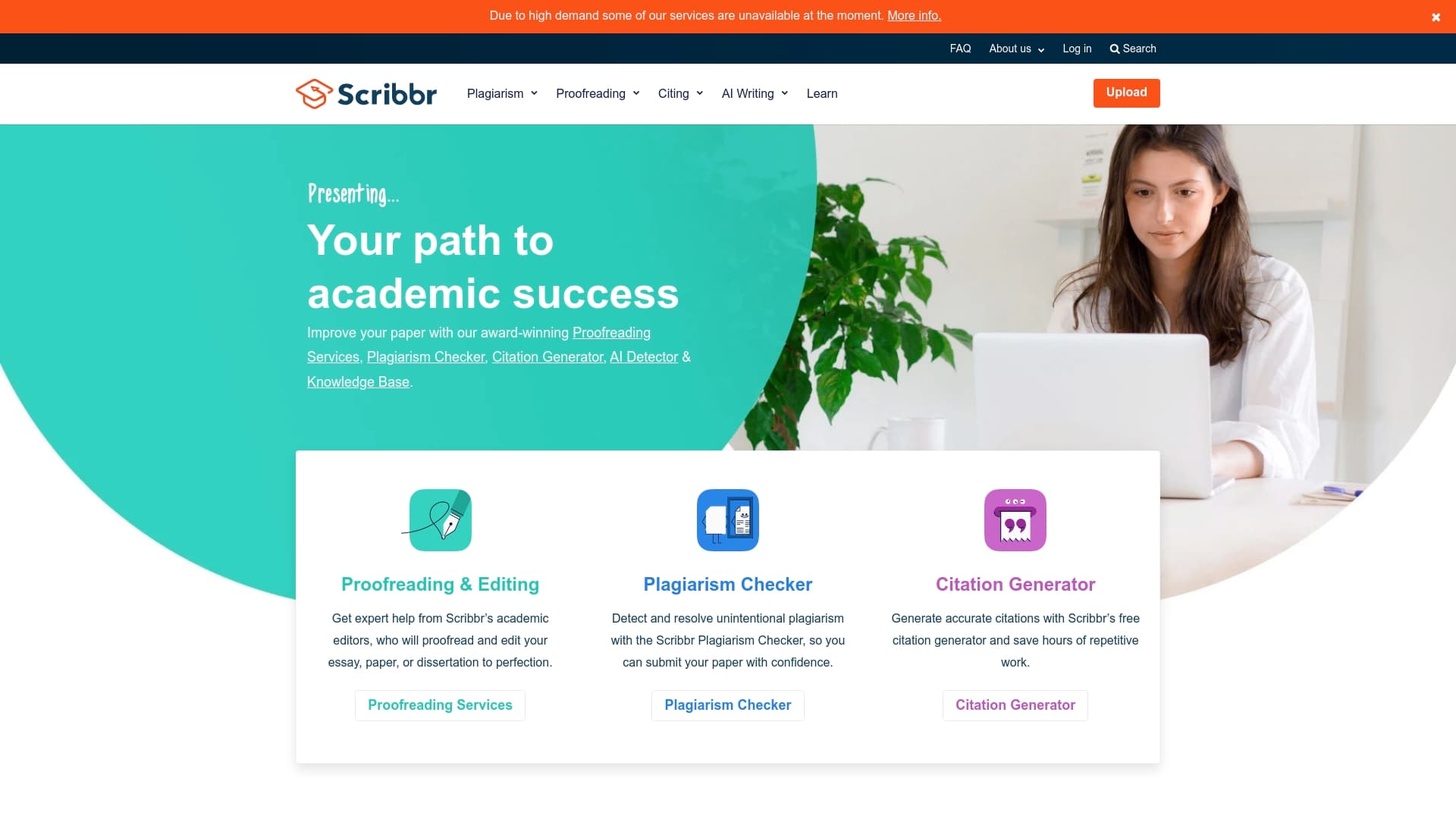
Scribbr packages proofreading, plagiarism checking, citation generation, AI detection, and a trove of learning resources into a single platform designed for academic use. For educators evaluating tools to safeguard originality and improve student writing, Scribbr delivers reliable plagiarism detection and professional editing at scale. It is a pragmatic choice when you need a clear second pair of eyes, solid citation tools, and on-demand learning materials — though pricing details are not provided in the source data.
Scribbr’s core capabilities center on improving and authenticating academic writing. The platform offers proofreading and editing by academic editors, a plagiarism checker intended to detect unintentional overlap with published sources, and a citation generator that supports multiple styles. An AI detector helps identify machine-generated text, and an expansive knowledge base provides articles, videos, lecture slides, templates, a Chrome extension, and paraphrasing tools to teach better research and writing practice.
Scribbr is best suited for students, researchers, and academic professionals who want reliable proofreading, plagiarism checking, citation generation, and instructional resources. If you oversee undergraduate or graduate writing programs and need a central tool to raise baseline writing quality and verify originality, Scribbr aligns with that mission.
Scribbr’s value lies in blending human academic editing with automated checks and a rich learning library. That combination supports both corrective action (proofreading, plagiarism checking) and preventive education (tutorials, templates), helping educators address integrity and skill development simultaneously.
An advisor sends a thesis draft to Scribbr for editing, runs the plagiarism check to confirm originality, uses the citation generator to format references, and directs the student to targeted videos to correct recurring citation mistakes.
Pricing is not specified in the provided content. Contact Scribbr via the website for current plans and institutional options.
Website: https://scribbr.com
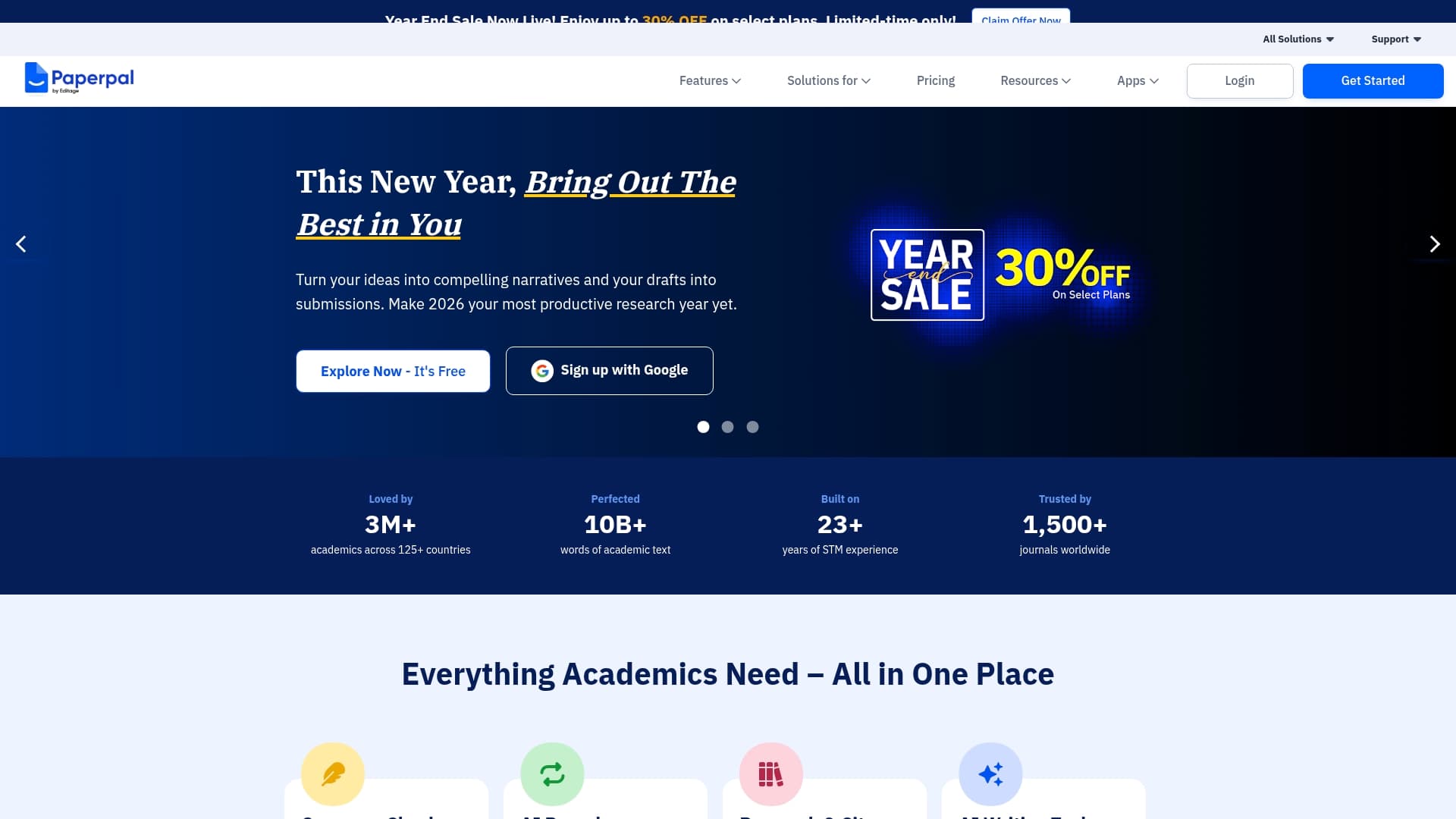
Paperpal is an AI-powered academic writing assistant built to help researchers, students, and educators move from idea to submission-ready manuscript faster. It combines grammar and paraphrasing tools, a plagiarism checker, citation support, and pre-submission checks in a single workflow. If you need tight integration with common writing platforms and a feature set focused on publication readiness, Paperpal is worth testing. Bottom line: it streamlines language quality and citation work while leaving subscription and data-security questions to resolve.
Paperpal’s core capabilities center on improving manuscript quality and speeding literature handling. Key tools include a grammar checker tailored for academic tone, an AI paraphraser to broaden vocabulary, a plagiarism checker to reduce self-plagiarism risk, and a research-and-citation tool that supports multiple styles. It integrates with MS Word, Google Docs, and Overleaf, offers Chat with PDFs for summaries and critiques, includes AI content detection for authenticity, and runs pre-submission checks to assess journal suitability and language quality. These features are organized to move you from drafting to submission with fewer manual steps.
Paperpal is aimed at researchers, academics, university students, and educational institutions invested in producing publishable work. If you lead a lab, supervise student theses, or coordinate collaborative manuscripts, Paperpal can reduce repetitive editing tasks and help standardize citation practices across contributors.
Paperpal’s unique value is its focus on publication readiness: it marries academic-style language editing, citation management, and journal pre-checks within familiar writing environments. That focus makes it more than a generic grammar tool—it’s designed to nudge manuscripts closer to acceptance standards.
A University professor refines a research article with Paperpal to improve clarity, tighten language, and run pre-submission checks before sending the manuscript to coauthors and target journals. The result: fewer revision rounds and stronger initial submissions.
Pricing details are not explicitly provided; Paperpal encourages users to try the service for free and contact the team for paid subscription information.
Website: https://paperpal.com
The following table compares popular academic writing tools, highlighting their features, pros, cons, pricing, and intended users to help you identify the best option for your needs.
| Tool | Features | Pros | Cons | Pricing |
|---|---|---|---|---|
| Samwell.ai | AI academic writing, citation manager, originality checks, long-document support | Access to over 20 libraries, advanced originality focus, extensive editing tools | Pricing information not available | Not specified |
| EduWriter.ai | Rapid essay generation, APA citation support, human editor access | Fast content generation, customizable AI models, plagiarism checked | Relies on clear user instructions, subscription costs | Free plan, Premium $3.3–$19/month |
| Grammarly | Writing suggestion corrections, plagiarism detection, tone adjustment | Widely used and trusted, multiple plan options, team collaboration tools | Some features limited to paid plans, generic suggestions | Free for basic, Pro $12/month |
| Jasper.ai | AI-generated text and visuals, brand consistency tools | Supports content pipelines, robust customization, enterprise-grade security | Learning curve for complex features, high cost for features | Trial available, Pro $59/month |
| Scribbr | Proofreading by experts, plagiarism detection, educational materials | Comprehensive toolset, supports multiple formats, robust customer support | Pricing not disclosed, feature accuracy varies | Not specified |
| Paperpal | Grammar and research tools, citation manager, AI paraphrasing | Pre-submission checks, multi-platform integration, manuscript-focused editing | Subscription-dependent capabilities, data privacy questions | Not specified |
The article highlights the growing need for educators to find reliable essay generators that uphold academic integrity while facilitating efficient, citation-rich writing. Key challenges include managing originality concerns, ensuring proper use of MLA and APA styles, and supporting students through structured essay development. Samwell.ai directly addresses these pain points with its advanced Semihuman.ai technology that minimizes plagiarism risks and empowers users to customize sources and instructions to generate credible academic content.
With powerful tools like the Power Editor for targeted refinements and Guided Essays to help structure complex long-form assignments, Samwell.ai offers a seamless solution designed for both students and educators seeking rigorous yet user-friendly academic writing support. Join over a million users who trust Samwell.ai to balance AI efficiency with scholarly standards.
Looking for an academic essay generator that combines source depth, citation accuracy, and originality safeguards?
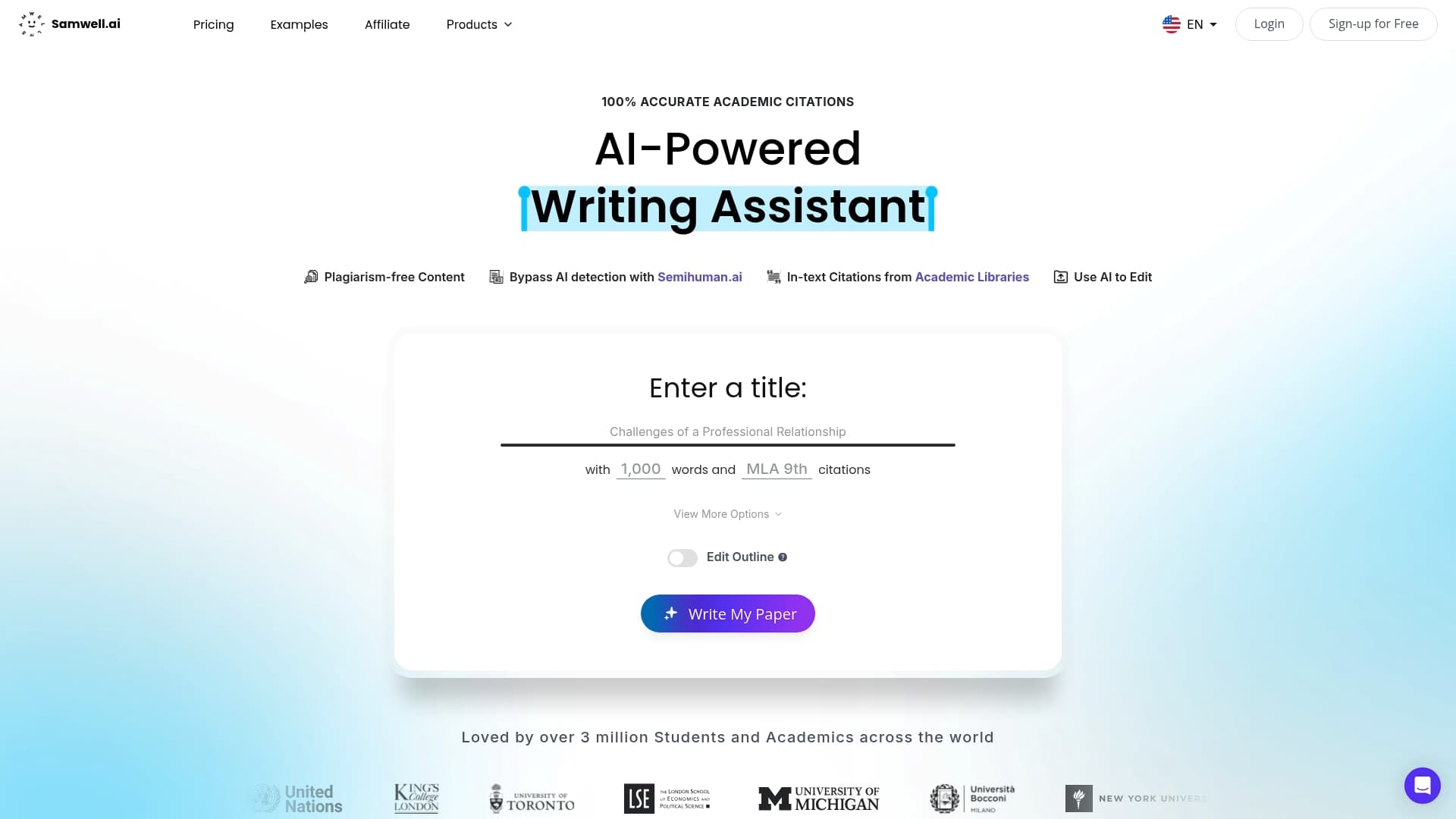
Explore how Samwell.ai can transform your academic writing process today by visiting Samwell.ai. Start achieving high-quality, well-cited essays that meet evolving educator expectations and take control of your research writing now.
When choosing an essay generator, key features to consider include citation support, compatibility with various essay formats, and tools for plagiarism detection. Look for platforms that offer structured outlines and customizable editing options to enhance academic integrity and writing quality.
To ensure originality, select essay generators that incorporate plagiarism-checking tools and originality detection technology. Run the generated content through additional plagiarism detection software to confirm that it adheres to academic standards.
Yes, many essay generators can adapt to various writing styles by applying different formatting and citation methods. Experiment with the settings and prompts of the tool to refine the output to match specific academic requirements or personal preferences.
Educators should actively review and edit the content generated by these tools to ensure it meets course objectives and maintains academic rigor. Contextualize the generated essays with your own insights or additional sources, ensuring that they align with educational goals.
To select the best essay generator, evaluate your specific classroom needs, such as the required citation styles, subject areas, and the level of student engagement with technology. Consider trial options to test different platforms and gather feedback from students to gauge effectiveness.
Most essay generators can produce drafts in just a few minutes, usually within 20 to 60 seconds for shorter assignments. Plan assignments around this rapid generation capability to manage your classroom workload effectively.