Loading...

Writing about yourself sounds simple until you sit down to actually do it. Many students assume that because they know themselves best, crafting a self-introduction essay will be effortless. The reality is different. A strong self-introduction essay demands clear structure, authentic voice, and direct response to the assignment prompt. This guide breaks down evidence-based strategies to improve your essay writing in 2026, helping you transform personal experiences into compelling academic narratives.
| Point | Details |
|---|---|
| Narrative structure engages readers | Using a hook and story arc keeps your audience invested from the first sentence. |
| Prompt alignment improves scoring | Directly addressing assignment requirements ensures relevance and higher grades. |
| Personal anecdotes build connection | Specific experiences make essays relatable while avoiding irrelevant details. |
| Clear organization enhances flow | Logical structure with smooth transitions helps readers follow your ideas easily. |
| Proofreading ensures professionalism | Multiple editing rounds catch errors and polish your final submission. |
Your essay's opening moments determine whether readers stay engaged or mentally check out. Effective self-introduction essays utilize a narrative structure to create a coherent story that keeps your audience invested. Rather than listing facts about yourself, you're building a journey that reveals who you are through carefully chosen moments and reflections.
Starting with a hook pulls readers into your world immediately. This could be a surprising fact about your background, a thought-provoking question, or a brief anecdote that captures your personality. The key is authenticity. Your hook must connect directly to your essay's central theme, not just grab attention for its own sake.
Consider these effective hook types:
Generic openings like "My name is..." or "I was born in..." waste your most valuable real estate. Readers already know they're reading about you. Jump straight into what makes your story worth their time. Without a narrative framework or engaging hook, you risk losing reader interest before they reach your second paragraph.
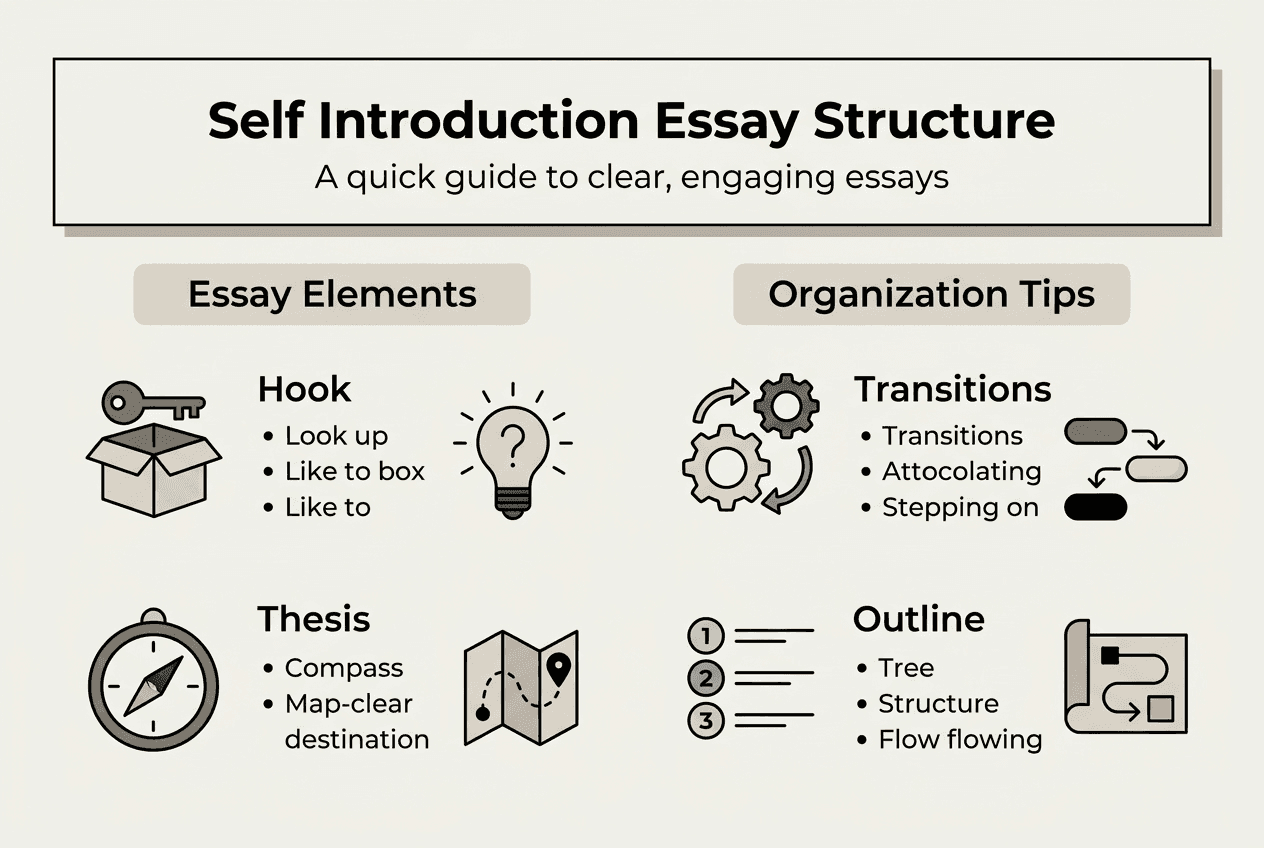
Pro Tip: Read successful self introduction essay examples to identify hook patterns that resonate with your own story, then adapt them to your unique voice rather than copying the structure.
The narrative you build should have clear momentum. Start with context, develop through specific experiences, and conclude with reflection or growth. This arc gives readers a satisfying journey rather than a disconnected collection of facts. When you understand how to start an essay about yourself, you gain control over your reader's experience from the first word.
Even brilliant writing falls flat if it doesn't answer the actual question. Understanding the prompt is crucial because essays that directly address requirements receive higher scores in academic settings. Your first task is careful, deliberate reading of what's being asked.
Identify keywords and required themes in the prompt before you write a single sentence. Is the assignment asking about your academic goals, personal challenges, or future aspirations? Does it want you to connect your background to a specific program or field? These details shape every choice you make in your essay.
Follow this systematic approach:
Cross-checking your content against the prompt isn't optional. Before finalizing your essay, place the prompt and your draft side by side. Does each paragraph contribute to answering what was asked? Have you addressed every part of a multi-part question? This verification step catches gaps that undermine otherwise strong writing.
Pro Tip: If any part of the prompt feels unclear or ambiguous, ask your instructor or advisor for clarification before you start writing, not after you've completed a full draft.
Planning your content around the prompt's questions creates focus. You might have fascinating stories about your childhood pet or your summer job, but if they don't connect to what the prompt requires, they dilute your essay's impact. Relevance trumps entertainment. Every anecdote, reflection, and detail should serve the specific purpose outlined in your assignment. This disciplined approach to writing mastery separates adequate essays from exceptional ones.
Random thoughts, no matter how insightful, confuse readers when presented without structure. Organizing ideas with a clear outline improves your essay's logical flow and makes your narrative easy to follow. Think of your outline as a roadmap that guides both you as the writer and your reader through your story.

The basic essay structure provides a reliable framework. Your introduction includes the hook and sets up your central theme. Body paragraphs each develop a unique point or experience that supports your overall narrative. Your conclusion synthesizes these elements and leaves readers with a clear understanding of who you are and why it matters.
Clear transitions connect ideas smoothly between paragraphs. Rather than jumping from one topic to another, you're building bridges that show how each section relates to what came before and what follows. These connections might highlight cause and effect, chronological progression, or thematic development.
| Structure Type | Best For | Pros | Cons |
|---|---|---|---|
| Narrative | Personal growth stories | Engaging, easy to follow | Can lack depth if not careful |
| Thematic | Exploring multiple qualities | Shows complexity, organized | Requires strong transitions |
| Chronological | Journey over time | Clear progression, logical | May feel predictable |
Use these outline strategies:
Pro Tip: Write a concise thesis statement that captures your essay's central message, then ensure every paragraph connects back to this core idea.
Your outline doesn't need to be elaborate. Even a simple list of main points in order helps you spot organizational problems before you've written full paragraphs. When you understand how to make an introduction essay flow naturally, you give readers a smooth experience that keeps them engaged through your final sentence.
Authenticity separates memorable essays from forgettable ones. Sharing personal experiences and reflections makes your essay relatable and impactful, but the key is selecting details that support your narrative without oversharing. You want readers to understand your character and values, not know every private aspect of your life.
Include specific anecdotes and reflections that relate directly to your essay's focus. If you're writing about resilience, describe a particular challenge and how you responded. If you're exploring intellectual curiosity, share a moment when a question led you down an unexpected path. These concrete examples prove your claims rather than just stating them.
Avoid irrelevant or overly private information such as parental income, relationship status, or sensitive family matters unless they're central to the story you're telling. The goal is connection, not confession. Ask yourself whether each detail serves your essay's purpose or simply fills space.
Common clichés reduce your essay's impact because they signal generic thinking. Phrases like "I have always been passionate about..." or "This experience taught me that hard work pays off" tell readers nothing distinctive about you. Instead, show your passion through specific actions. Demonstrate what you learned through concrete changes in your behavior or thinking.
Follow these proofreading strategies:
Pro Tip: Edit your essay multiple times with at least a day between drafts, allowing you to approach your work with fresh perspective and catch issues you initially overlooked.
Proofreading and editing are essential to ensure your essay is polished and error-free. Even brilliant ideas lose credibility when presented with typos or grammatical mistakes. Multiple editing rounds, each focusing on different elements, catch problems that a single read-through misses. First check for big-picture issues like structure and argument. Then focus on sentence-level clarity. Finally, hunt for mechanical errors.
Authentic voice means writing like you actually speak, adjusted for academic context. You don't need to sound like a textbook or imitate what you think "good writing" sounds like. Clear, genuine language builds connection with readers far better than inflated vocabulary or complex sentence structures that obscure your meaning. Review personal essay introduction examples to see how successful writers balance formality with personality.
Applying these strategies becomes easier with the right support. Samwell.ai provides AI-powered writing tools specifically designed for academic essays like self-introductions, helping you draft, refine, and polish your work efficiently. The platform offers personalized feedback on clarity, structure, and style, pointing out areas where your essay could be stronger.
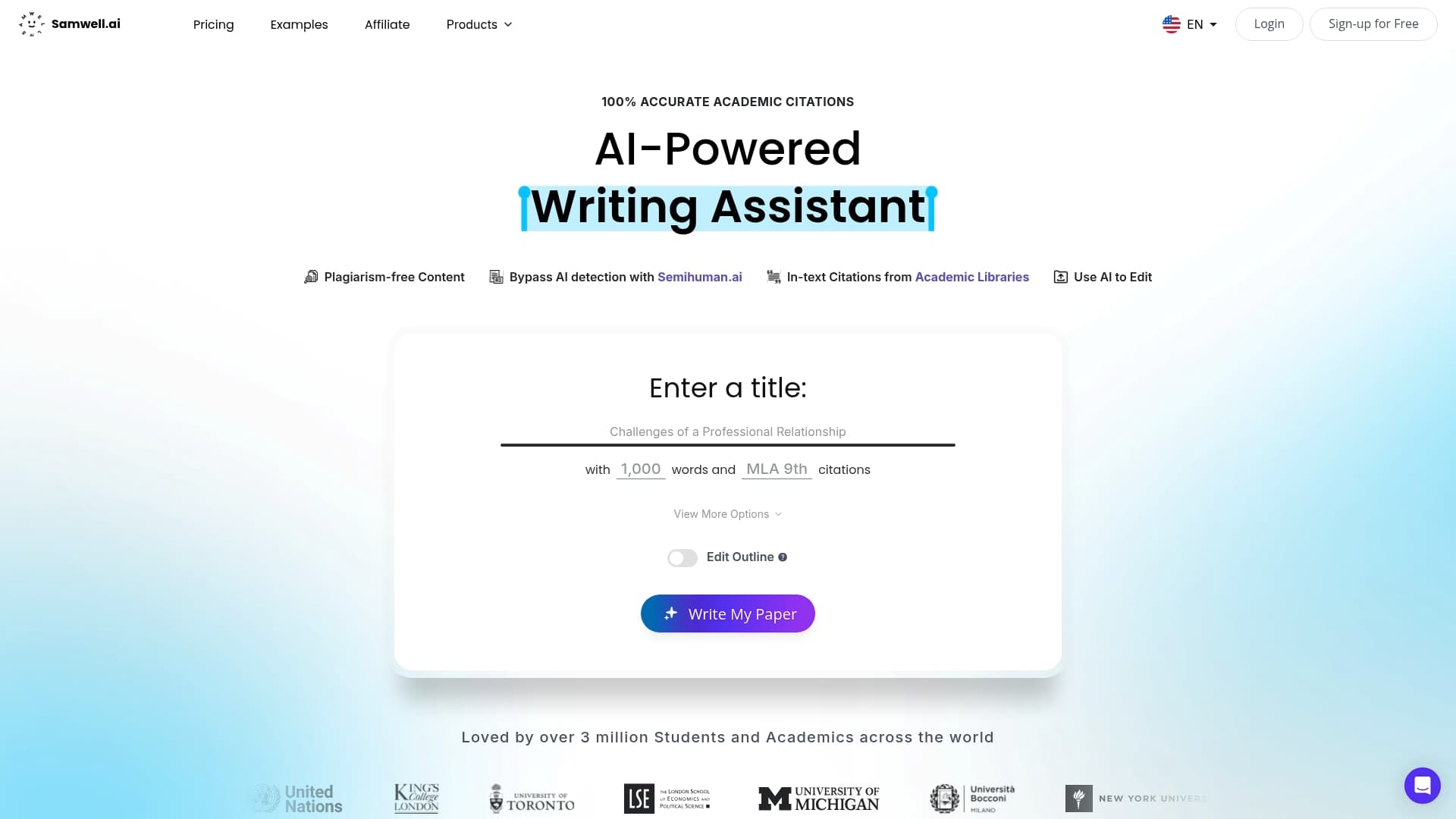
Students using Samwell.ai get expert guidance throughout their writing process, from initial brainstorming through final edits. The Power Editor helps you expand ideas that need development and tighten sections that ramble. Guided Essays provide structured outlines that ensure you address all prompt requirements. Real-time feedback helps you catch issues before submission, building confidence in your final work.
Whether you're struggling with how to write an essay on yourself or simply want to elevate good writing to great, Samwell.ai offers accessible tools that complement the techniques covered in this comprehensive guide. The platform supports over 1,000,000 students and academic professionals, combining AI efficiency with the academic integrity your institution expects.
Typically one to two pages depending on your assignment requirements, though always check your specific prompt for word count guidelines. Your introduction should be concise, usually one to two sentences, to quickly convey your hook and central theme without losing reader attention.
Interesting questions, personal anecdotes, unique facts about your background, or bold statements that challenge assumptions all work well as hooks. The key is ensuring your hook feels authentic and relates directly to your essay's central message rather than just grabbing attention for shock value.
Include personal details that support your story, like meaningful experiences, interests that shaped you, or challenges that revealed your character. Avoid oversharing private or irrelevant information such as parental income, relationship drama, or sensitive family matters unless they're absolutely central to your narrative.
Focus on specific personal experiences and concrete reflections rather than generic statements everyone could claim. Use your authentic voice and describe particular moments that reveal who you are, avoiding common phrases like "I have always been passionate about" or "This taught me that anything is possible."