Loading...

TL;DR:
- Citation error rates in academic literature range from 10 to 25%, risking misinformation.
- Proper citation practices prevent plagiarism, build credibility, and enable source verification.
- Researchers should follow discipline-specific styles, verify sources, and use citation tools to ensure accuracy.
Citation error rates in academic literature run between 10 and 25%, a figure that should stop any serious researcher in their tracks. Most students treat citations as an afterthought, something to bolt on before submitting a paper. But citations are the backbone of scholarly communication. They signal credibility, protect your academic reputation, and allow other researchers to build on your work. This article walks you through why citations matter, where most people go wrong, how citation metrics shape academic careers, and what you can do right now to cite sources with precision and confidence.
| Point | Details |
|---|---|
| Citations ensure integrity | Accurate citations prevent plagiarism and strengthen your work's credibility. |
| Database differences matter | Citation counts can vary widely across platforms, so check details carefully. |
| Metrics are imperfect | Numbers alone don't capture real research impact—context and quality are essential. |
| Consistency prevents errors | Using clear style guides and checklists helps minimize costly mistakes. |
Citations are not bureaucratic paperwork. They are the connective tissue of academic knowledge. Every time you cite a source, you are doing three things at once: acknowledging the intellectual labor of others, giving readers a path to verify your claims, and situating your work within a broader scholarly conversation.
Think of citations as a chain of trust. If you make a bold claim without a source, readers have no way to check whether you are right. If you cite a credible study, you invite scrutiny, and that scrutiny is what makes academic knowledge reliable. Without it, research becomes opinion.
Here is what proper citation practice actually does for your work:
"Proper citation is not about following rules for their own sake. It is about participating honestly in the ongoing conversation of your field."
Many students underestimate how much citation quality affects the reception of their work. A paper with sloppy references sends a signal that the author cut corners. Conversely, learning how to cite sources correctly from the start builds habits that will serve you throughout your academic career.
Pro Tip: When you are finding reliable references, always check whether the source is peer-reviewed, recently published, and directly relevant to your claim. A citation that does not actually support your argument is worse than no citation at all.
The discipline of citing well also forces you to read more carefully. When you know you will need to attribute an idea precisely, you pay closer attention to what the original author actually said, which makes your own analysis sharper.
Even experienced researchers get citations wrong more often than they realize. Understanding where the problems cluster helps you avoid them.
Here are the most common citation mistakes, ranked by how often they derail academic work:
Citation error rates in biomedical literature alone run between 10 and 25%. That is a striking figure. It means that in a paper with 40 references, somewhere between 4 and 10 of them may contain errors significant enough to affect traceability or accuracy. Those errors compound when other researchers cite the same flawed references.
A common misconception is that citation errors only matter in highly technical fields. In reality, errors in humanities and social science papers can be just as damaging, especially when arguments hinge on specific quotations or historical data.
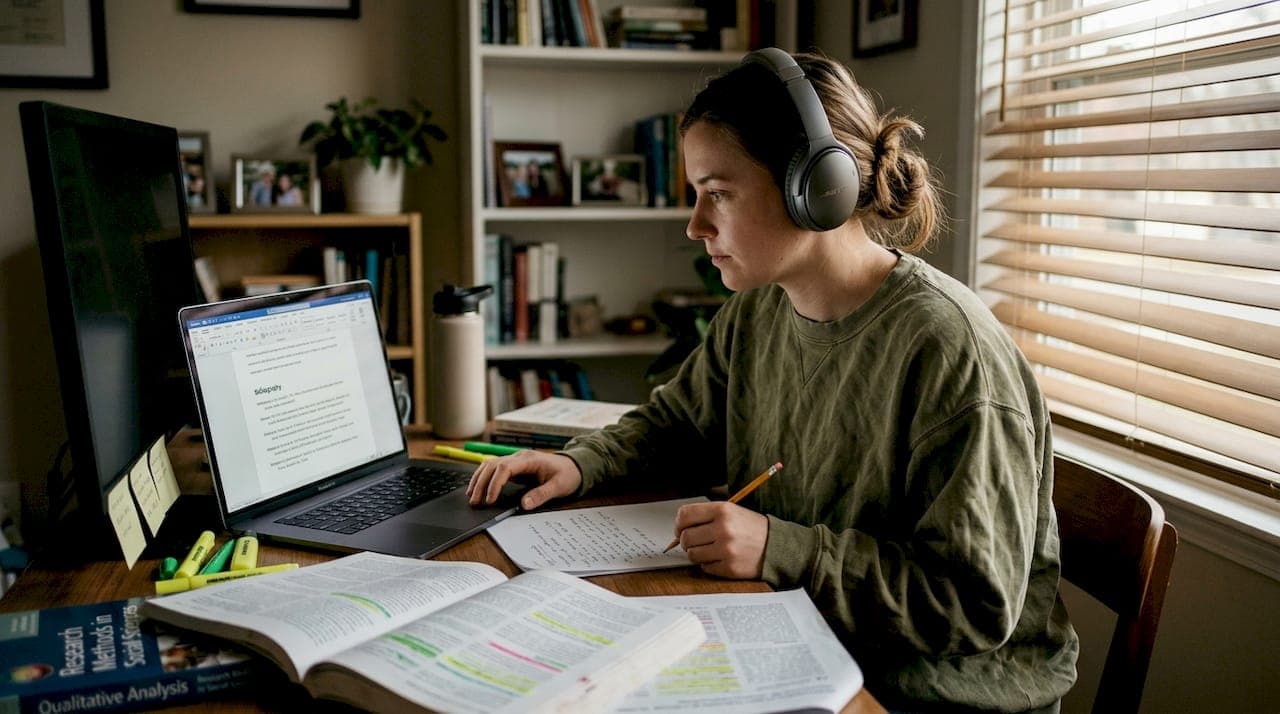
Pro Tip: Use a step-by-step citation guide before you submit any paper. Cross-check at least a sample of your references against the original sources to catch formatting errors early.
Another underappreciated risk is the cascade effect. When a flawed citation gets published in a reputable journal, other researchers trust it and repeat it. Understanding referencing risks is not just about protecting your own work. It is about protecting the integrity of your entire field.
Citations do more than document sources. They determine how your research is perceived, measured, and rewarded within academia.
Metrics like the h-index, which measures both the productivity and citation impact of a researcher, are now used in hiring decisions, grant applications, and tenure reviews. But these metrics are far from neutral.
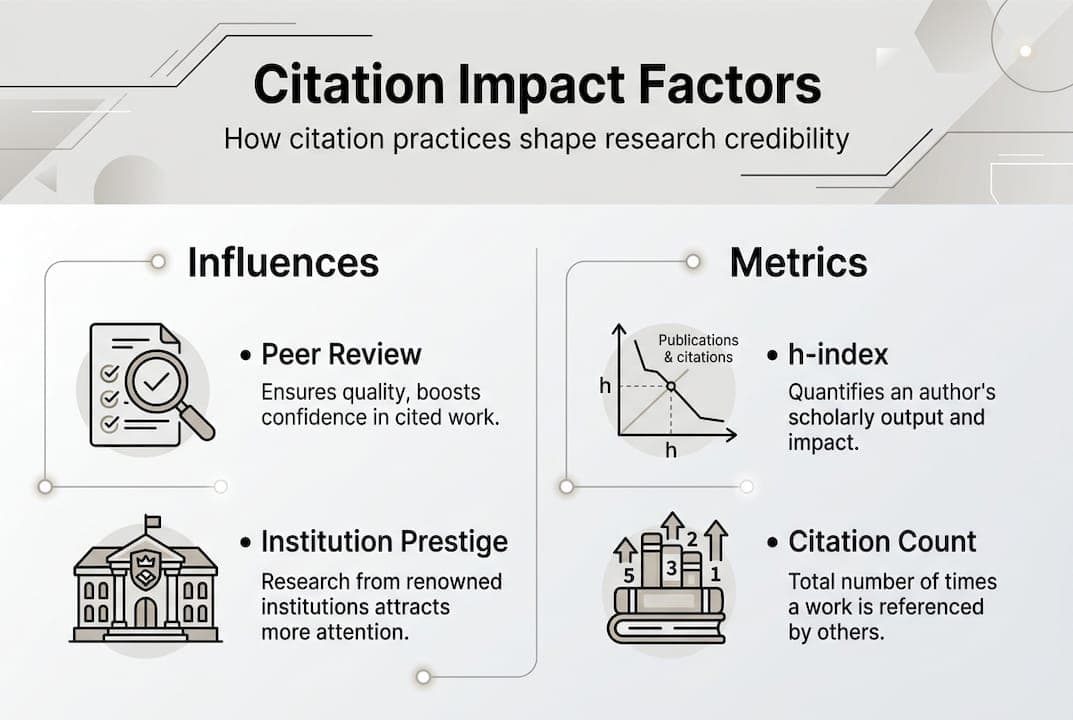
| Factor | Effect on citation count | Notes |
|---|---|---|
| Institutional prestige | Increases citations | Matthew effect: rich get richer |
| Self-citation | Artificially inflates count | Ethical if relevant, problematic if excessive |
| Citation cartels | Distorts metrics | Groups that cite each other to boost numbers |
| Field norms | Varies widely | Humanities cite less frequently than STEM |
| Open access status | Increases citations | Freely available papers get cited more |
The Matthew effect in citation practice means that papers from prestigious institutions attract more citations simply because of where they come from, not necessarily because they are better. A groundbreaking study from a lesser-known university may be overlooked while a mediocre paper from a top-ranked institution gets widely cited.
Disciplinary differences add another layer of complexity. Humanities scholars typically produce papers with fewer citations than biomedical researchers, not because their work is less rigorous, but because the norms of their field are different. Comparing citation counts across disciplines is like comparing apples to engine parts.
Metrics like the h-index have benchmarks but database discrepancies that make direct comparisons unreliable. A researcher's h-index on Web of Science may differ from their h-index on Google Scholar because each database indexes different sources.
Key takeaways on citation metrics:
For students writing essays and research papers, understanding these dynamics matters when you look at citation in essays and choose which sources carry the most weight in your argument.
Knowing why citations matter and where they go wrong is only useful if you translate that knowledge into action. Here is how to build a citation practice that is both accurate and sustainable.
Step-by-step approach to effective citation:
| Citation style | Primary fields | Key format feature |
|---|---|---|
| APA (7th ed.) | Psychology, education, social sciences | Author-date in-text citations |
| MLA (9th ed.) | Literature, humanities | Author-page in-text citations |
| Chicago (17th ed.) | History, arts, some social sciences | Footnotes or author-date |
| Vancouver | Medicine, life sciences | Numbered references |
Proper citation practice prevents plagiarism and demonstrates research depth, but it also protects you from the reputational damage that comes from publishing inaccurate references. Journals increasingly use automated tools to check citation accuracy, so errors that might have slipped through a decade ago are now more likely to be caught.
Pro Tip: Before submitting any paper, run through a citation styles checklist to confirm that every reference matches the required format. Pay special attention to your APA citation guide if you are working in the social sciences, where APA is the dominant standard.
Consistency is as important as accuracy. A paper that switches between citation styles mid-document signals carelessness, even if individual citations are technically correct.
Here is an uncomfortable truth: the academic world has built an entire reward system around citation counts, and that system is quietly distorting research priorities.
When researchers chase citations rather than genuine contribution, they gravitate toward safe, incremental work that is likely to be cited by many rather than bold, original work that challenges assumptions. They write for citation metrics, not for readers.
Automated metrics cannot capture whether a paper genuinely advanced understanding or simply confirmed what everyone already believed. A paper that gets cited 500 times because it is widely criticized is treated the same as one cited 500 times because it changed a field.
The quality over quantity argument is not new, but it is consistently ignored in hiring and funding decisions. We think the solution starts with individual researchers making deliberate choices about how they cite. Cite because a source genuinely supports your argument. Engage with it critically. Build on it meaningfully. Practicing direct citation skills with real intentionality is how you contribute to a healthier academic culture, not just a better-looking reference list.
Managing citations accurately while also writing compelling research is a lot to handle at once. That is exactly where Samwell.ai steps in.
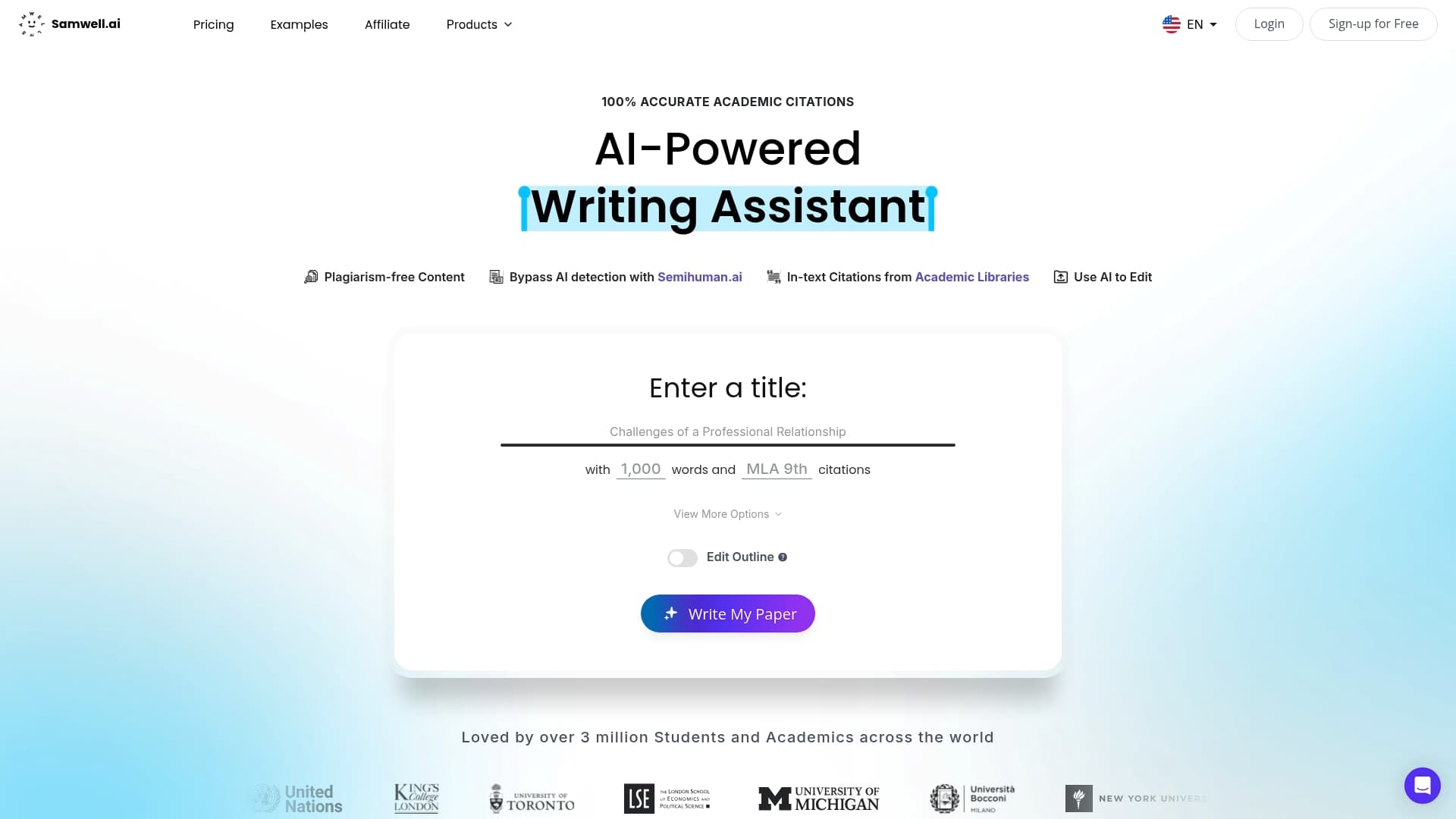
Samwell.ai is built for students and academic professionals who want to produce credible, well-cited work without spending hours formatting references manually. The platform supports APA, MLA, Chicago, and other major citation styles, and its AI-powered tools help you find academic references that are relevant, reliable, and properly formatted. With over 1,000,000 students already using Samwell.ai, the platform combines AI efficiency with a genuine commitment to academic integrity. If you want to write research papers that hold up to scrutiny, Samwell.ai gives you the tools to do it right.
Omitting a citation risks plagiarism and weakens credibility, and may violate your institution's academic integrity policies, potentially leading to serious academic consequences.
Yes. Different fields require specific formats, and citation norms vary by discipline, so using the wrong style can affect how your work is received and whether it meets submission requirements.
No. Citation counts reflect prestige and bias as much as quality, and prioritizing quality over quantity is essential for meaningful academic contribution.
The Matthew effect means that already-prestigious works attract even more citations due to their reputation, creating a cycle where visibility drives citations rather than the actual quality of the research.