Loading...
Drafting academic papers with accurate citations, source verification, and formatting that matches strict journal requirements often means juggling multiple disconnected writing tools. Many academic writing assistants either lack proper citation management, lock advanced features behind confusing pricing, or risk data integrity and workflow headaches for research teams. This comparison spells out how the leading academic writing assistants differ on citation accuracy, collaboration, pricing, and integration so you can pick a workspace that matches your manuscript needs from first draft to submission.
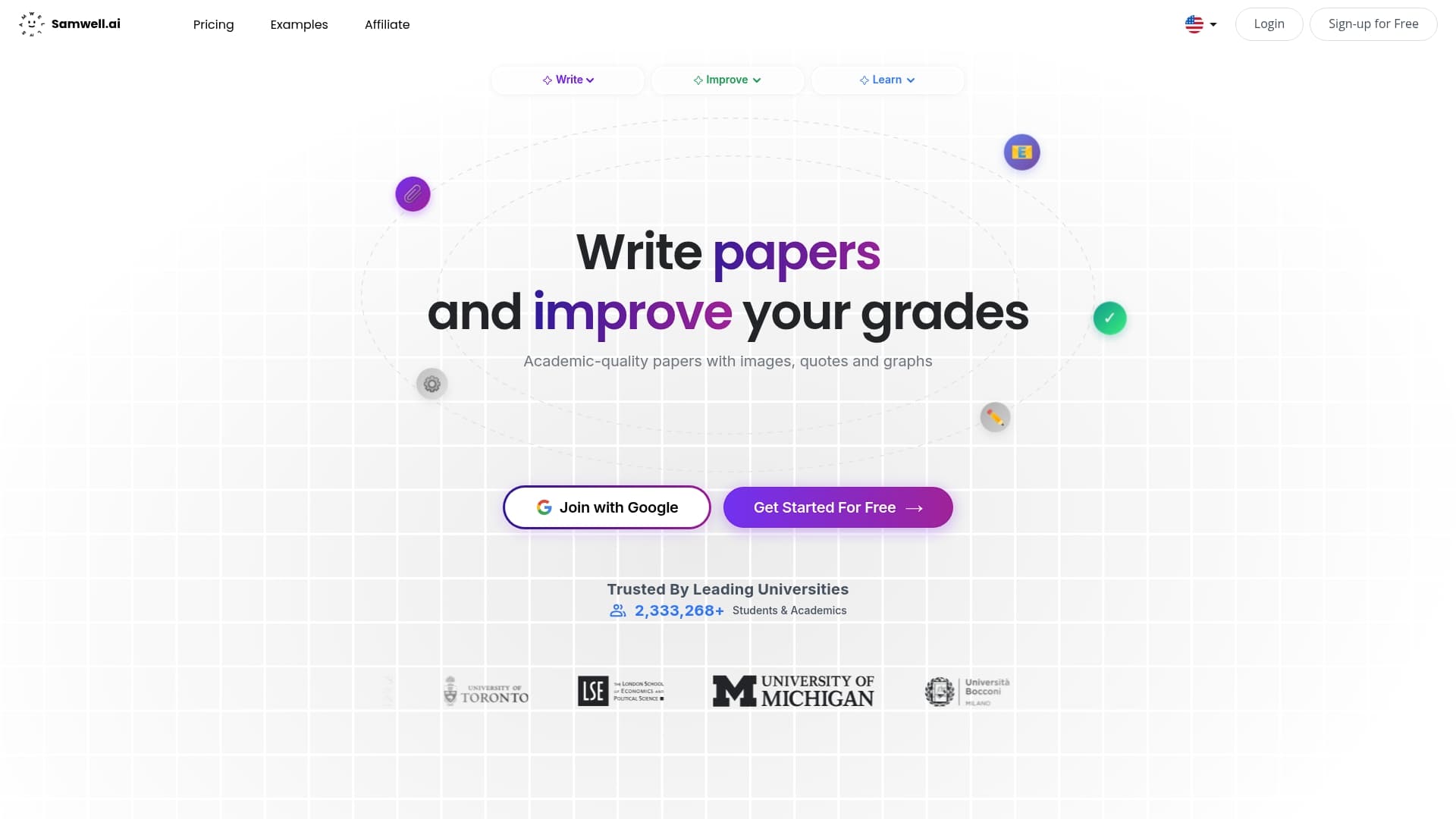
The vendor reports over 3 million users rely on Samwell.ai for academic writing and research support. That user count above is self-reported. Samwell.ai pairs citation tools, data visuals, and collaborative editing specifically tuned for scholarly work.
What separates Samwell.ai is the built-in combination of citation management, data visuals, and real-time collaborative editing designed for academic workflows. That single integration means you can draft, cite, illustrate, and co-edit in one document environment rather than moving between separate utilities.
Generates citation-ready drafts quickly, which saves initial research assembly time and reduces repetitive formatting work.
Supports multiple academic document types including essays, research papers, and literature reviews so you can reuse the same workspace across projects.
Includes collaboration features for real-time co-authoring, allowing coauthors to suggest edits, add citations, and comment inline without exporting files.
Provides tools for improving clarity and originality, such as paragraph rephrasing and tone adjustments that align with academic conventions.
Draws on trusted sources and reference lists from academic databases to populate citations and suggested references in drafts.
Students, researchers, and academics who need a single workspace for drafting, citing, and co-authoring papers will get the most value. Instructors who review multiple student drafts will appreciate the citation checks and revision history.
The Power Editor and citation-aware tools let you edit and expand specific sections while preserving reference integrity. That workflow reduces the manual step of reformatting citations after edits, which saves time during manuscript revision and submission prep.
A university student uploads a draft essay, runs the Power Editor to tighten prose, requests figures, and uses the citation manager to generate an APA reference list. The student then shares the document with a peer for live comments and submits a cleaner manuscript to their instructor.
The vendor advertises both free and premium plans but specific tier prices and word limits are not provided in the product data. The pricing field in the source is labeled informational only, so budget estimates require visiting the vendor site for current plan details.
Website: https://samwell.ai
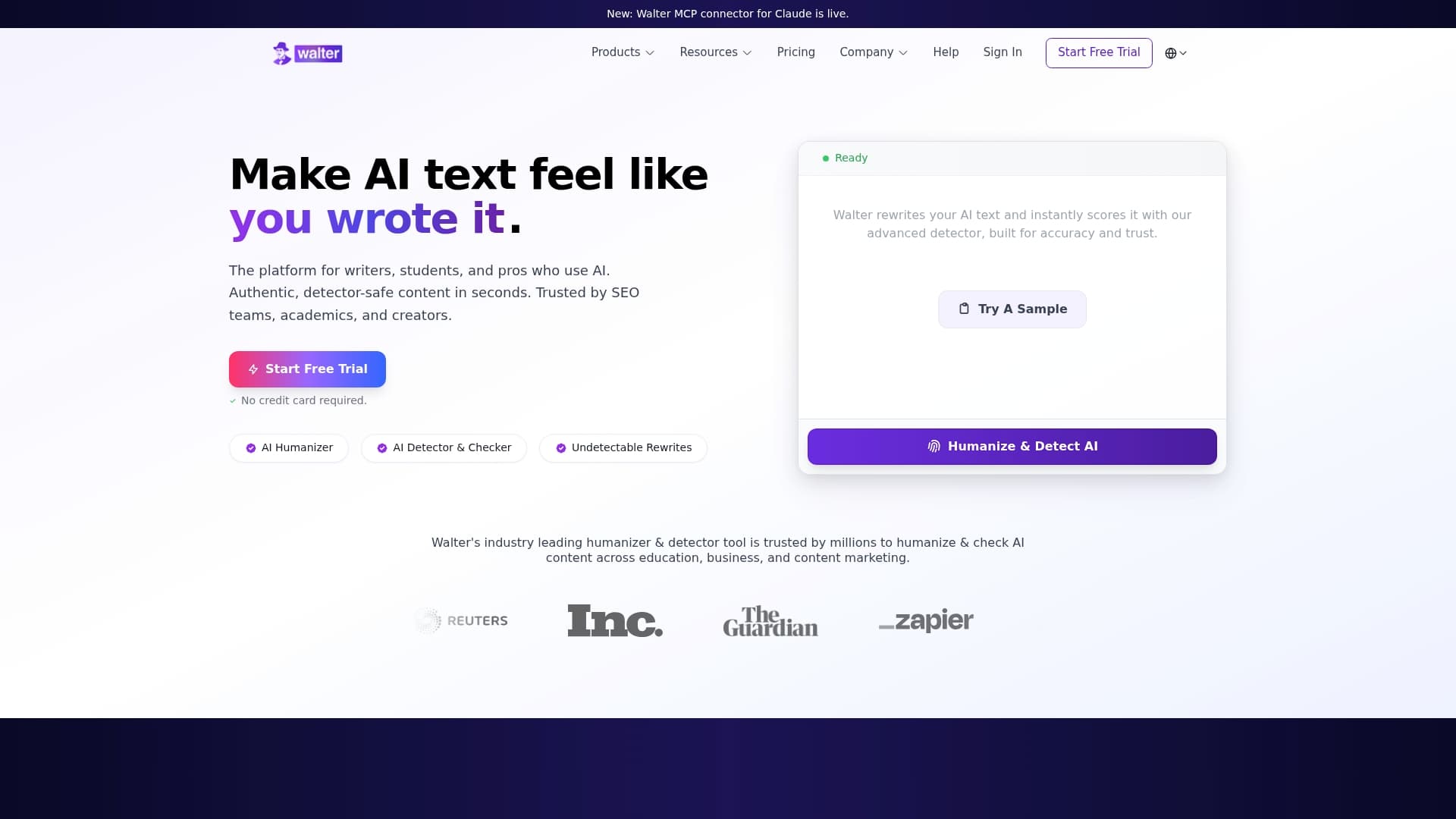
Users have reported billing and refund complaints even as many praise the editor for rapid output and a clean workflow. The vendor positions the product around lowering AI-detection flags while keeping the UI minimal and fast; results still need human review for coherence.
The vendor emphasizes a focus on reducing AI-detection concerns while preserving a streamlined authoring experience. That positioning narrows the product toward writers who worry about detector scores rather than teams seeking heavy editing controls or citation management.
If your work demands citation-accurate academic prose, legal precision, or peer-review quality, Walterwrites.ai is the wrong tool. Expect to spend substantial time editing longform drafts for logic and sourcing. Teams that require clear refund policies or enterprise SLAs should be cautious.
Content creators, solo marketers, and small agencies that need fast first drafts and a minimal learning curve will find value. It suits teams that plan to edit outputs aggressively rather than publish raw AI text. Not ideal for academic authors seeking citation integrity.
A marketing team uses Walterwrites.ai to generate three topic outlines and first drafts for a weekly blog cadence. Writers then spend an hour refining voice, verifying facts, and adding sources. The process cuts initial drafting time by a noticeable margin for routine posts.
The product data does not list subscription tiers. Pricing is marked as "Not applicable — informational only" in the dataset, so check the vendor site for current plans and any trial or refund policy before buying.
Website: https://walterwrites.ai
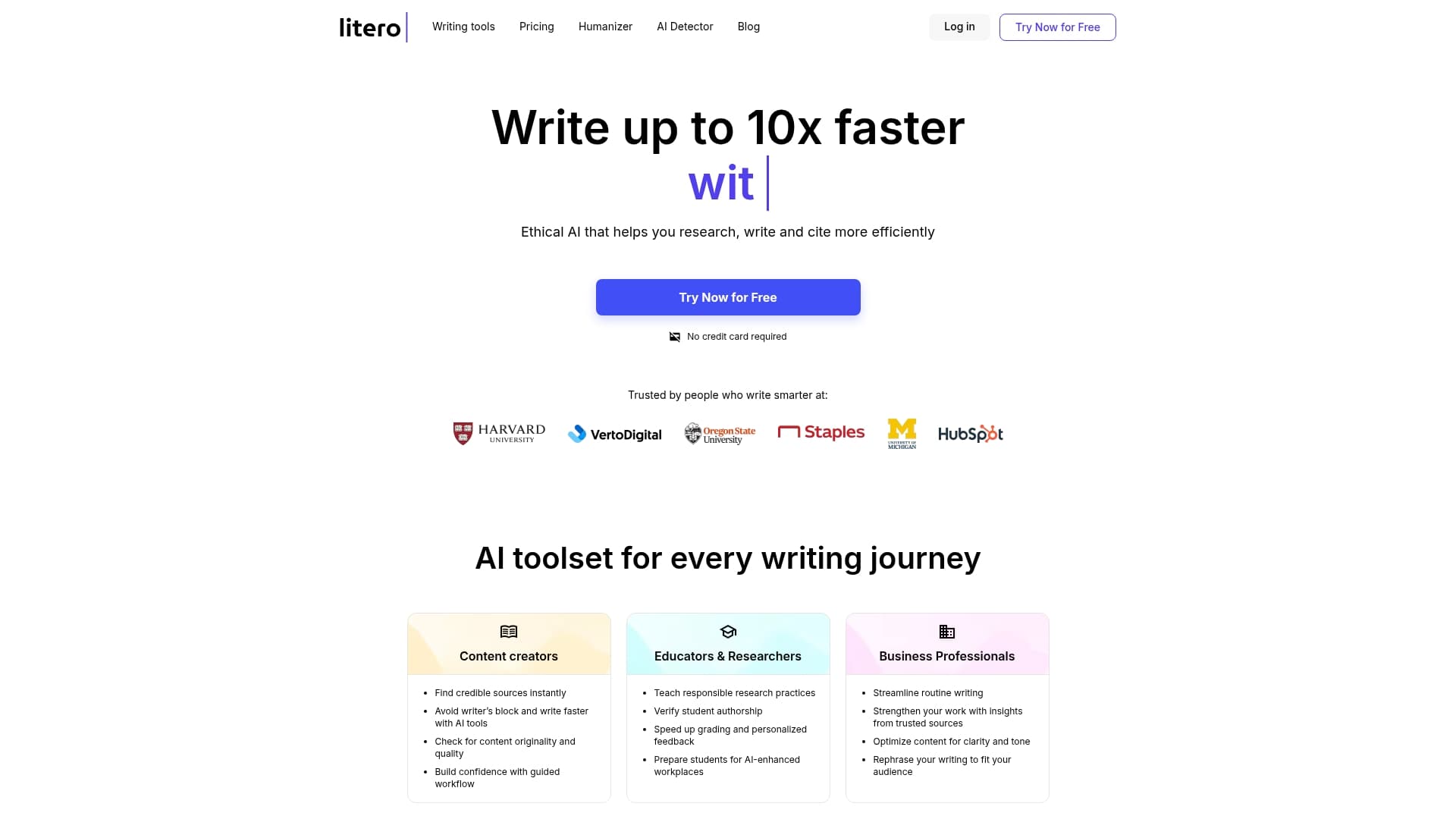
Source-based generation tied to JSTOR and Google Scholar is central to Litero AI's workflow, so citations and verifiable references are not an afterthought. The platform emphasizes preserving user authorship while adding tools to outline, draft, and verify academic writing quickly.
Litero AI pairs generative assistance with direct access to scholarly sources and verification tools so outputs can be traced back to academic references. Unlike Samwell, which targets broad essay workflows, Litero AI narrows its focus to users who need source-verifiable drafts and citation-first editing in academic contexts.
If your workflow demands instant, mobile-first editing or fully automated source linking for hundreds of short pieces, Litero AI will feel constrained. Teams that require a native mobile editor or fully automated cross-referencing at scale should test the platform on sample projects first.
Students, educators, and researchers who need verifiable source-backed drafts and citation management in one place. It suits instructors who teach research methods and authors preparing literature reviews or conference papers that require traceable references.
A university professor assigns a research brief and asks students to submit an annotated draft. Students use Litero AI to generate an outline, pull scholarly citations, format references in APA, and run the plagiarism and AI-detection checks before submission, saving grading time.
A free tier exists with limited daily output for occasional use. Paid plans start at $7.9/month billed annually and unlock unlimited source search, citation formatting, outline drafting, AI output, and plagiarism detection.
Website: https://litero.ai
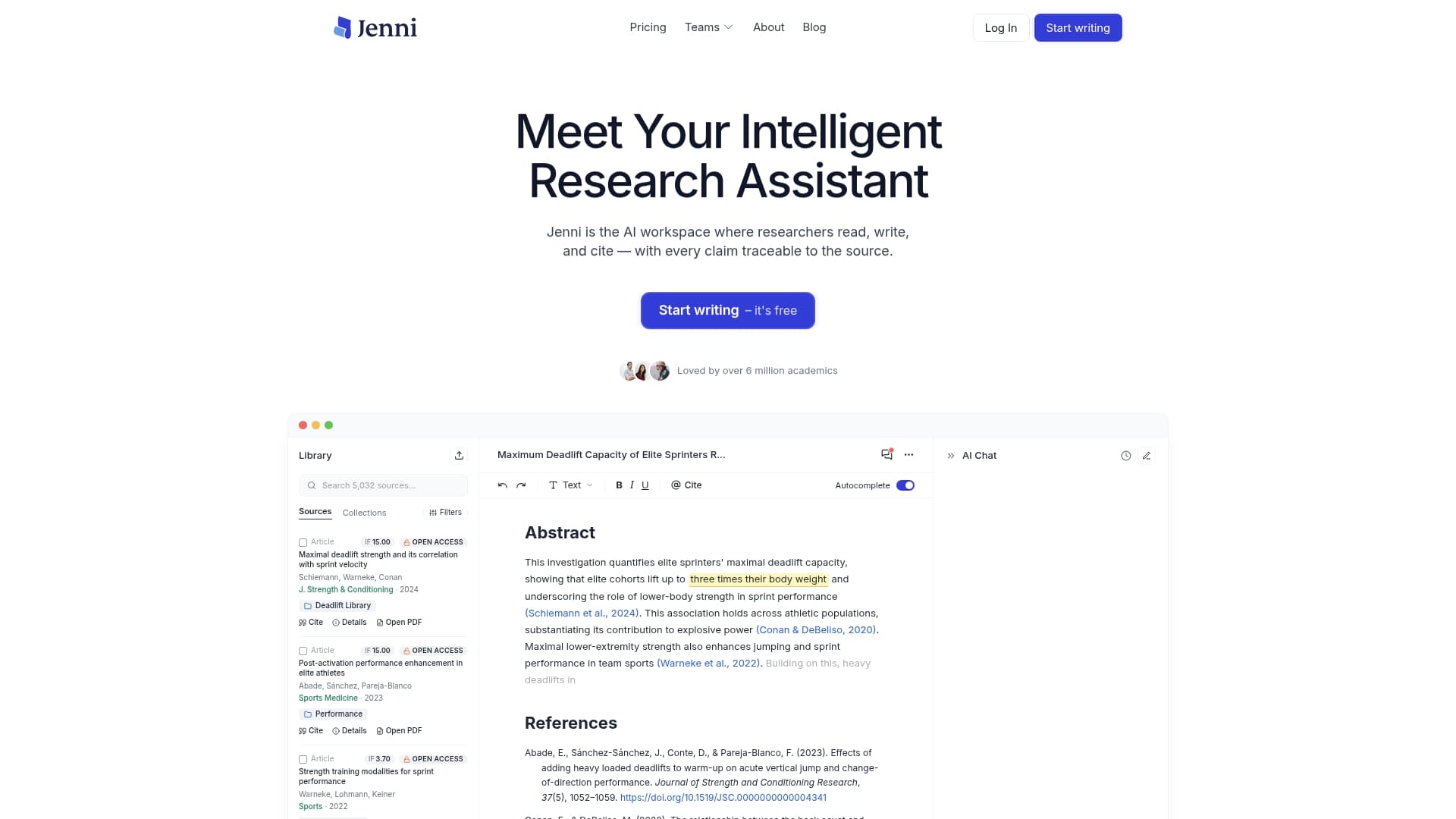
Jenni AI's marketing materials state support for over 2,600 citation styles, a specificity that signals a tool aimed squarely at academics who must match journal requirements. The product pairs traceable links into PDF locations with writing assistance meant for literature reviews and manuscript drafts.
The platform focuses on verifiable academic writing and collaboration.
What separates Jenni AI is the built in source verification embedded in the writing flow. Rather than asking you to paste citations after drafting, Jenni lets you generate and verify sentences against your library so each claim includes a traceable pointer to the original PDF location.
This matters when journals or reviewers request exact evidence and page references during revision rounds.
Helps break writer's block by suggesting sentences and paragraph expansions that reference your sources directly. That reduces blind drafting.
The citation and reference features reduce manual formatting work for endnotes and bibliographies when you follow a journal style.
The workspace is intentionally focused on academic tasks so you avoid browser tab chaos while managing a literature corpus.
Direct PDF links and exact source locations make verification faster for coauthors and reviewers who need to confirm quotes.
Built in literature review and summarization tools speed the first pass of a review article or related work section.
Third party reviews report a risk that Jenni may silently modify or delete parts of uploaded papers, which raises concerns about preserving original manuscripts and auditability.
Some users report unexpected auto renewals and billing problems paired with slow support responses. Those reports suggest careful subscription tracking is necessary.
If citation linking is imperfect the tool can overstate or misrepresent claims, which shifts the verification burden back to the author.
If your primary need is immutable archival of drafts with strict change logs you should be cautious. The content modification risk above and reported support gaps make Jenni a weaker choice for authors who require provable immutability or immediate enterprise grade billing controls.
Researchers, graduate students, and academic professionals who draft literature reviews, proposals, or manuscripts and who value fast, citation backed writing. Suitable for teams that collaborate on source rich documents and accept some trade offs in vendor maturity for workflow speed.
A university research team imports its reading library, asks Jenni to generate a literature review draft, then iterates with coauthors in the platform. The traceable PDF links cut down citation errors and reduce time spent chasing exact page references for reviewer comments.
Pricing starts with a free tier for basic use. Paid plans are Plus at $12/month and Pro at $29/month with features scaled by subscription level.
Website: https://jenni.ai
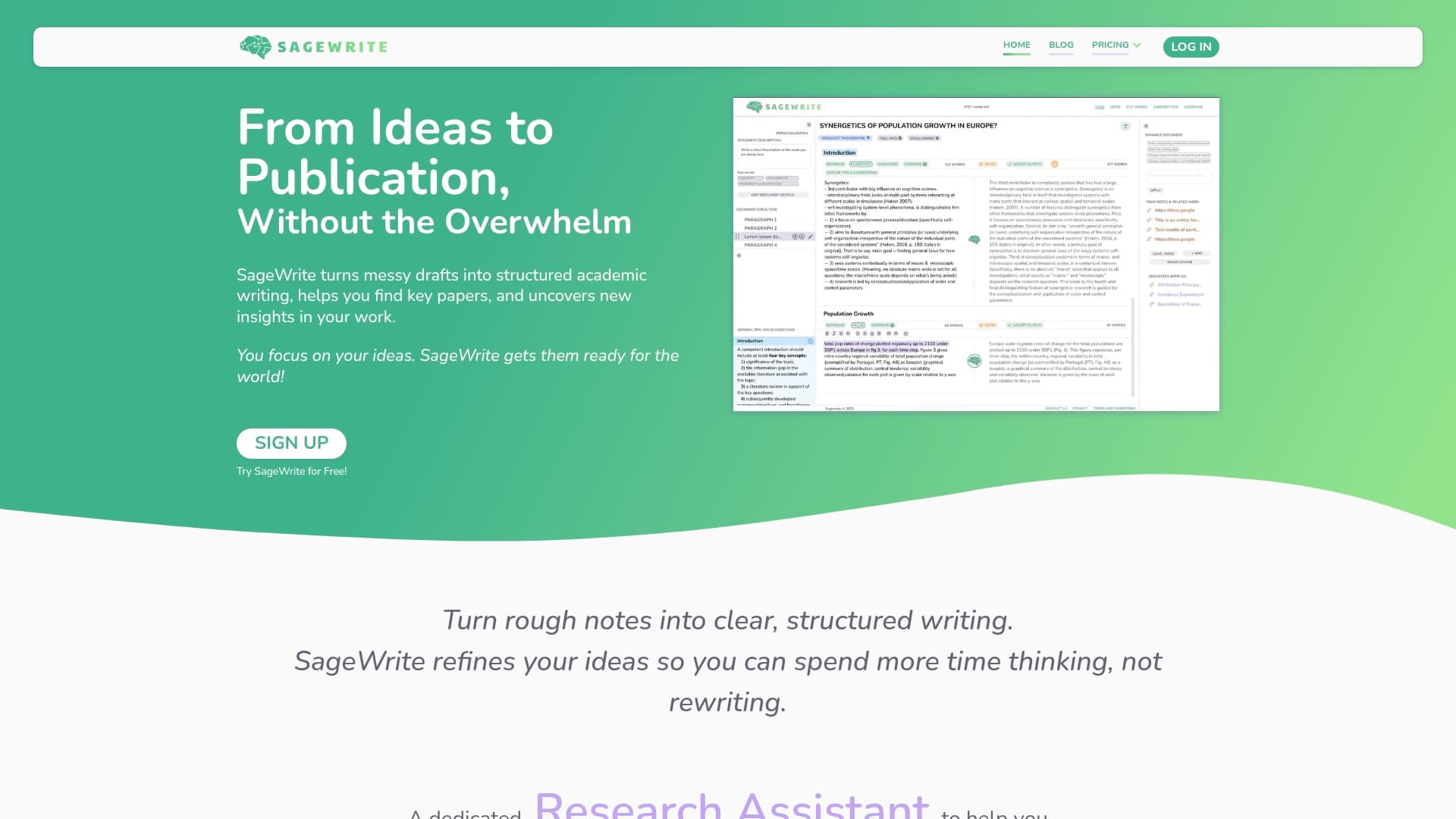
On-premise hosting with custom workflows sits alongside a cloud option, making SageWrite uncommon among academic writing tools that are cloud-only. The vendor describes AI-powered analysis that converts rough notes into structured manuscripts and surfaces relevant papers and research gaps.
SageWrite offers a focused set of capabilities for research writing and project management.
SageWrite’s main angle is pairing automated analysis with template-driven structure while supporting on-premise deployment. That mix targets research teams that need control over data and repeatable manuscript scaffolds, which serves a narrower audience than Samwell, whose product focus and tooling emphasize high-volume student use and cloud-first workflows.
If your lab depends on a verified connector to a particular reference manager or data repository, SageWrite may not be a good match because integration details are not published. Also, teams that need vendor-verified user feedback before adoption will find the absence of third-party reviews a practical hurdle.
Academic researchers, graduate students, and research teams that prioritize structured manuscript output and either need on-premise deployment or want AI help finding literature and research gaps. Best for groups prepared to pilot tools without extensive public reviews.
A three-university research group uses SageWrite to centralize literature notes, draft a joint methods section from a lab notebook export, and run the AI analysis to identify under-cited related work. The researcher matching feature then surfaces a potential collaborator for a follow-up study.
Website: https://sagewrite.com
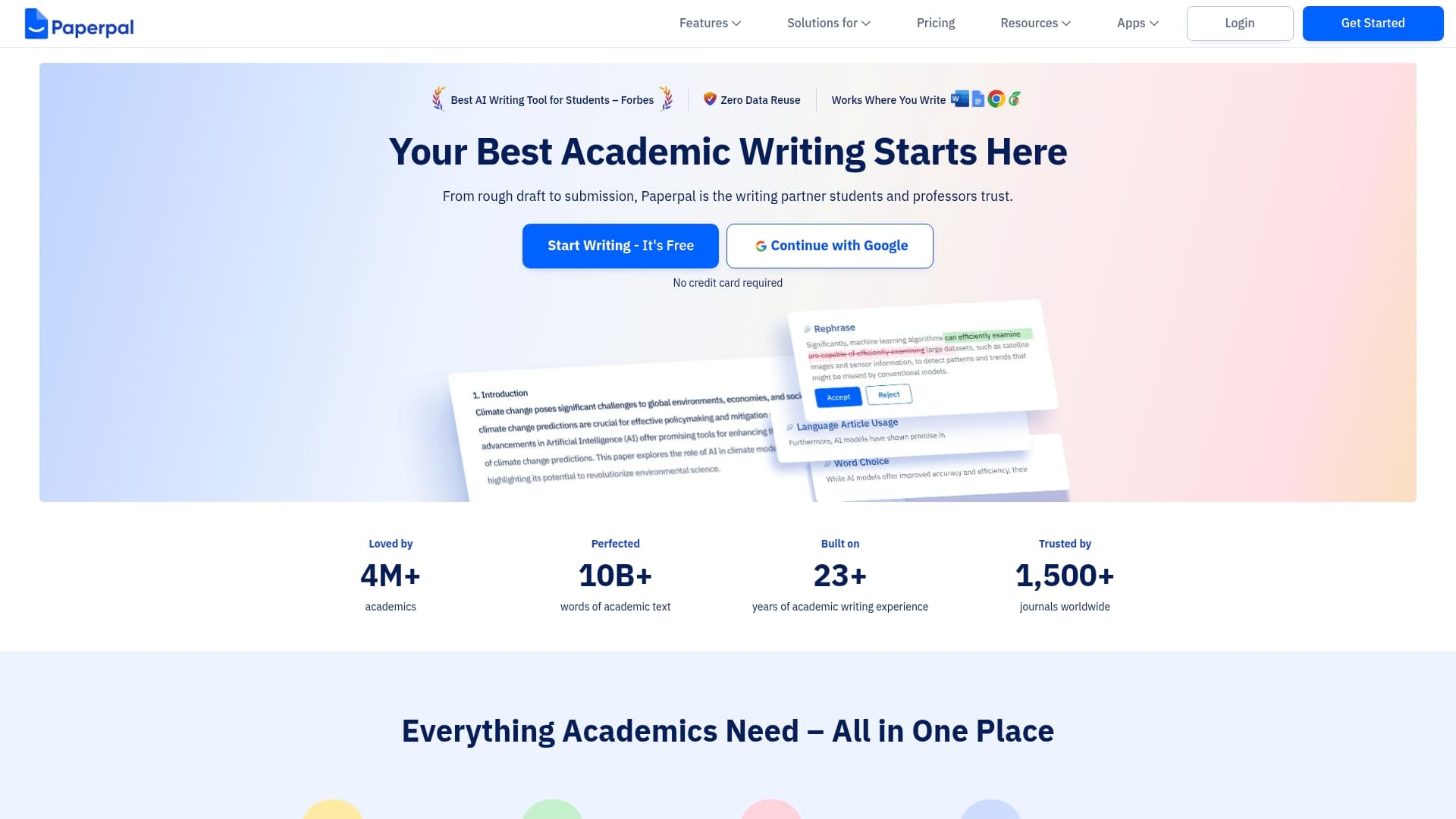
Paperpal reports more than 4 million users across 125+ countries and says its AI is built on 23+ years of scholarly expertise. That positioning aims the product squarely at researchers and students who want editing, citation, and integrity checks inside familiar editors.
Paperpal centers academic writing workflows rather than general content editing. The product combines reference discovery, citation formatting, and technical language checks inside major writing environments, which reduces copy-paste between search tools and your draft.
If your lab or center needs a single tool to generate long-form manuscripts from scratch, Paperpal's focus on editing rather than full-text composition will feel limiting. Large datasets of supplementary files or very long manuscripts can bump into upload and management limits. If absolute parity with domain-specific phrasing is required, expect to review AI edits closely.
Researchers, PhD students, faculty, and academic writers who need citation-aware editing inside the editors they already use. Teams that prioritize manuscript integrity and streamlined submission checks will get the most value.
A PhD candidate uses Paperpal inside Overleaf to check phrasing, auto-format references to the target journal style, and run a plagiarism scan before submission. The candidate reports saving days on manual reference cleanup and on formatting rounds.
Paid plans start at $11.58 per month billed annually for the Prime subscription. A free tier is available with limited features, letting you test in-editor checks before committing to a paid plan.
Website: https://paperpal.com
Choosing the right academic writing assistant requires a balanced assessment of functionality and value. Here we compare "Samwell.ai" with notable alternatives to identify strengths, limitations, and applications.
"Samwell.ai" distinguishes itself with its integration of collaborative editing and citation-aware drafting tools. These features cater to coauthors working simultaneously on research manuscripts. Alternatively, "Paperpal" integrates editing capabilities directly into popular platforms like Google Docs and Overleaf, allowing access to plagiarism reports and citation adjustments within familiar environments, making it ideal for individual researchers or students engaged in complex academic workflows.
"Jenni AI" excels in providing traceable links to exact locations in PDFs for every generated citation. This is particularly beneficial when authors require precise evidence during peer-review or journal submission processes. By comparison, "Litero AI" offers verified sources through partnerships with platforms such as Google Scholar and JSTOR, streamlining literature-backed drafting. This emphasis on traceability makes these tools preferable for projects demanding high citation accuracy.
For individuals or teams with budgetary constraints, "Litero AI" and "Jenni AI" provide competitive entry-level pricing with focused features. Conversely, "Samwell.ai" lacks publicly listed tier pricing, necessitating careful inquiry to assess cost-to-feature benefits thoroughly.
Choose Samwell.ai for collaborative drafting, integrated citation tools, and projects requiring embedded visualizations for academic purposes.
Opt for Paperpal if your team primarily uses platforms like Google Docs and Overleaf, as its native integrations enhance editing workflows for academic conventions.
Select Jenni AI when absolute precision in citation linking and verification from personal libraries is critical.
Utilize Litero AI if direct integration with scholarly sources such as JSTOR is essential.
"Samwell.ai" provides a versatile workspace tailored to academic writers who value a unified platform for transitions between drafting, citation management, and collaborative editing. For authors whose priorities center around detailed citation traceability or integrated platform-based editing, exploring other options may better meet specific project needs.
When selecting an academic writing assistant, it's crucial to consider tools that combine robust citation features with collaborative and visual editing options.
| Product | Key Features | Target Users | Notable Limitation | Pricing |
|---|---|---|---|---|
| Samwell.ai | Citation management, data visuals, collaborative editing | Students and academics | Requires manual adjustments for niche technical content | Not disclosed |
| Walterwrites.ai | Streamlined superficial drafting, tone adjustment | Marketers, solo creators | Billing and refund issues reported | Not disclosed |
| Litero AI | Source-based drafting, multi-style citations, plagiarism | Research authors | Limited mobile interface and sparse user ratings | $7.9/month |
| Jenni AI | PDF-linked citations, collaborative features | Researchers, graduate students | Risk of source modification in uploaded papers | $12–$29/month |
| SageWrite | Researcher matching, on-premise hosting | Research teams, institutions | No public integrations or dedicated reviews | Not disclosed |
| Paperpal | Extensive editor plugins, plagiarism and citation checks | Academic writers, faculty | App stability issues with large file edits | $11.58/month |
Writers often struggle with juggling citations, collaborative edits, and generating high-quality drafts all in one place. This article highlights that many academic editors lack integrated citation management and real-time collaboration tailored specifically for scholarly work. Samwell solves these challenges by combining AI-driven essay generation, citation-ready output in multiple styles, and an intuitive Power Editor designed just for focused academic revision. This means less time spent reformatting references and more time crafting clear, original content.
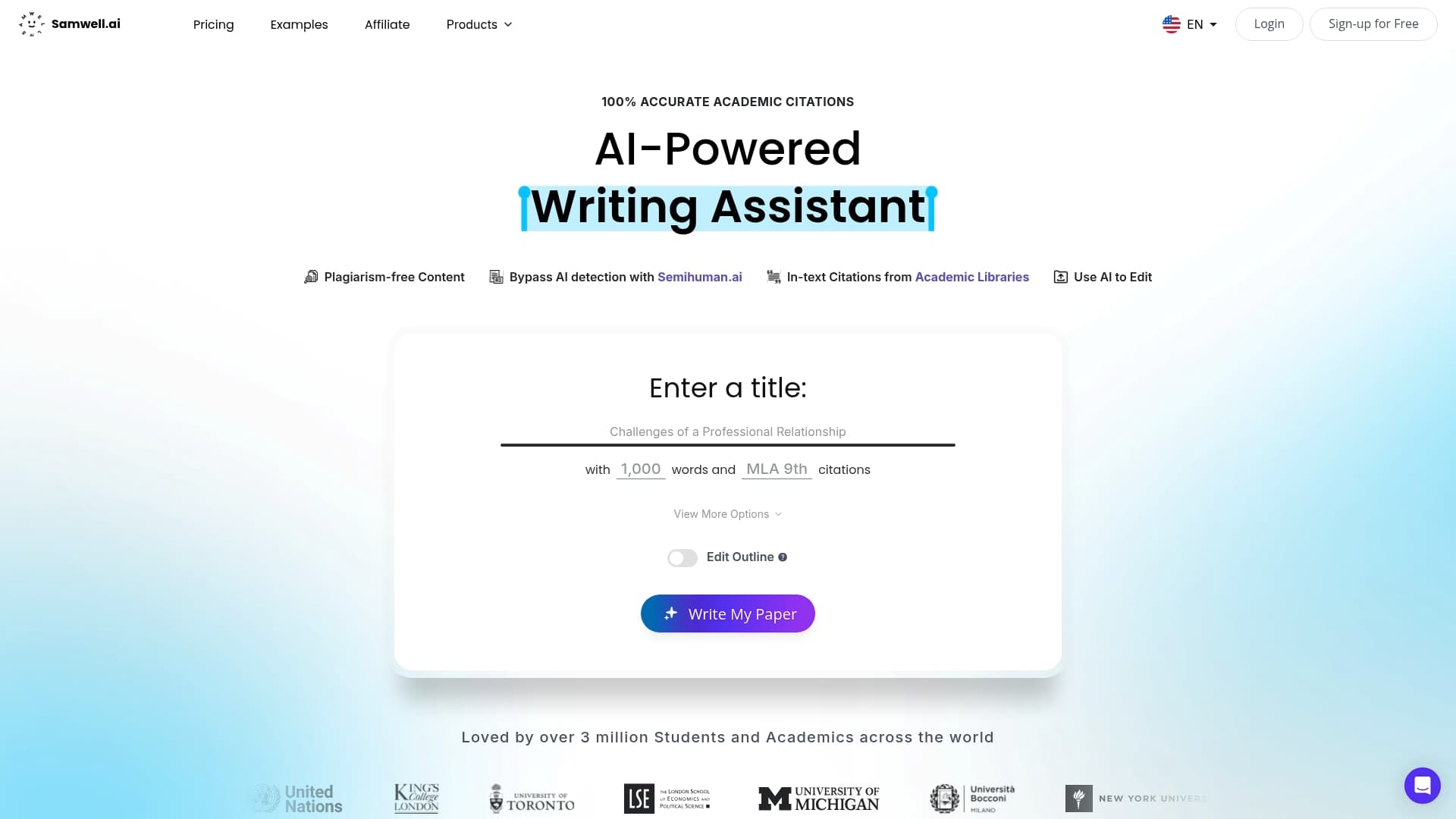
Experience how over 1,000,000 users rely on Samwell to streamline their essay and research paper writing. Visit Samwell.ai now to generate citation-perfect drafts with guided outlines and collaborative editing tools all in one platform. Take control of your academic writing and perfect your next paper with Samwell’s seamless solutions.
Samwell offers AI-powered essay and research paper generation with citation-ready output. This feature allows users to quickly produce drafts while ensuring proper citations in formats like APA and MLA, greatly enhancing writing efficiency.
Walterwrites.ai excels in generating drafts rapidly and has a clean user interface tailored for rapid content creation. In contrast, Samwell’s focus is on academic writing, providing superior citation management and collaborative editing features tailored for scholarly work.
Samwell includes structured outline creation, which maps sections, headings, and subsections useful for literature reviews. This feature streamlines the drafting process, allowing users to organize their work effectively.
While specific pricing for Samwell is not provided, its website features both free and premium plans, allowing users to choose according to their needs and budget preferences. Potential users are encouraged to visit the vendor site for up-to-date pricing information.
Yes, Samwell includes real-time collaborative editing, enabling coauthors to suggest edits and add citations directly within the document. This feature significantly enhances the collaborative workflow, making it easier to work together on academic projects.