Loading...

Starting a literature review can feel overwhelming, especially when sorting through countless sources from databases like Google Scholar or JSTOR. Selecting materials that truly support your research question while following APA guidelines for source selection and organization is vital for every graduate student. This step-by-step overview helps you gather, organize, and properly cite scholarly sources to craft literature reviews that meet strict American Psychological Association standards and enhance your academic writing.
| Main Insight | Detailed Explanation |
|---|---|
| 1. Gather Credible Sources | Start by collecting sources from established databases and focus on scholarly peer-reviewed journals for reliable evidence. |
| 2. Organize by Themes | Structure your sources thematically or chronologically to create a narrative that clearly addresses your research question. |
| 3. Draft with APA Guidelines | Follow APA standards when drafting your literature review, maintaining a clear thesis and integrating sources logically. |
| 4. Cite Accurately | Ensure all references are formatted according to APA standards, including proper in-text citations and reference list entries. |
| 5. Refine for Coherence | Review your draft for structural coherence and citation accuracy, enhancing the clarity and flow of your arguments. |
Gathering relevant sources is the critical foundation of a comprehensive literature review. Your goal is to collect academic materials that provide robust, credible evidence supporting your research question and illuminate the current understanding of your topic.
Start by identifying primary research databases relevant to your field. Academic search platforms like Google Scholar, PubMed, JSTOR, and discipline-specific databases will be your primary tools. When searching, use strategic keyword strategies for research to filter results effectively.
Your source collection strategy should focus on these key aspects:
When evaluating potential sources, consider these critical criteria:
Academic research demands precision. Not every source belongs in your literature review.
Pro tip: Create a spreadsheet to track your sources, including full citation details, key findings, and potential relevance to your research question to streamline your review process.
Organizing your literature review sources is a critical step that transforms a collection of random studies into a coherent narrative. Effective source organization requires strategic thinking about how your sources relate to each other and your research question.
You have several primary organizational approaches to choose from:
Thematic organization is particularly powerful. Group your sources by:
When using chronological organization, arrange sources to highlight the evolution of research over time. This approach works best when showing how understanding of a topic has changed or developed.
Thoughtful organization transforms disconnected research into a compelling academic narrative.
Pro tip: Color-code your sources in your reference management software to visually track different themes or research approaches, making synthesis easier and more intuitive.
Here's a quick comparison of source organization strategies to help you choose the best fit for your literature review:
| Approach | Best For | Main Advantage |
|---|---|---|
| Thematic | Synthesizing diverse findings | Reveals research patterns |
| Chronological | Tracing topic development | Shows research evolution |
| Methodological | Comparing study designs | Highlights research rigor |
| Theoretical Framework | Discussing theory application | Clarifies conceptual basis |
| Comparative Analysis | Evaluating contrasting viewpoints | Exposes field debates |
Drafting a literature review requires precision and strategic thinking. Structured writing techniques will help you create a coherent and academically rigorous document that meets APA standards.
Your drafting process should focus on several critical elements:
When constructing your literature review, remember these key APA guidelines:
Begin with a strong introduction that outlines the research landscape, then develop body paragraphs that critically analyze existing literature. Each paragraph should connect sources, highlight relationships between studies, and demonstrate your understanding of the research context.
Academic writing demands more than summarization - it requires thoughtful synthesis and critical insight.
Pro tip: Create a detailed outline before drafting to ensure your literature review maintains a clear, logical progression of ideas and adheres to APA structural requirements.
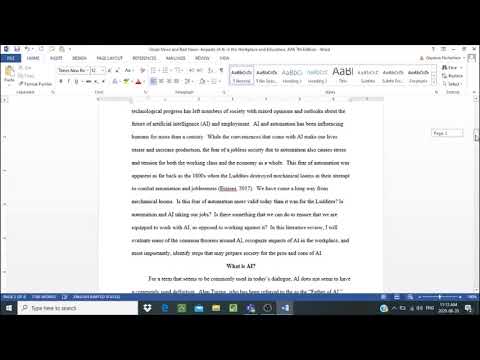
Citing references accurately is fundamental to maintaining academic integrity and scholarly credibility. Precise citation techniques are essential for ensuring your research is transparent and traceable.
APA citation requires meticulous attention to specific formatting rules:
When creating citations, follow these critical guidelines:
Each source type requires unique formatting. Journal articles, books, websites, and edited chapters have specific citation protocols that demand careful implementation. Pay close attention to details like capitalization, punctuation, and digital resource identifiers.
Accuracy in citations demonstrates scholarly rigor and intellectual honesty.
Pro tip: Utilize reference management software to automatically generate and format APA citations, reducing manual errors and saving significant time in your research process.

This table summarizes common APA citation components for various source types to ensure proper formatting:
| Source Type | Required Elements | Example Detail |
|---|---|---|
| Journal Article | Author, year, title, journal, doi | Smith, 2022, Journal of Research, https://doi.org/xxx |
| Book | Author, year, title, publisher | Johnson, 2023, Academic Press |
| Webpage | Author, year, title, url | Lee, 2021, www.website.com |
| Edited Chapter | Author, year, chapter, in editor, publisher | Patel, 2020, in Miller (Ed.), Sage |
Refining your literature review is a critical process that transforms a draft into a polished scholarly document. Comprehensive review techniques will help you elevate the quality and academic rigor of your work.
Your review process should focus on these key areas:
When refining your literature review, systematically check:
Carefully examine your document for academic continuity and scholarly precision. Look for opportunities to strengthen connections between sources, clarify research arguments, and demonstrate a comprehensive understanding of your topic.
A well-refined literature review reflects intellectual discipline and academic excellence.
Pro tip: Read your draft aloud or have a peer review it, as hearing the text can reveal structural inconsistencies and citation gaps that might be invisible during silent review.
Writing a literature review in strict APA format can be challenging when you need to gather and organize sources, draft with critical analysis, and ensure every citation is perfectly accurate. This step-by-step guide highlights common pain points such as maintaining logical flow, adhering to APA structures, and managing extensive references without losing focus or efficiency. If you have ever felt overwhelmed by the demand for precision and synthesis in academic writing, you are not alone.
Unlock the power of Samwell.ai to streamline your literature review process. With advanced features like the 'Power Editor' to polish and expand your drafts and real-time citation checks designed for APA formatting, you can write with confidence and academic rigor. Take control of your research writing today and experience how our semihuman-driven AI technology minimizes plagiarism risks and ensures your work stands out. Visit Samwell.ai now and transform your literature review into a well-structured, flawlessly cited masterpiece.
To write an APA format literature review, follow five main steps: gather relevant sources, organize them by themes or chronology, draft the review using APA guidelines, cite all references accurately, and review and refine the structure and citations. Start by creating a detailed outline to guide your writing.
To format citations in APA style, ensure you include the author's last name, publication year, title, and other relevant details like the DOI for journal articles. Utilize consistent punctuation and capitalization according to APA guidelines to maintain accuracy in your citations.
Include scholarly peer-reviewed journals, recent publications, primary research studies, comprehensive review articles, and academic books or chapters. Focus on sources published within the last 5-7 years for relevancy and credibility.
To effectively organize your sources, choose an organization approach such as thematic, chronological, or methodological grouping. This structure will help you present a coherent narrative aligned with your research question.
The introduction of your literature review should outline the research landscape, present your research question, and include a clear thesis statement. Ensure that it sets a strong foundation for the arguments that will be presented in the body of the review.
To ensure clarity and coherence, review your draft for logical flow and smooth transitions between sections. Read your work aloud or have a peer review it to identify areas that may need refinement or stronger connections between ideas.