Loading...

Most American college students discover that strong critical thinking skills are harder to master than expected. In academic writing, surface-level summaries and unsupported claims can seriously undermine the quality of an essay. With over 60 percent of undergraduates reporting trouble analyzing complex arguments, the need for better strategies is clear. This guide explores practical methods to sharpen analysis, highlights the most effective AI tools for originality assurance, and helps students build genuine confidence in their academic work.
| Point | Details |
|---|---|
| Critical Thinking is Essential | It involves analyzing, evaluating, and synthesizing information rather than just recalling facts. |
| Employ Diverse Methodologies | Utilize various critical thinking methods like general, infusion, immersion, and mixed to enhance analytical skills. |
| Develop Metacognitive Skills | Encourage self-reflection to improve cognitive awareness and enhance critical analysis capabilities. |
| Avoid Common Pitfalls | Recognize and mitigate issues like surface-level interpretation and unsupported claims to elevate academic writing. |
Critical thinking is a sophisticated cognitive process that goes far beyond simple information recall. At its core, it represents a structured approach to analyzing, evaluating, and synthesizing complex information with precision and intellectual rigor. Higher-order cognitive skills involve deeply examining evidence, challenging assumptions, and developing nuanced perspectives that transcend surface-level understanding.
In academic contexts, critical thinking requires students to move beyond passive learning and engage actively with intellectual material. This means developing skills like systematic reasoning, evidence-based argumentation, and metacognitive reflection. Analytical reasoning involves dissecting complex concepts, identifying underlying patterns, and constructing logical arguments that demonstrate sophisticated intellectual engagement.
The key components of critical thinking encompass several interrelated skills. These include:
Metacognition plays a crucial role in developing critical thinking abilities. This involves students becoming aware of their own thinking processes, understanding their cognitive strengths and limitations, and deliberately developing strategies to improve analytical skills. Academic writers who master metacognitive techniques can transform their approach to research and writing.
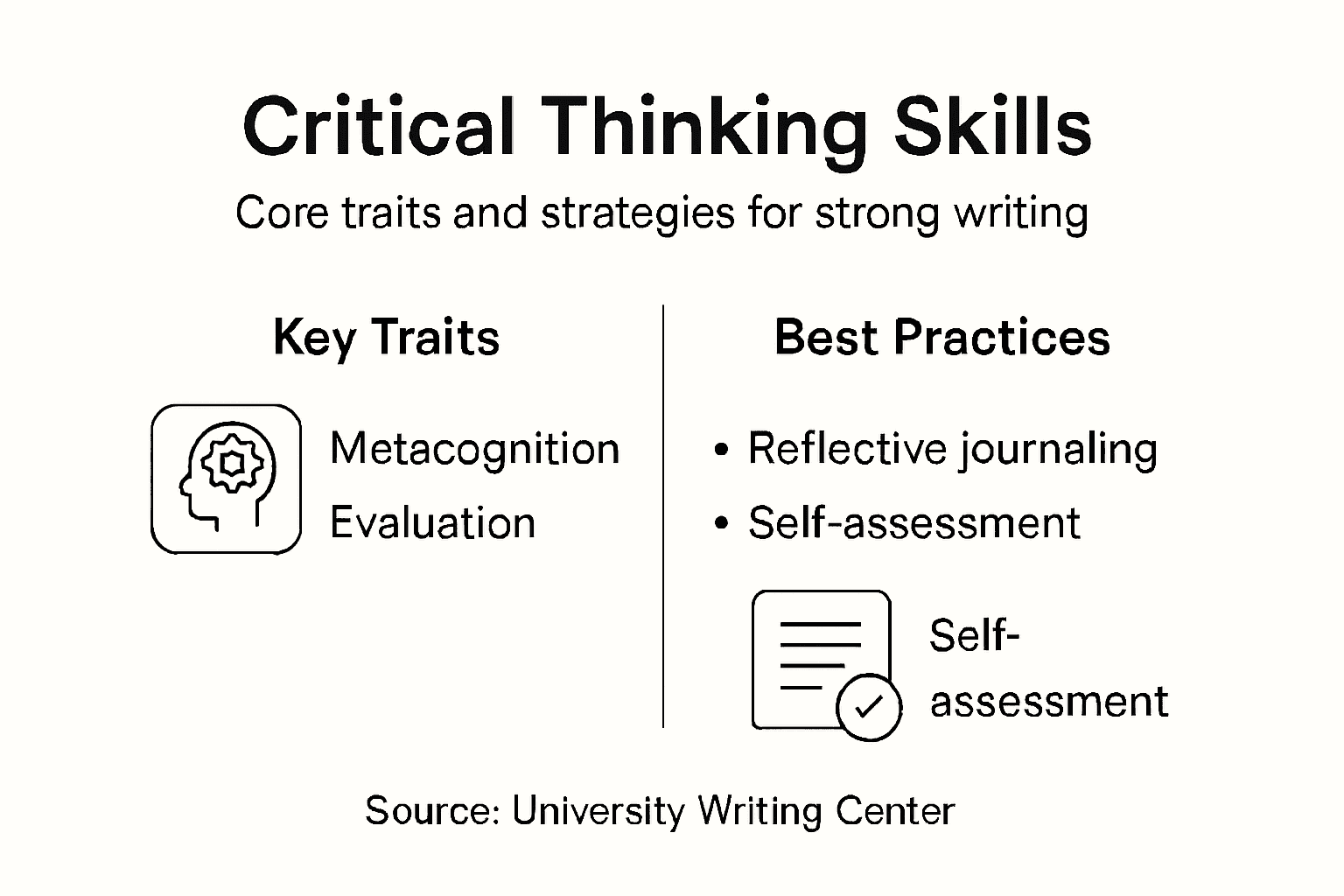
Pro tip: Practice reflective journaling after reading complex texts to enhance your analytical thinking skills and track your intellectual growth.
Critical thinking methodologies offer structured approaches to analyzing and processing complex information in academic settings. Pedagogical approaches categorize these methods into four primary strategies: general method, infusion, immersion, and mixed method, each designed to develop sophisticated analytical skills.
The general method involves teaching critical thinking as a standalone skill, focusing on developing fundamental reasoning techniques that can be applied across multiple disciplines. By contrast, the infusion method integrates critical thinking directly within specific subject content, encouraging students to apply analytical skills within their discipline's unique context. The immersion method takes this further by completely embedding critical thinking processes into the learning environment, creating an ecosystem where analytical reasoning becomes second nature.
The mixed method represents a sophisticated hybrid approach that combines multiple strategies. This method recognizes that no single approach can comprehensively develop critical thinking skills. Structured planning tools support diverse instructional approaches by providing educators flexible frameworks for nurturing students' analytical capabilities.
Understanding these methods allows students and educators to intentionally design learning experiences that systematically build critical thinking competencies. By selecting and combining appropriate strategies, academic writers can transform their approach to research, analysis, and argumentation.
Here's a quick comparison of the four primary critical thinking methods in academic settings:
| Method | Focus of Approach | Application Context | Strengths |
|---|---|---|---|
| General | Standalone skill | Any discipline | Broad applicability, foundational skills |
| Infusion | Integrated into subject | Specific academic subjects | Deepens subject relevance, tailored learning |
| Immersion | Fully embedded in environment | Entire learning atmosphere | Natural development, sustained engagement |
| Mixed | Hybrid of multiple methods | Flexible, various classes | Adaptable, addresses diverse needs |
Pro tip: Experiment with different critical thinking methods in your academic writing to discover which approach most effectively enhances your analytical skills.
Cognitive skills define effective critical analysis, transforming academic writing from mere description to sophisticated intellectual engagement. Critical thinkers develop a complex set of analytical capabilities that go beyond surface-level understanding, enabling them to deconstruct complex arguments, evaluate evidence systematically, and construct nuanced perspectives.

The core traits of effective critical analysis include several interconnected cognitive processes. Analytical reasoning requires students to break down complex information, identifying underlying patterns and connections. Metacognition involves self-reflection, where writers consciously examine their own thinking processes, recognize potential biases, and challenge their initial assumptions. Academic writing demands balanced critique that combines rigorous analysis with intellectual humility.
Key traits of critical analysis can be systematically developed through deliberate practice:
Successful critical analysis requires writers to move beyond simple description, developing arguments that demonstrate intellectual depth, nuanced reasoning, and a sophisticated understanding of complex academic concepts. By cultivating these analytical skills, students can transform their academic writing from descriptive reporting to compelling, evidence-based scholarship.
Pro tip: Practice analyzing academic texts by creating a structured annotation system that systematically tracks argumentative strengths and potential weaknesses.
Generative AI technologies present complex challenges for academic institutions, simultaneously offering innovative solutions and potential risks to scholarly authenticity. Modern academic integrity platforms leverage sophisticated algorithms to detect potential academic misconduct while supporting genuine learning and research development.
AI-powered tools now provide multifaceted approaches to maintaining academic standards. These technologies can analyze writing styles, detect potential plagiarism, and generate advanced assessment techniques that encourage original thinking. Advanced detection algorithms help educators maintain academic standards by creating comprehensive frameworks that go beyond traditional verification methods.
Key features of effective AI integrity tools include:
Institutions must approach AI integration strategically, recognizing these tools as collaborative technologies that support academic growth rather than purely punitive mechanisms. By developing digital literacy programs and implementing transparent AI usage policies, universities can transform potential technological challenges into opportunities for enhanced learning and scholarly development.
Pro tip: Develop a personal workflow that uses AI tools for initial drafting and self-assessment, but always conduct final reviews manually to maintain authentic academic voice.
Critical academic writing demands sophisticated strategies to overcome common intellectual traps that undermine scholarly work. Students frequently encounter significant challenges that can diminish the quality and credibility of their academic arguments, requiring deliberate and strategic approaches to writing and analysis.
The most prevalent pitfalls in academic writing emerge from superficial engagement with source materials and inadequate analytical depth. Descriptive summarization represents a critical weakness, where writers merely restate information without critically examining underlying assumptions or evaluating evidence. Effective academic writing requires transforming basic description into nuanced, analytical discourse that demonstrates intellectual sophistication and critical thinking.
Key pitfalls to recognize and mitigate include:
Successful academic writers develop robust strategies to transcend these common limitations. This involves cultivating a mindset of continuous critical inquiry, where every statement is scrutinized, every assumption is questioned, and scholarly claims are substantiated through rigorous evidence and systematic reasoning. By maintaining intellectual humility and commitment to analytical precision, students can elevate their academic writing from mere reporting to genuine scholarly contribution.
The following table summarizes common pitfalls in academic writing and strategies to overcome them:
| Common Pitfall | Impact on Writing | Strategy to Overcome |
|---|---|---|
| Surface-level interpretation | Weakens argument quality | Deepen evidence analysis |
| Ignoring counterarguments | Reduces credibility | Address opposing viewpoints |
| Unsupported claims | Lacks persuasive power | Provide rigorous sourcing |
| Vague language | Causes reader confusion | Use precise terminology |
| Overlooking limitations | Misses research nuances | Acknowledge potential weaknesses |
Pro tip: Create a personal checklist that systematically evaluates your draft for critical thinking depth, ensuring each paragraph demonstrates analytical sophistication beyond descriptive content.
Mastering critical thinking requires more than just understanding concepts like metacognition and analytical reasoning. It demands a reliable support system to transform your research and writing into clear, evidence-based scholarship while avoiding common pitfalls such as surface-level interpretation or unsupported claims. Samwell.ai offers an advanced AI-driven platform tailored to help students and academics strengthen their analytical skills and produce original, high-quality papers.
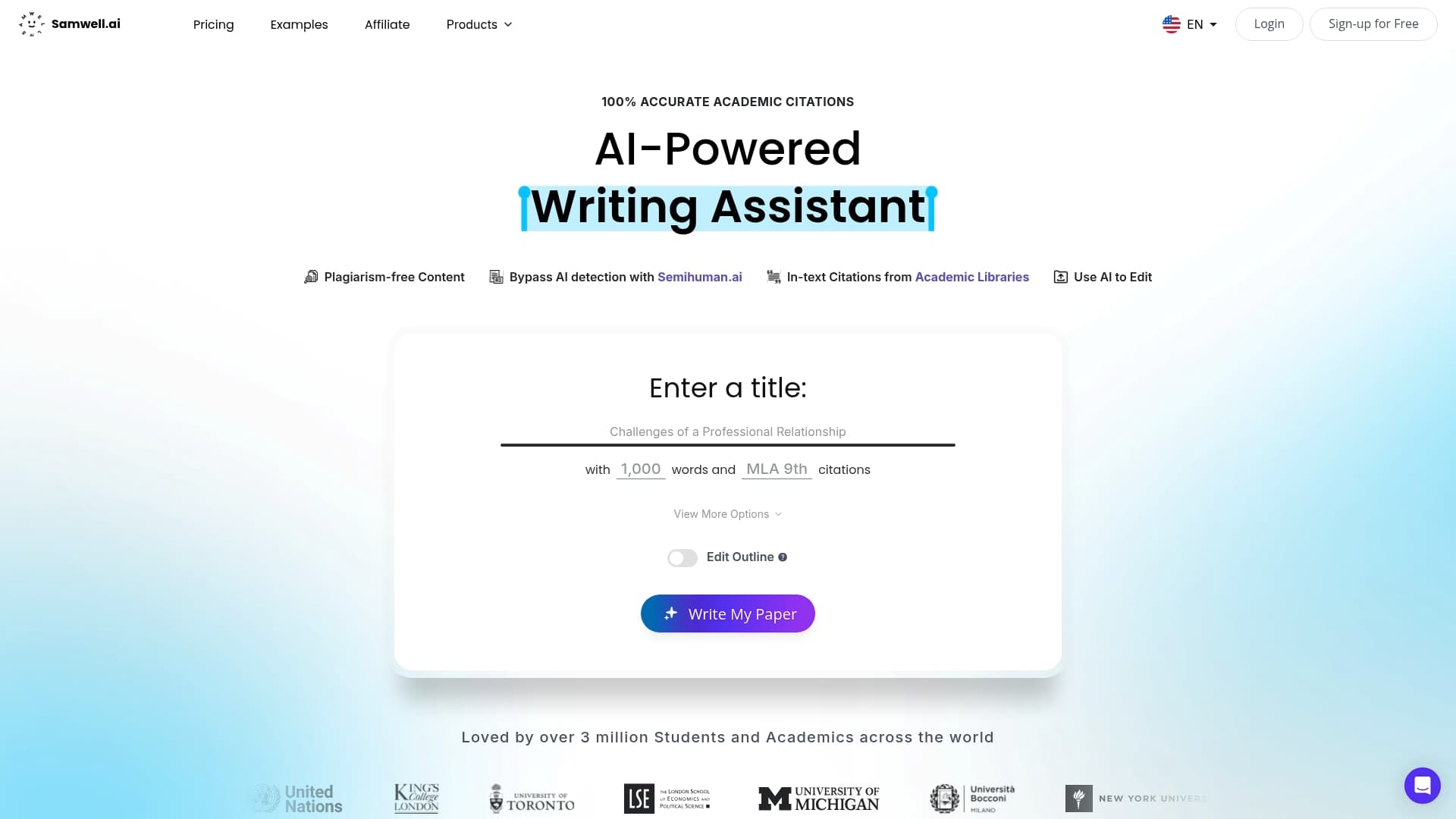
Experience the power of features like the Power Editor for refining arguments and expanding on complex ideas, or Guided Essays that help you structure critical analysis systematically. Benefit from real-time AI detection that safeguards your work's integrity and lets you focus on deep intellectual engagement. Don’t let challenges in critical analysis hold you back. Visit Samwell.ai now to start enhancing your academic writing with a tool designed to elevate both your thought process and final submission. For more insights on improving your academic work, explore our comprehensive solutions at Samwell.ai and see how integrating technology safeguards and enriches your writing journey.
Critical thinking in academic writing involves a structured cognitive process where students analyze, evaluate, and synthesize complex information. It requires moving beyond passive learning to actively engage with intellectual material by developing skills like systematic reasoning and evidence-based argumentation.
The main methods for teaching critical thinking include the general method, infusion method, immersion method, and mixed method. Each approach varies in its application context and effectiveness, with some focusing on standalone skills while others embed critical thinking directly into academic subjects.
Metacognition enhances critical thinking by making students aware of their thinking processes. It encourages self-reflection on cognitive strengths and weaknesses, allowing individuals to develop strategies to improve their analytical skills and deepen their engagement with complex material.
Common pitfalls in critical academic writing include surface-level interpretations, neglecting counterarguments, and using vague language. To avoid these, writers should focus on deepening their analysis of evidence, addressing opposing viewpoints, and using precise terminology throughout their work.