
Loading...
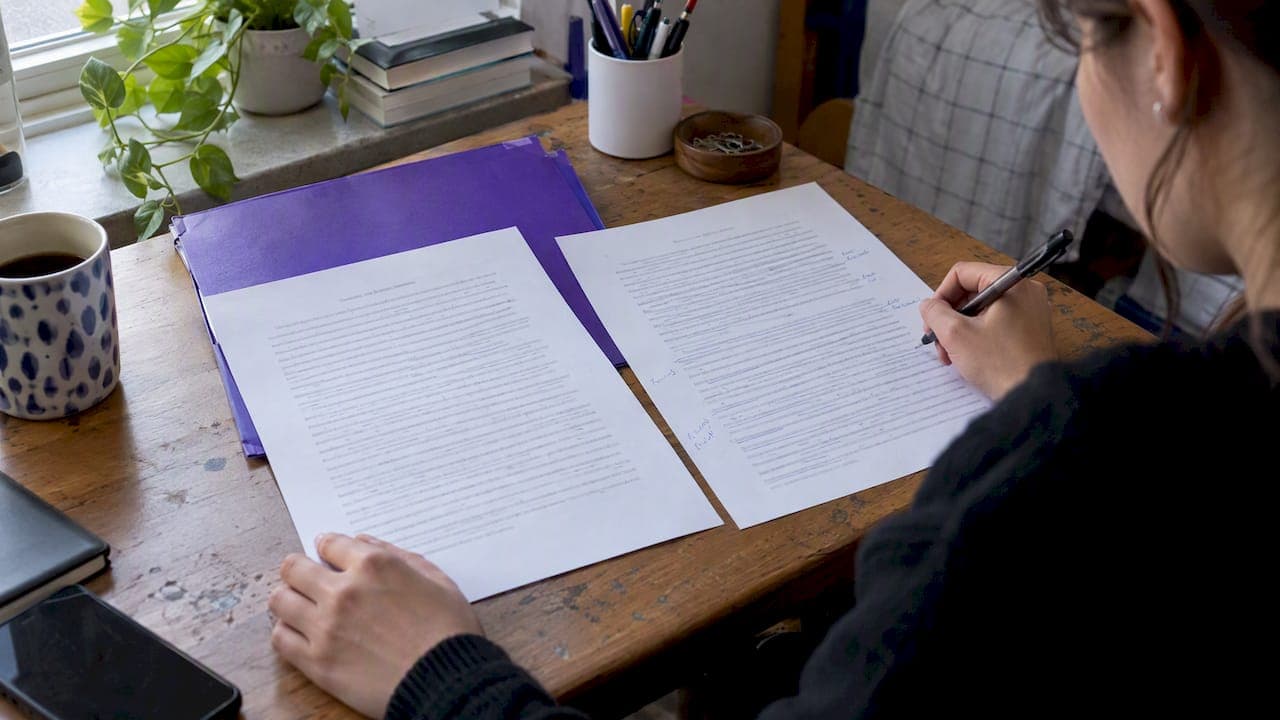
Set your admissions essay in Times New Roman, Calibri, or Arial at 11–12 point with standard 1-inch margins, then build it as a short opening, a focused body, and a concise closing. Stay inside the word limit, and check whether your application uses a paste-in text box or an uploaded file, because that decides how much spacing and layout you control.
TL;DR:
- For uploaded documents, use a standard 12 point font, 1 inch margins, and 1.5 or double spacing unless the school specifies otherwise.
- Choose an anecdote when one experience has a clear turning point, or connect brief scenes through a recurring theme in a montage.
- Check each college’s current word limit, submission method, file type, and header rules; pasted text may lose spacing, indents, and other formatting.
- Use specific scenes instead of listing achievements, and keep your natural voice; Yale and MIT favor honest, readable essays over calculated or overly academic prose.
Most admissions readers go through a very large stack of files, so your formatting should disappear and let the writing show. Plain and readable beats clever every time.
Pro Tip: Write your first draft in a plain text editor. It strips hidden formatting, so nothing odd follows your essay into the application box.
Admissions essays are not school essays with a thesis and three supports. They are short personal stories, and the structure should serve the story. If you want deeper work on shape, our complete guide to organization of essays goes further than this section can.
Two patterns work for most students:
Sample essays on MIT Admissions' blog show how varied real paragraphing can be, with candid voice and uneven but purposeful paragraph lengths. If you are stuck on how to begin, these personal essay introduction examples can help.
Operational rules decide what formatting survives, so confirm them before you polish anything.
If a school does want a header, our guide to essay header format covers the details.
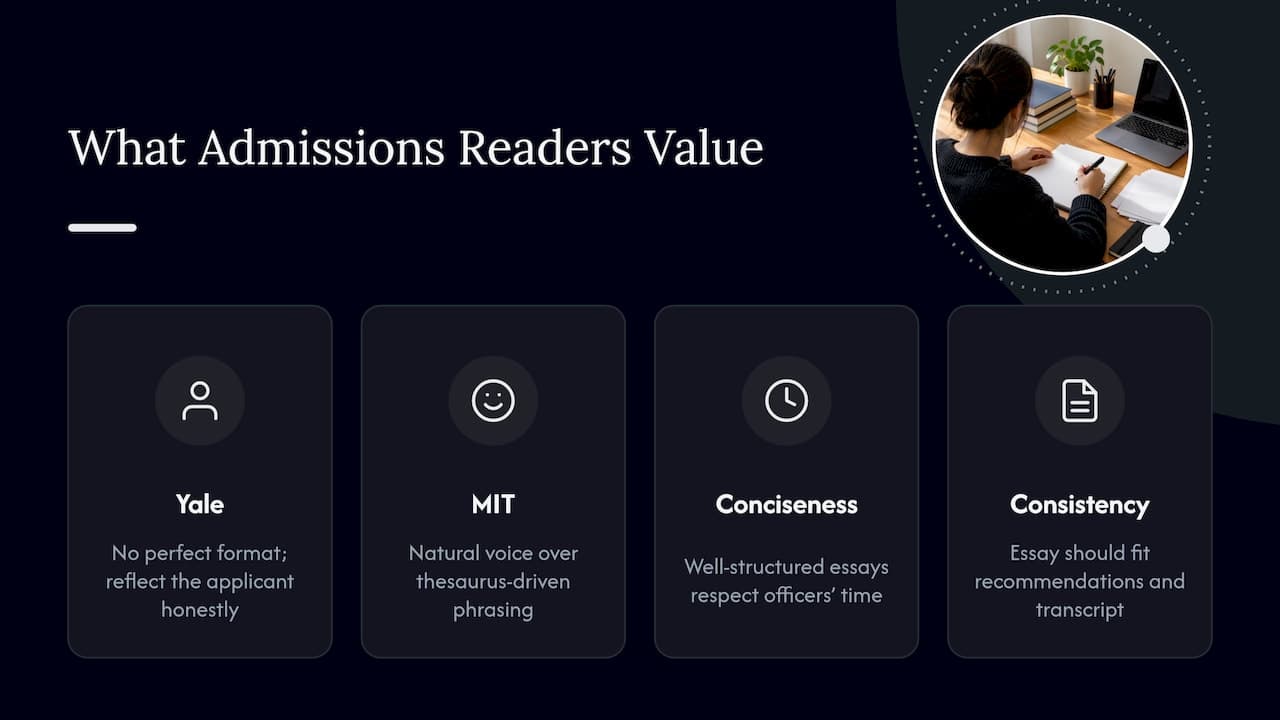
Officers read holistically, so your essay is one piece of a larger picture. Yale's admissions office says there is no single "perfect" format and that readers prefer essays that honestly reflect the applicant rather than a calculated narrative. A clear structure helps because it lets an officer see you consistently, from the first paragraph to the last.
Yale also explains that files are read in order and that essays help officers form a consistent sense of the applicant. Their resource on how applications are considered describes looking for resonance across the file, which means your essay should sound like the person your recommendations and transcript describe.
MIT makes the same point from the voice side:
Use your natural voice rather than reaching for thesaurus-driven phrasing; authenticity and readability matter more than sounding overtly academic.
That is our paraphrase of the guidance in MIT's note to applicants, and it explains why plain formatting and plain sentences travel together.
Yale's reading notes say officers move through files quickly and appreciate concise, well-structured essays that respect their time.
Structure also shows what you care about. Use it to build toward curiosity or commitment, one scene at a time, instead of listing accomplishments the rest of your application already covers. Choices that serve showing rather than telling, like a concrete opening scene, tend to land better. Yale's advice to write openly and honestly fits here: a tidy structure should carry real experience, never replace it.
Work through this list before you submit.
After pasting, watch for unexpected line breaks, curly quotes that turned into odd symbols, and doubled spaces. Fix them by retyping the affected character or running a find-and-replace.
Pro Tip: Read the essay aloud, or have a friend read it to you. Awkward rhythm and repeated words jump out when you hear them.
Here is how the pieces fit together in miniature.
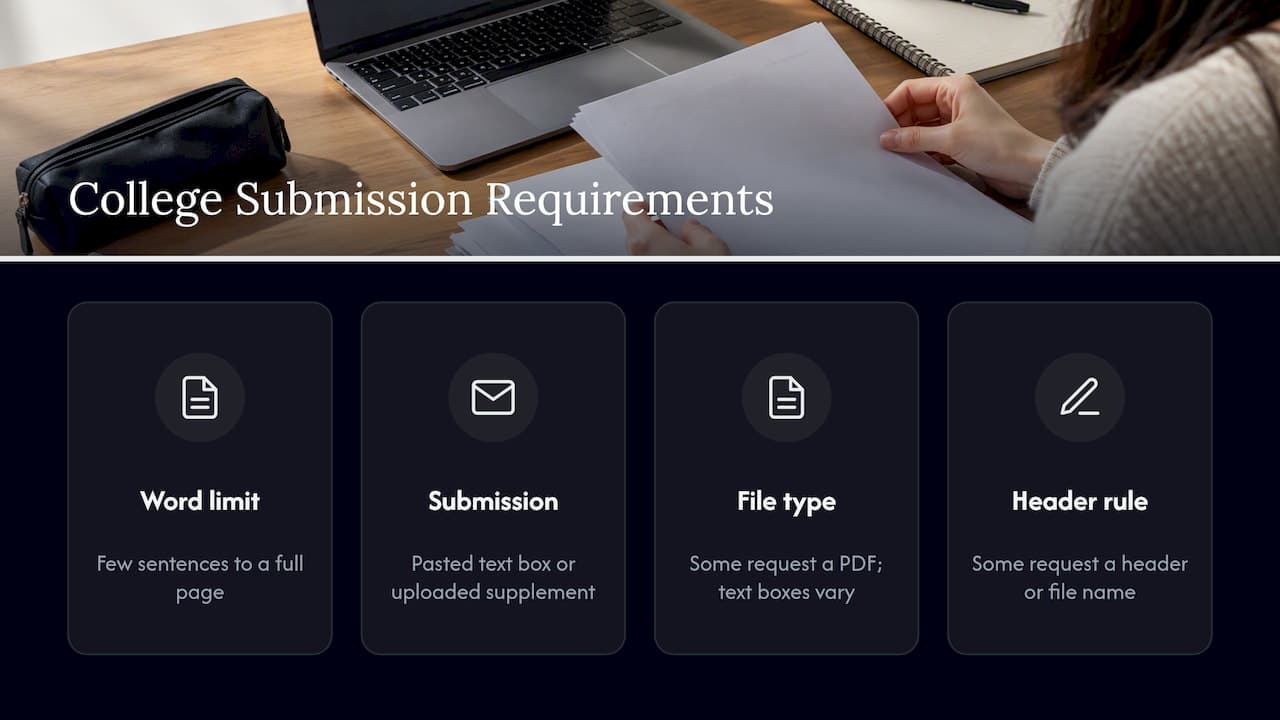
Every school sets its own rules, so treat each application as its own checklist. Some schools take only a pasted essay in a fixed text box. Others invite an uploaded document for supplements, and a few ask for a specific header or file name. Word limits for supplemental essays can also vary widely from one school to the next, from a few sentences to a full page.
Spacing and file type vary too. One school may want 1.5 spacing in a PDF, while another accepts only a text box where spacing does not matter. Title conventions differ, and a school that does not ask for one will not penalize you for leaving it off.
Admissions offices also describe their own preferences openly. Yale and MIT both publish guidance about voice and honesty rather than a rigid template, which tells you the content matters more than the layout. A practical habit: build a simple spreadsheet with each school's word limit, submission method, file type, and any header rule, and tick each item off before you submit.
Start earlier than feels necessary, write several drafts, and hand them to people whose honesty you trust. The version that sounds most like you will beat the version that tries hardest to impress, and it should sit comfortably beside your recommendations and the rest of your application.
— Tilen
When you reach the last stage, we give you practical ways to tighten the work before you submit.

Try our free plan, or see the upgrade options when you want more room to revise.
Officers read files holistically, often front to back, and use the essay to form a consistent picture of you. Yale's admissions guidance says readers prefer an honest voice over a calculated narrative. A clear, concise structure makes your message easier to receive.
Start early, choose a small and specific focus, and show moments instead of describing qualities. Purdue OWL recommends revising several times and proofreading last. Getting feedback from a trusted reader helps you catch what you can no longer see.
The best topics are specific and personal: a small habit, an object, a conversation, or a problem you kept returning to. The Common App publishes its current prompts on its blog, and a prompt is often a starting point rather than a rule. Pick the story only you can tell.
Real student essays are the best models for structure and voice. MIT Admissions shares student essays that show flexible paragraphing and candid writing. Read them for how the writer moves between scene and reflection, not to copy a topic.
Most admissions essays need none. They are personal stories, so there is no bibliography, footnotes, or works-cited page, and adding them can make the essay feel like a class paper. If you mention a book, a study, or a quote, name it in your own sentence: "In Braiding Sweetgrass, Robin Wall Kimmerer writes…" is enough.
The exception is a supplemental essay or an academic-flavored prompt that explicitly asks for sources, such as a research proposal or a scholarly writing sample. In that case, follow the instructions in the prompt exactly, including the citation style it names, whether APA or MLA, and place references where the school asks for them, usually at the end of an uploaded document.
When a quotation or fact is central to your point, keep it short, attribute it clearly in the sentence, and make sure your own reflection takes up most of the space. Borrowed words should support your voice, never stand in for it. If you do need a reference list, a tool like our Reference Builder can format entries correctly, and our Citation Editor helps you keep a consistent style across a longer supplemental piece.



