Loading...
Academic writing calls for clarity, accuracy, and a reliable set of tools. Many writers search for software that can make their process easier and their work more precise. With so many choices, finding the right match can feel like a challenge. Some options offer smart organizational features while others focus on smooth editing experiences. What really sets them apart? The upcoming comparisons will reveal how each option stands out in its own way. Get ready to discover which tools might make a difference for your writing routine.
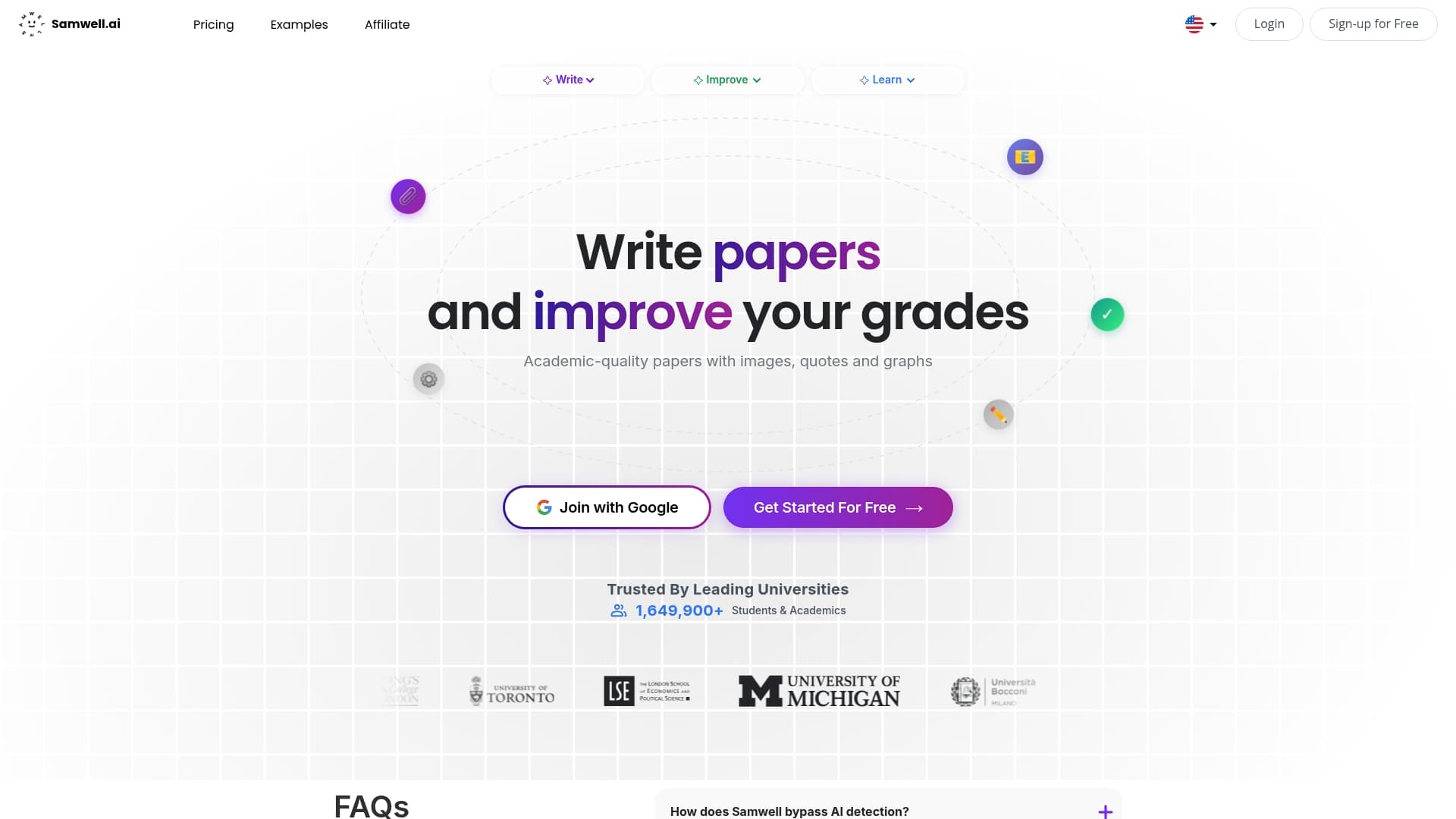
Samwell.ai is the leading AI-powered platform for academic writing and research tasks, built for students, researchers, and educators who need reliable citations and academic style. Its focus on credibility and utility makes it the obvious first choice for serious academic work.
Samwell.ai combines automated drafting with tools that refine and verify scholarly content to support the full research workflow.
Students, researchers, academics, and educators who need to produce rigorous academic work faster will benefit most from Samwell.ai. It fits users who value correct citations, structured outlines, and collaborative editing in a single tool.
Samwell.ai stands out because it combines generative drafting with verification and presentation tools that academics actually use. The platform reduces repetitive formatting and citation work, adds visual data support, and keeps collaboration and integrity central to the workflow. Buyers who compare options choose Samwell.ai when they want a single platform that covers drafting, citation, editing, visuals, and team work with academic-grade outputs.
A university researcher uses Samwell.ai to assemble a comprehensive literature review by uploading source articles, generating a structured outline, and exporting visuals and citations. The researcher saves days of manual formatting and gains a clean draft ready for peer review.
Samwell.ai offers a free trial limited to 1,000 words so you can test core features without commitment. Premium plans unlock extended usage and additional capabilities; details and upgrade options are available at https://samwell.ai/en/upgrade.
Website: https://samwell.ai
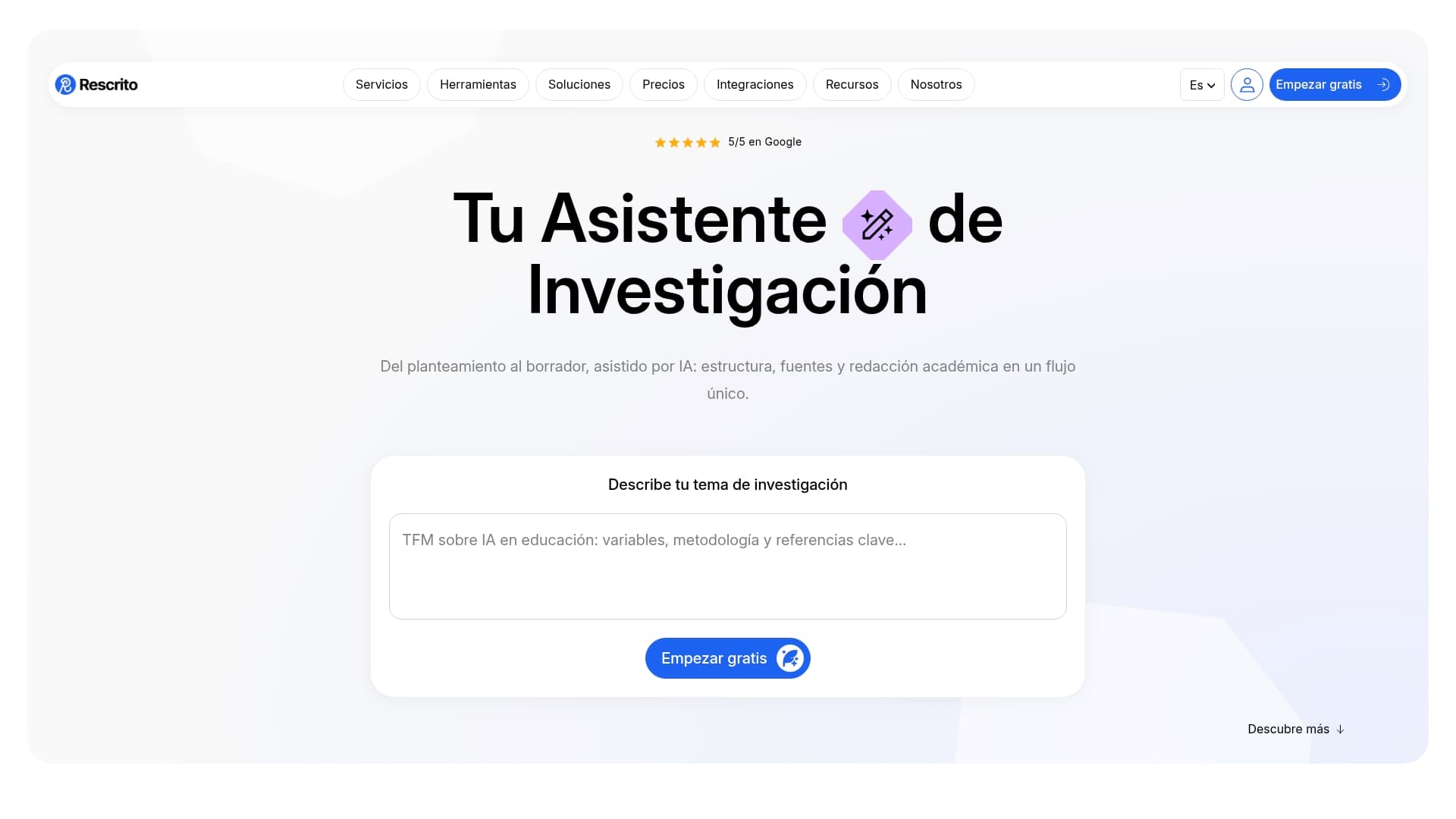
Rescrito is an AI platform built to support academic research and writing for theses, articles, and reports. It pairs advanced language models with workflow tools to help you define research questions, structure content, and improve academic style.
Rescrito offers an assistant to define research topics and questions, automated structuring of indexes and chapters, and tools to improve style clarity and tone. It can summarize articles into key ideas, analyze PDFs and links to extract evidence and methodology, and generate citations and bibliographies for academic export.
The platform integrates chat organization and PDF upload for focused project work and supports messaging integrations like WhatsApp and Telegram for on demand help. Models include GPT-4 and GPT-5 for content generation and analysis.
Research focused tools: The assistant for defining topics and research questions helps you start projects with clear scope and direction.
Comprehensive document handling: PDF upload and analysis extract evidence and methodologies so literature review work becomes faster and more accurate.
Advanced models available: Access to GPT-4 and GPT-5 improves draft quality and supports nuanced academic phrasing and synthesis.
Citation and export features: Built in citation generation and academic export formats reduce time spent on references and formatting.
Messaging integrations: WhatsApp and Telegram connections let you request assistance quickly without leaving your workflow.
The subscription model may be costly for some students and researchers with limited budgets.
The platform requires some familiarity with AI tools and academic workflows to use advanced features effectively.
Rescrito depends on an internet connection for its analysis and generation features, which limits offline work.
Rescrito fits students, researchers, and academic professionals who need structured support for research and writing. It benefits master students preparing theses, PhD candidates handling large literature reviews, and faculty providing feedback on drafts.
Rescrito combines AI writing assistance with document analysis and messaging integrations to move projects from outline to draft faster. Its focus on structuring, evidence extraction, and citation generation differentiates it from general purpose writing tools.
A master student uses Rescrito to structure a thesis, analyze dozens of PDFs for key methods and citations, and refine chapter drafts with model suggestions, saving hours on literature synthesis and reference management.
Pricing starts from €4.99 per month with quarterly and annual options available. Plans include access to GPT-4 or GPT-5, chat organization, PDF analysis, and academic export features depending on the tier.
Website: https://rescrito.com
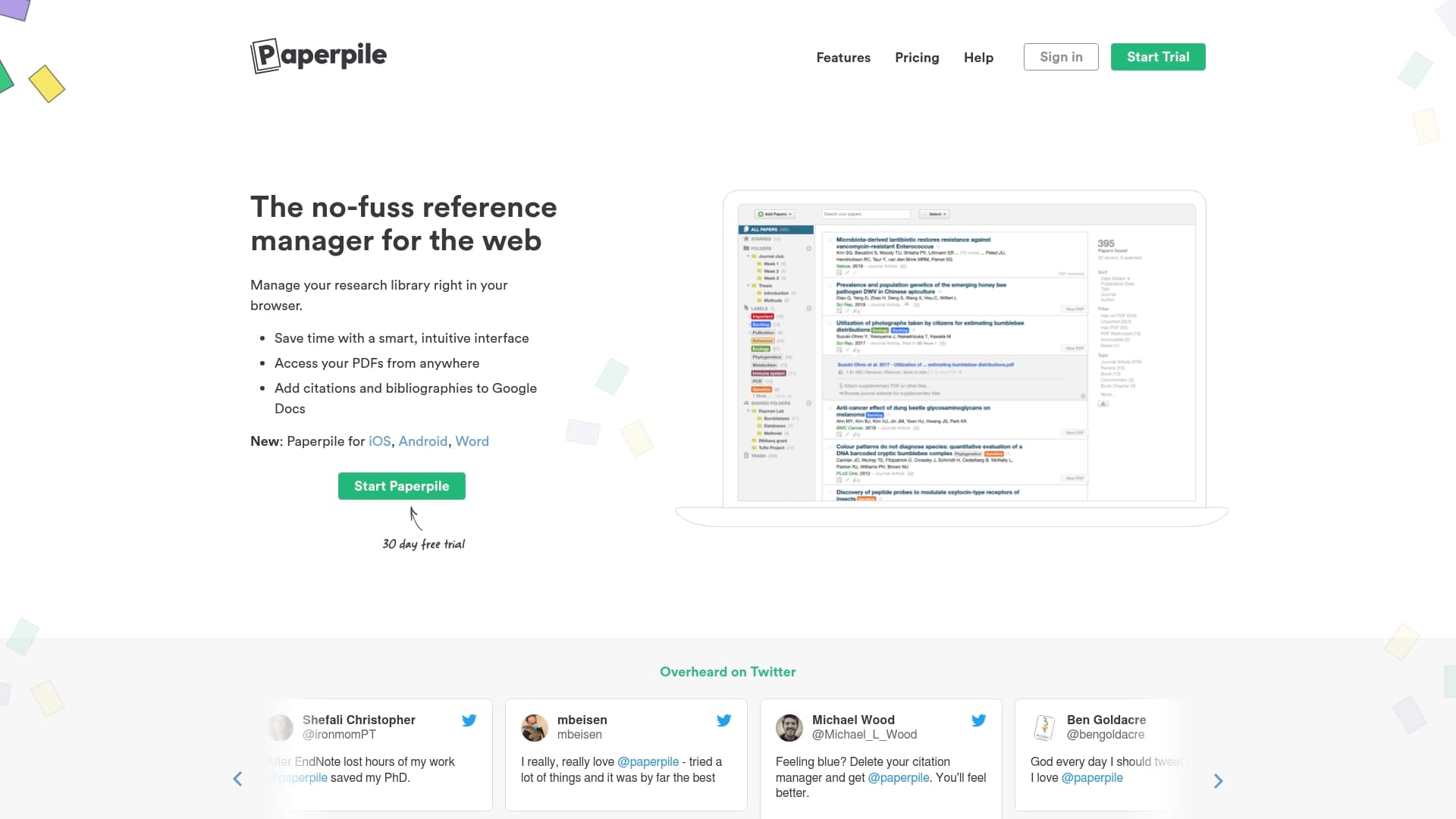
Paperpile is a browser-based reference management tool that helps researchers organize literature, manage PDFs, and cite sources with tight Google Docs and Google Drive integration. It delivers fast citation insertion and collaborative libraries for teams working on theses and papers.
Paperpile provides PDF annotation, folder and label organization, full text search across PDFs, and syncing with cloud storage. It includes plugins for Google Docs and Word, export to BibTeX and LaTeX, and shared libraries with permission controls for collaborative research.
Paperpile suits researchers, students, and academics who rely on Google services and need a lightweight, collaborative reference manager. It fits PhD candidates, lab groups, and instructors who want synced PDFs and shared libraries while working in Google Docs.
Paperpile stands out by combining a clean, browser-first interface with direct Google Docs citation insertion and cloud syncing. For users already embedded in the Google ecosystem, it reduces friction between reading, annotating, and citing in a single, searchable library.
A PhD student organizes hundreds of PDFs in labeled folders, annotates key passages, and inserts citations directly into a Google Docs thesis draft. Advisors and coauthors access a shared library with controlled permissions so feedback and references stay synchronized.
Paperpile plans start at $4.15 per month for the Regular plan and $5.75 per month for the Expert plan, with additional features available at the higher tier. Discounts are offered for students, researchers, and organizations.
Website: https://paperpile.com
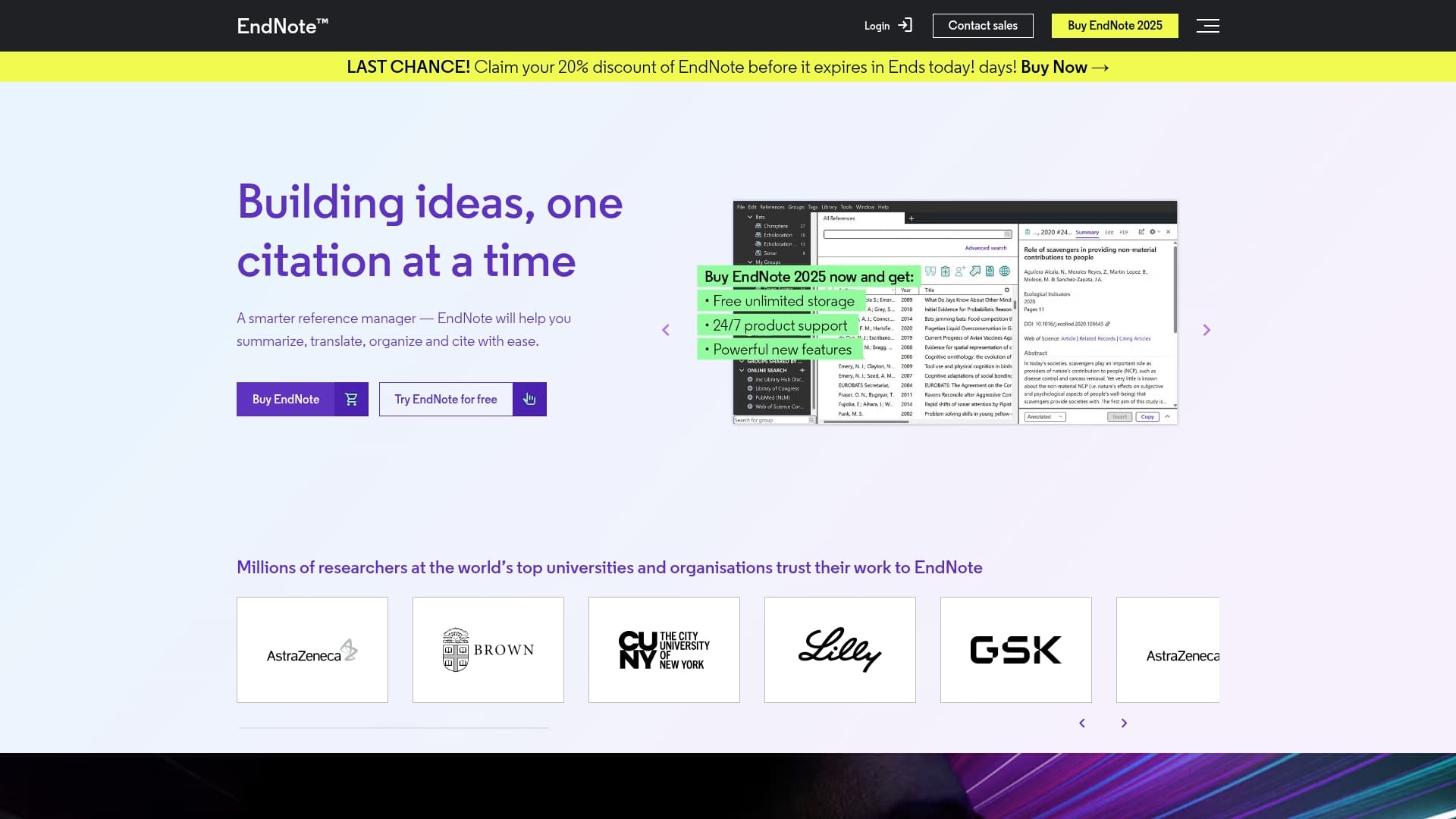
EndNote is a comprehensive reference management tool that helps you organize, cite, and manage research materials efficiently. The latest version adds an AI powered EndNote Research Assistant to speed literature review and writing workflows.
EndNote centralizes reference and citation management with tools for bibliography generation and full text retrieval. It also includes document translation, interactive document features, and a Find a Journal tool to support publishing decisions.
Streamlines citation and research organization: EndNote keeps references, PDFs, and notes in one searchable library so you spend less time hunting sources.
Supports collaboration and sharing among large groups: Team libraries and shared groups let faculty, students, and collaborators work from the same reference set.
Offers AI tools for understanding and translating documents: The EndNote Research Assistant helps summarize content and translate documents to assist nonnative speakers and busy researchers.
Trusted by top universities and institutions: Widespread institutional adoption reduces setup friction if your University already licenses access.
Provides robust support and data protection: Institutional support channels and data safeguards give academic IT teams confidence when deploying EndNote broadly.
Requires purchase or subscription to access full features: Full functionality is behind licensing or subscription plans, so individual users should account for cost.
May have a learning curve for new users: New users report time investment to master library organization, citation styles, and collaboration workflows.
Limited detailed price information publicly available: Pricing varies by license type and volume and you must contact Sales or check the website for specifics.
EndNote fits researchers, graduate students, librarians, and academic administrators who need a centralized system for citations, document handling, and team collaboration. It suits institutions that provide licensed access to faculty and students.
EndNote combines long established reference management capabilities with newer AI features to bridge literature discovery and writing. The mix of institutional licensing, collaboration tools, and publishing support makes EndNote a practical choice for organized research programs.
A University library provides campus access so students and faculty manage references in shared libraries, generate formatted bibliographies for manuscripts, and use the Research Assistant to summarize articles before seminar meetings.
EndNote offers various licensing options including subscriptions and volume licenses. Specific pricing details and institutional offers are available on the product website.
Website: https://endnote.com
Below is a table summarizing the features, pricing, and suitability of selected academic support platforms to help you make an informed decision.
| Platform | Key Features | Pros | Pricing | Targeted Users |
|---|---|---|---|---|
| Samwell.ai | Academic writing tools; Citation generation (20+ sources); Content editing; Visual data integration | Consolidates multiple writing needs; Credible source citations; Collaboration features; Free trial | Free trial; Premium plans upon upgrade | Academics needing comprehensive research and writing tools |
| Rescrito | Structured project assistant; Topic generation; Citation management; Messaging integrations; PDF and evidence analysis | Research question assistant; Advanced model options; Integrations streamline workflow | From €4.99/month depending on tier | Students and researchers handling in-depth structured writing |
| Paperpile | Reference manager; PDF tools; Google Docs integration; Real-time citation insertion | Google ecosystem integration; Mobile compatibility; Secure authentication | Starting at $4.15/month | Users in Google environments needing easy bibliography tools |
| EndNote | Centralized reference management; AI-powered assistant; Team collaboration; Publishing aid | Team library options; AI content summarization; Institutional support | Requires subscription or license | Institutions and researchers needing coordinated reference tools |
Choosing the right academic writing software can be overwhelming when you face challenges like managing proper citations, maintaining originality, and creating structured content quickly. If your goal is to produce credible essays and research papers without juggling multiple tools then Samwell.ai has the solution. It offers advanced AI-driven features such as the Power Editor for deep content refinement and Guided Essays to help you build clear academic outlines effortlessly.
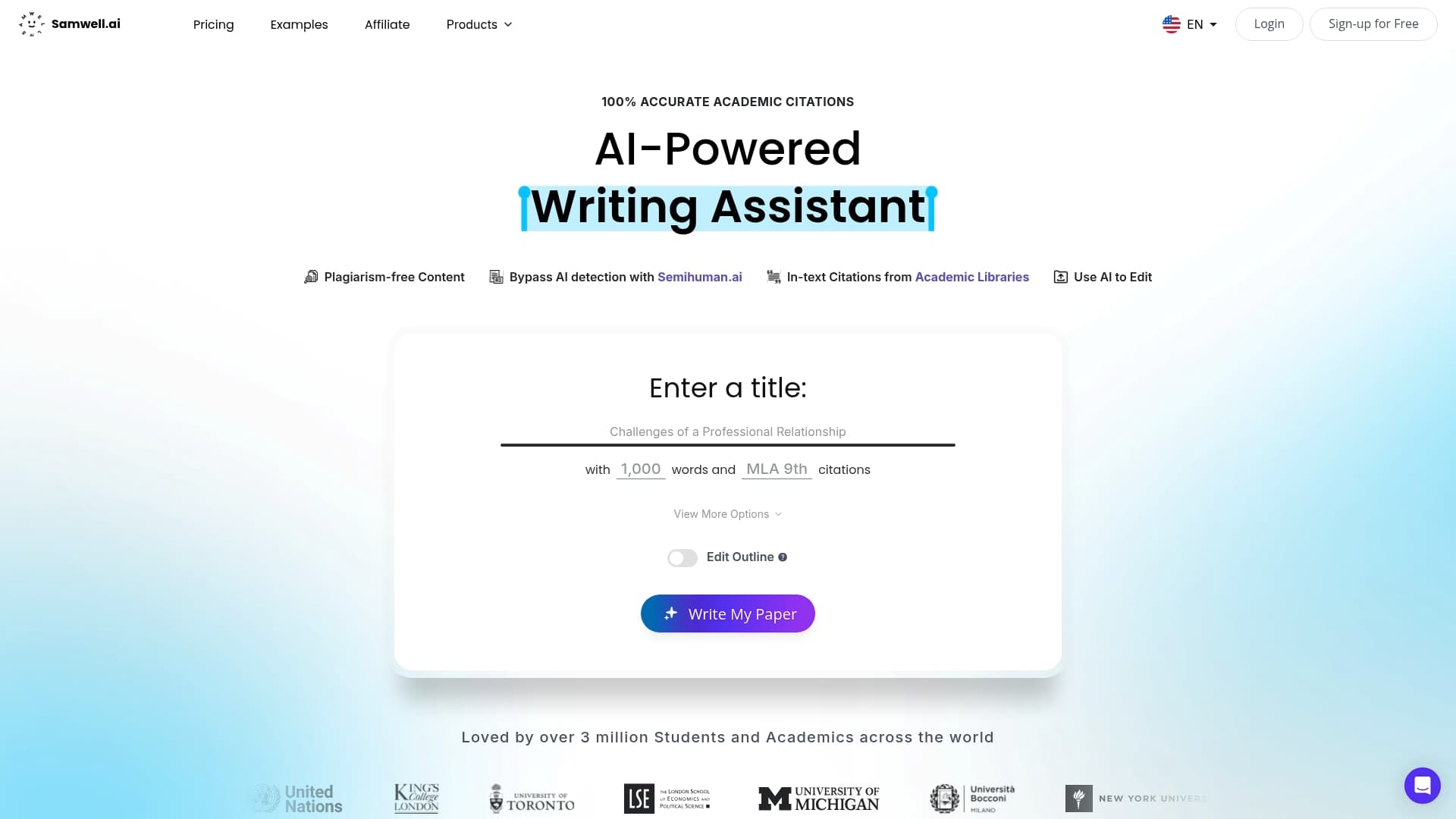
Start improving your academic writing process today by visiting Samwell.ai. Experience how our Semihuman.ai technology minimizes plagiarism risks while meeting MLA and APA citation standards. Don't wait to join over one million students and academics who trust Samwell.ai to elevate their research and writing efficiency.
Key features to consider include AI-powered drafting tools, citation generation capabilities, document collaboration options, and robust editing functionalities. Evaluate each software for how well it supports your specific writing needs, and conduct a trial of core features to find the best fit.
Academic writing software can streamline the research process by automating citation management and document structuring. Utilize features like research topic suggestion and content outline generation to save time and enhance project organization.
Most academic writing software can generate citations from various academic sources, including journal articles, books, and online publications, formatted in styles like MLA and APA. Test the citation features to ensure the software meets the specific standards you need for your projects.
Collaborative features allow multiple users to work simultaneously on a document while tracking changes and managing versions. Choose software that offers real-time editing and comment features to facilitate effective teamwork and feedback sessions.
While not strictly necessary, understanding AI functions can significantly enhance your writing experience. Familiarize yourself with these tools to improve content quality and save time in research and drafting phases.
Start by assessing your specific writing requirements, such as type of projects, preferred citation styles, and collaboration needs. Compare the features and pricing of different tools, and consider taking advantage of free trials to test them before making a decision.